
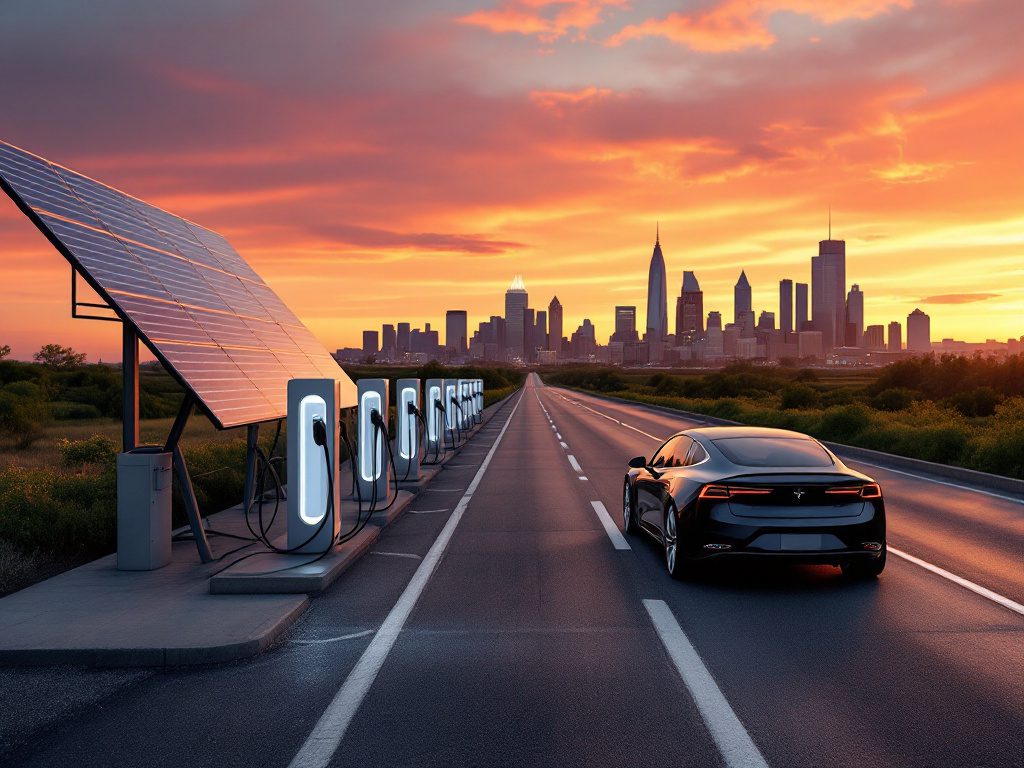
It wasn’t so long ago that electric vehicles (EVs) were little more than a curiosity for most Americans—seen as promising but distant technology. Today, that future isn’t just near; it’s here, shaping policy, infrastructure, and daily life across the country. Both Oklahoma and Georgia are making significant strides in bolstering their electric vehicle charging infrastructure, demonstrating an accelerated, proactive approach to facilitating EV adoption that sets a progressive example.
The Imminent Charge: Oklahoma’s Commitment
At the University of Oklahoma, the installation of two new EV charging stations near Dale Hall points to more than just convenient charging options—it’s indicative of a broader, deliberate strategy responding to growing demand. The director of OU Parking and Transportation, Kris Glenn, cites a “monitored rise in demand” over recent years as the key motivator behind this development.
Glenn’s assessment isn’t anecdotal but reflects statewide trends supported by concrete figures. According to Oklahoma’s Department of Commerce, the state astonishingly ranks third in the entire U.S. for installed superchargers. Moreover, Oklahoma is home to the nation’s largest battery refurbishing facility and enjoys the second-lowest industrial electricity rates—a synergy that arguably makes it an ideal location to pioneer robust EV infrastructure.
With more than 22,843 electric vehicles registered in Oklahoma as of December 2023, these installations are not just welcome but necessary. The growth is expected to continue its upward trajectory, underscored by the state receiving over $66 million in federal funding allocated specifically toward EV infrastructure over the coming five years.
“We will continue to monitor usage to determine if we need to add more in the future,” Glenn reassured, signaling adaptability to changing transportation needs.
Georgia’s Electric Leap: Columbus Leads by Example
Not to be outdone, Columbus, Georgia, recently celebrated the completion of ten electric vehicle charging stations funded by the city’s TSPLOST, a special 1% sales tax dedicated to transportation projects. It’s no trivial gesture; these ten stations cost nearly one million dollars—a steadfast municipal investment underscoring Columbus’s commitment to sustainable urban development.
The city’s new stations strategically include both Level 2 chargers, suitable for steady, prolonged recharging sessions, and a cutting-edge Level 3 DC fast charger capable of recharging an EV battery from 10% to 80% within a swift 25 to 52 minutes. This diversified approach aligns neatly with diverse commuting habits and the practical realities of busy lives.
Columbus’s definitive approval—from a unanimous city council vote, no less—illustrates not only political consensus but also a clear economic priority on sustainable infrastructure. Approximately 4% of TSPLOST’s total budget now specifically supports electric vehicle charging infrastructure, symbolically elevating the status of EV adoption as a public priority alongside traditional transportation improvements.
Policy, Progress, and the Road Ahead
What does this mean on a broader scale? The initiatives in Oklahoma and Georgia clearly demonstrate forward-thinking policymaking at the municipal and state levels, responding not merely to the realities of present demand but preparing strategically for rapidly-evolving transportation norms. How many cities might look to these examples as they consider their own futures? Policymakers elsewhere may wish to ask themselves: Is our city ready for the electric tide, and if not, what exactly is holding us back?
Historically, conservative critics have sometimes questioned large-scale investments into alternative infrastructure like EV charging stations, suggesting they can burden taxpayers without clear short-term benefit. Yet stories like Columbus and Oklahoma’s are immediately persuasive—they reflect far-sighted investment that facilitates ecological sustainability, economic responsibility, and quality of life improvements almost instantly.
Expert analysts argue that far beyond the environmental benefits, both cities stand to profit economically in the medium- to long-term. Beyond breaking initial barriers to EV adoption, the presence of widespread, effective charging infrastructure has proven in numerous cases to attract businesses and boost economic activity.
Moreover, the growing ease and convenience of charging infrastructure directly impacts consumer choices. Access to reliable charging directly addresses one of the most significant barriers for potential electric vehicle consumers—”range anxiety,” the worry that an electric vehicle won’t have the range or recharging capacity to serve their day-to-day needs effectively.
Ultimately, the argument for building out charging infrastructure is becoming increasingly compelling across bipartisan lines due to economic as well as environmental imperatives. Charging stations are no longer mere symbolic installations—they are now essential infrastructure, crucial both to reducing dependence on fossil fuels and stimulating local economic growth through infrastructure investment and job creation.
As Columbus and Oklahoma illustrate, investing in electric vehicle infrastructure results in more than practicality; it demonstrates confident leadership, a commitment to combating climate change, and recognition of the broad economic benefits inherent in building tomorrow’s infrastructure today.
