
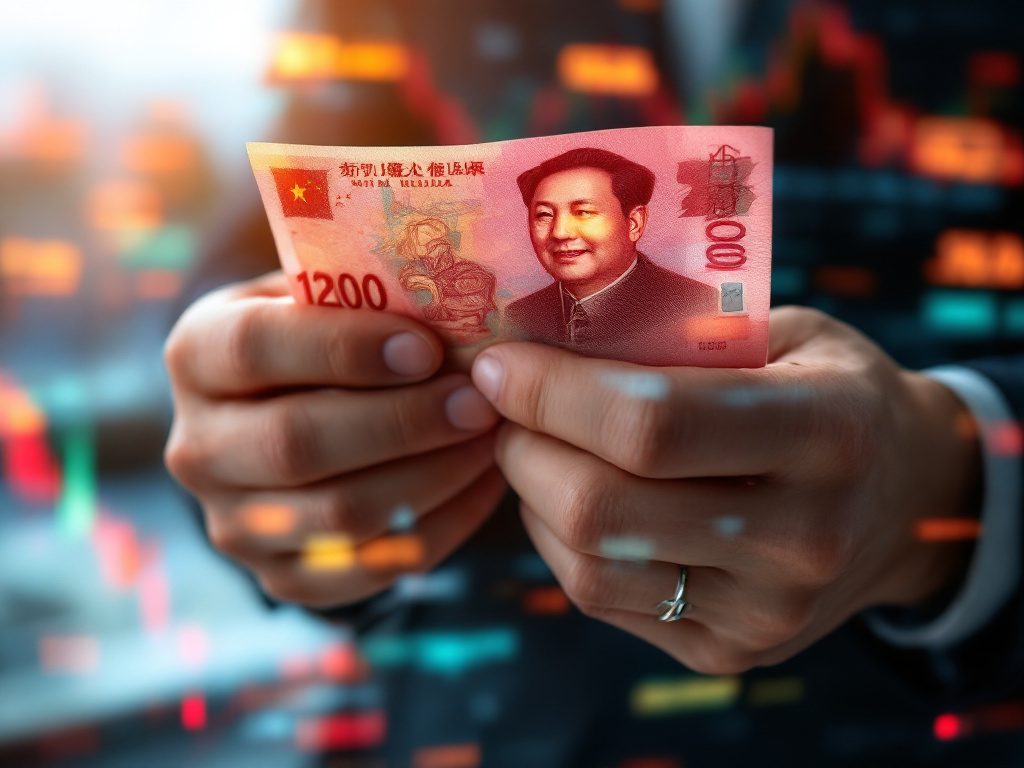
Amid intensifying trade disputes with the United States, China’s currency finds itself under severe strain. This week, the People’s Bank of China (PBOC) issued a clear, albeit informal, directive known as “window guidance” to state-owned banks, instructing them to significantly reduce their U.S. dollar purchases for proprietary trading. This unexpected move reveals Beijing’s growing concern over the yuan’s sliding value, which recently hit a new low against the dollar at approximately 7.35, illustrating the intense economic pressures brought on by escalating tariffs.
A Strategic Intervention in Currency Markets
In response to the mounting pressures triggered by trade conflicts, the PBOC’s command demonstrates the central bank’s growing anxiety over economic stability, reflecting its policies aimed at safeguarding the yuan from dramatic volatility. Tariffs imposed by former President Donald Trump, totaling up to 104% on Chinese goods, coupled with Beijing’s retaliations, have exacerbated the situation, putting Beijing’s monetary policymakers in a challenging position.
Professor David Becker, an international economics analyst at Harvard University, recently remarked, “China has strategically shifted gears toward stabilizing its economy. Aggressive market interventions like these represent the PBOC’s attempt to shield the yuan from speculative trades and subsequent instability.” Sources confirm this with their revelation of big state banks actively selling dollars and buying yuan to support and stabilize the domestic currency.
“The realm of currency management, especially during tense trade standoffs, represents a delicate balancing act between market confidence and national economic interests,” says Professor Becker.
Long-term Implications for China’s Economic Strategy
The current tactic may be effective in the short-term, cushioning the Chinese financial markets against the shocks of escalating tariffs. However, analysts warn this strategy is not without risks. A closer look reveals that focusing heavily on exchange rate stability could diminish China’s previously strong foreign exchange reserves and constrain investment and growth opportunities.
According to policy advisers, the PBOC’s actions affirm Beijing’s stance against sharp depreciation. They acknowledge, however, that a modest, managed depreciation of the yuan may offer some relief, boosting the competitiveness of Chinese exports which have otherwise been hit hard. While the bank strategically avoids currency devaluation wars—preferring smaller-scale interventions—the subtle depreciation strategy aims to balance international relations with necessary economic resilience.
Yet, there are caveats. Escalating currency controls could push foreign investors away, discouraging the international collaboration that China heavily relies upon for continued economic vibrancy. In addition, such intrusion may lead the international community, especially major economies like the U.S. and European Union, to further intensify their scrutiny of China’s economic practices.
Protecting Key Sectors Amid Financial Turmoil
Besides currency interventions, sources within Beijing suggest the PBOC is evaluating complementary measures aimed primarily at exporters—a key economic constituency battered by onerous tariffs. Such measures might include offering subsidies, enhancing tax rebate mechanisms, and supporting market diversification strategies.
The implications are significant. China’s commitment to market stability represents more than a mere defensive mechanism; it symbolizes a broader policy approach designed to protect critical domestic enterprises severely impacted by the ongoing trade war. The effectiveness of interventions previously leveraged by the PBOC has occasionally produced mixed outcomes, serving as cautionary tales for current policymakers attempting delicate maneuvers amidst fraught financial landscapes.
Indeed, the PBOC must tread carefully. The offshore yuan’s recent precipitous drop to a record low profoundly illustrates market apprehensions around these tensions—highlighting the stark reality Beijing faces. Whereas previous measures may have reassured domestic markets temporarily, the current strategy signals China’s commitment to pushing back forcefully while signaling an unwillingness to engage in an outright currency-depreciation war.
One thing remains clear: Beijing has drawn a line in the sand, reiterating through its recent actions that despite economic headwinds, it remains dedicated to financial resilience and stability, intent on weathering the tariffs storm. How effectively China can balance stability against resilience amid ongoing tensions remains uncertain, but Beijing’s resolve appears unequivocal.
