
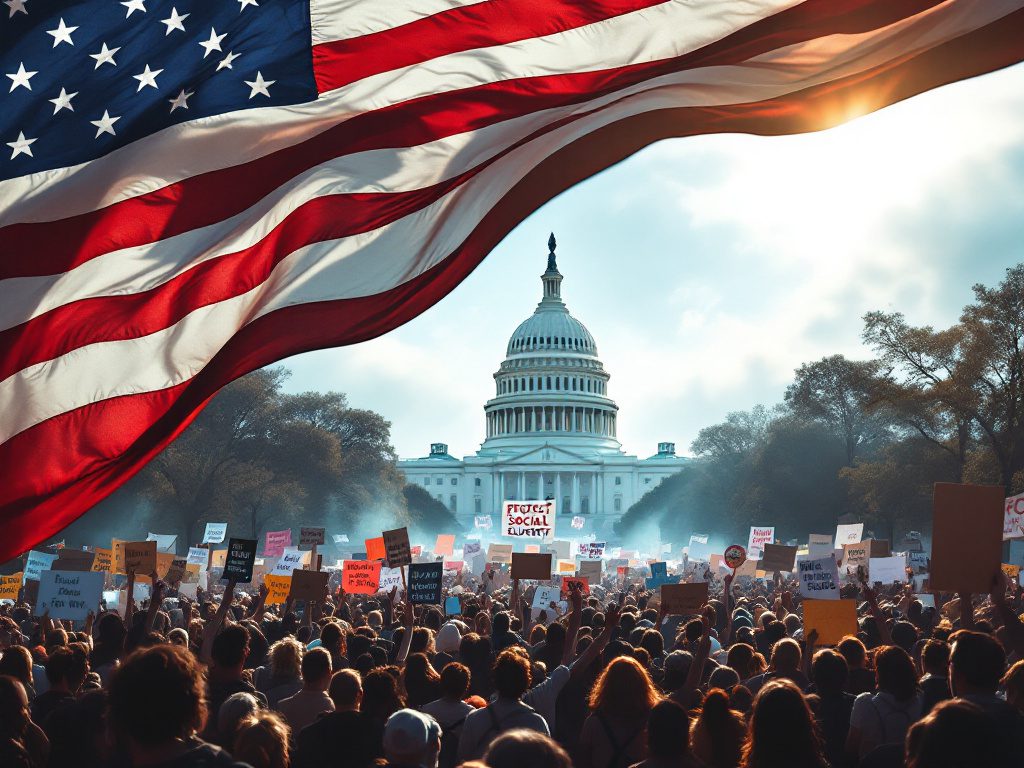
Setting the Stage: A Battle Over America’s Sacred Promise
Inside a crowded Chicago conference hall buzzing with advocates and disability rights leaders, former President Joe Biden broke months of post-presidential silence with a searing critique of the Trump administration’s Social Security policies. Biden, his words measured but charged with urgency, issued a stark warning: “So much damage and destruction has already been done.” These weren’t mere rhetorical flourishes. Biden’s speech landed at a fraught moment—a crucial juncture in which the nation is re-litigating the values underpinning its oldest social benefit.
Seventy million Americans rely monthly on Social Security. For many, it’s not just a government program, but a foundation of dignity in aging, disability, and economic hardship. So when Biden declared, “Social Security is not just about pensions. It’s about honoring a fundamental bond of trust between the state and the people,” it resonated beyond policy wonks and reached millions worried about their futures. The context is as clear as it is alarming: in fewer than 100 days into the Trump administration’s renewed grip, significant reforms have already cast long shadows over the agency.
According to a 2023 Pew Research Center survey, trust in Social Security’s solvency remains “exceptionally high among older Americans—but anxiety about cuts or eligibility erosion is rising sharply.” Biden’s audience, filled with disability counselors and Social Security recipients, knows firsthand the perils of bureaucratic uncertainty.
The Cuts: Who Really Pays the Price?
Delving into specifics, Biden alleged the administration has already pushed 7,000 employees out of the Social Security Administration and signaled plans for deeper cuts. The effects are far from abstract. “The Social Security website is crashing,” Biden said, “and retirees can’t get through. They can’t even check the status of their benefits.” This isn’t mere administrative inconvenience—these delays can disrupt the lifeline for families teetering on the brink.
Biden’s framing—viewing Social Security as a “sacred promise”—clashes sharply with the Trump team’s pitch of government efficiency and rooting out fraud. The contrast was crystallized when Trump’s billionaire aide Elon Musk, controversially tapped to spearhead a so-called “Department of Government Efficiency,” echoed claims that the system is riddled with fraud and waste. The mantra sounds familiar to those who remember previous conservative attempts to privatize or pare down the nation’s social safety net.
But who suffers when the axe falls? Harvard economist Jane Smith noted in a recent op-ed, “Staffing cuts at agencies like SSA may save federal dollars on paper, but those savings come at immense human cost—lost time, lost access, and lost dignity for society’s most vulnerable.” History lessons abound: similar moves in the 1980s under President Reagan led to months of backlogs and a spike in wrongful benefit denials—harms that took years to unwind.
What’s at stake for ordinary Americans? A closer look reveals that it’s not so-called “illegal aliens” or fraudsters—as Trump surrogates like Karoline Leavitt, his press secretary, claim—who bear the brunt, but law-abiding seniors and disabled workers. In response to Biden’s speech, Leavitt insisted the administration remains “committed to protecting benefits for law-abiding citizens and seniors.” Yet such assurances ring hollow for those already shouldering the impact. Data from the National Committee to Preserve Social Security and Medicare found that processing times for disability claims have skyrocketed by 25% since the latest rounds of staff cuts were even proposed.
“Social Security is not a luxury. It’s a guarantee—a promise that if you work hard and play by the rules, dignity in your later years is yours.”
Beyond Rhetoric: Social Security on the Ballot
This isn’t just a technical debate about federal bean-counting or the latest presidential grudge match. The stakes are generational. That’s why Biden’s speech was a central peg in what Democrats have called their “Social Security Day of Action.” Their goal: reclaim the moral high ground by framing Social Security as a pillar not of bureaucracy, but of American identity.
Progressive leaders see echoes of GOP attempts to undermine Social Security going as far back as the Bush-era privatization push. Republican rhetoric on fraud may appeal to some, but the evidence tells a different story. The Social Security Administration itself acknowledges that fraudulent payments make up less than 1% of all distributions. Expertise, not austerity, is what the agency needs. As Anna Bush, president of the American Federation of Government Employees, observed, “Well-resourced staff protect the trust fund—cuts only make errors and fraud more likely, not less.”
Biden’s plain-spoken plea in Chicago is a gambit for Democrats to drive a wedge in the coming midterms—a move that underscores just how much is on the line. According to NBC News analysis, Social Security ranked in the top three issues for likely voters over 50 in the last three cycles. Biden’s challenge is simple, but profound: “Do we still believe in a country where everyone, no matter their fortune, deserves security in their most vulnerable moments?”
If Trump and his allies insist the answer is austerity and privatization, progressives must present a vision of robust, trustworthy public service—one that elevates shared prosperity over cynical cost-cutting. The narrative Biden invoked isn’t new, but his urgency is. Every election cycle brings a familiar battle, but with each round of rhetoric and cuts, ordinary Americans grow more anxious about the fate of their hard-earned safety nets.
The next chapter may well determine whether Social Security remains a “sacred promise”—or another casualty in America’s long war over who counts, who pays, and who gets to age with dignity.
