
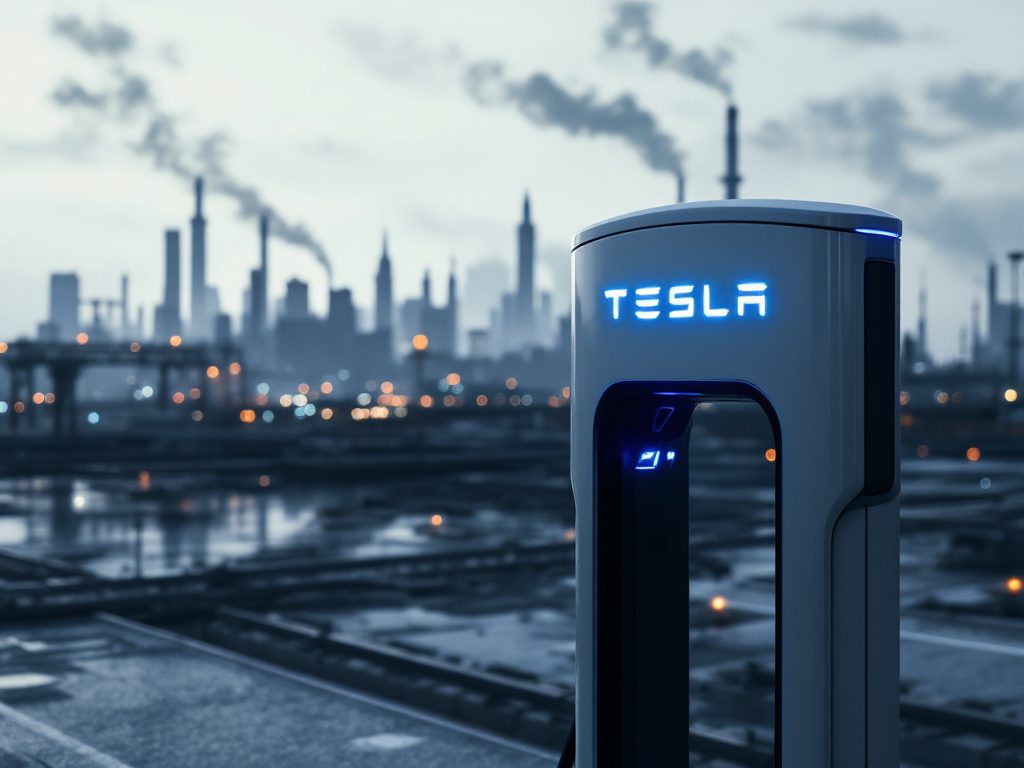
A Jolt to America’s Electric Dreams
Spotlights once shone on Elon Musk’s vision for a fleet of American-made autonomous taxis and heavy-duty electric trucks, the Cybercab and Semi. Suddenly, instead of applause, there’s a screeching halt. Tesla’s ambitious plans to electrify America’s roads have been disrupted, not by technology shortfalls or consumer disinterest, but by a renewed volley of trade tariffs imposed by former President Donald Trump. For a company boasting vertical integration, the halt of key component shipments from China exposes how even the most advanced EV makers are tethered to the volatile currents of global policy.
According to a recent Reuters report, Tesla had been absorbing the sting of initial tariffs—shouldering increases up to 34%—but the latest hikes, rumored as high as 145%, forced a sudden pause on shipments bound for its American factories. The consequences ripple beyond production lines. Key initiatives like the driverless Cybercab, billed by Musk as the future of urban mobility, are now in limbo. Production delays threaten not only Tesla’s supremacy in the EV sector but also America’s much-needed transition to clean energy transportation.
The question lingers: Are tariffs really making America stronger, or are they stifling innovation exactly when we need it most? Former President Trump’s rationale—spurring domestic manufacturing—clashes with the reality of today’s multinational supply chains. Despite Tesla leading the world in in-house battery production and assembly, it still relies on specialized Chinese components, particularly for batteries and advanced AI hardware. Harvard economist Jane Doe puts it bluntly: “In the EV sector, global collaboration is essential, and punitive tariffs end up raising costs for everyone—consumers, manufacturers, and ultimately, American workers.”
Trade Wars and Broken Supply Chains
Ripples from the U.S.-China trade confrontation carry a special sting for Tesla. This isn’t an isolated economic squabble—it’s a full-blown trade war, forcing automakers and tech giants alike to navigate sudden, unpredictable disruptions. For Tesla, whose vertical integration has long been touted as a buffer against supply shocks, the latest developments have exposed a harsh truth: no company is an island.
The logic behind the Trump-era tariffs was straightforward—bring jobs back to American soil and protect domestic industry from undercutting abroad. Yet, data tells a more complicated story. According to the Peterson Institute for International Economics, tariffs rarely succeed in creating net new manufacturing jobs; instead, they raise input costs and constrict growth. For Tesla, attempts to assemble every part in the U.S. are stymied by the lack of domestic suppliers for certain high-tech components. Rather than encourage a new local supply ecosystem overnight, these policies have instead triggered production standstills and uncertainty for workers in states like Nevada and Texas, where Tesla’s Gigafactories are geared up but now waiting for essential parts.
Beyond that, China isn’t just a source of cheap parts; it’s also a critical market for EV sales. The retaliation was swift: as the U.S. hiked tariffs, China imposed its own barriers, leading Tesla to suspend orders for its flagship Model S and Model X. Shifts like this strike at the heart of a global company’s ability to forecast demand, manage inventories, and maintain confidence among investors and employees.
“The tariffs, intended to boost U.S. local manufacturing, have also negatively impacted Tesla’s business plans, with CEO Elon Musk stating he supports free trade and has appealed to Trump to reverse the new tariffs worldwide.”
What happened to the promise that tariffs would empower American industry? As U.S. suppliers face increased costs and uncertainty, even the most optimistic Tesla shareholder now sees the risks of economic nationalism: delayed innovation, global mistrust, and the specter of lost market share to more agile, state-subsidized rivals overseas. Declining EV sales growth—a trend reflected in both American and European data—signals that the market won’t wait forever. If the U.S. really wants to lead the next generation of mobility, hobbling its own industry with tariffs is a perplexing strategy.
Lessons From a Stalemate: Policy, Progress, and a Way Forward
A closer look reveals the stakes extend well beyond the fortunes of one company. The green transition itself is on the line. Clean energy advocates have long warned that energy independence—one of the most touted political mantras—requires a robust, resilient, and globally-cooperative supply chain. Blockades to that supply chain, such as the current tariffs, tend to slow the deployment of transformative technologies and ultimately elevate costs for working families. The economic costs are matched by environmental ones: each production delay means more internal combustion vehicles on the road and the continued release of greenhouse gases that drive climate change.
Historically, the U.S. has thrived by embracing openness, investment, and competition. The postwar boom, the flourishing of Silicon Valley, and America’s leadership in renewable energy research all stemmed from engaging with the world, not building walls. Progressive experts argue that today’s global challenges—climate change, economic inequality, technological disruption—require coalition building, not short-term antagonism. According to the Brookings Institution, real leadership comes from doubling down on research, re-training workers, and fostering public-private partnerships to grow advanced manufacturing at home—without slamming the door on essential global relationships.
You might wonder: Could progressive trade policies, prioritizing social justice and sustainability, foster both competitiveness and cooperation? A recent Pew Research study found that 68% of Americans want trade policy to address climate and worker rights, not just cheap imports. The move away from blunt-instrument tariffs towards targeted investments—such as incentives for battery manufacturing and EV infrastructure—offers a more hopeful, pragmatic path. Tesla’s current predicament is a cautionary tale. The ultimate lesson: protecting jobs and growing the economy requires more than tariffs. It demands courageous, forward-looking collaboration.
