
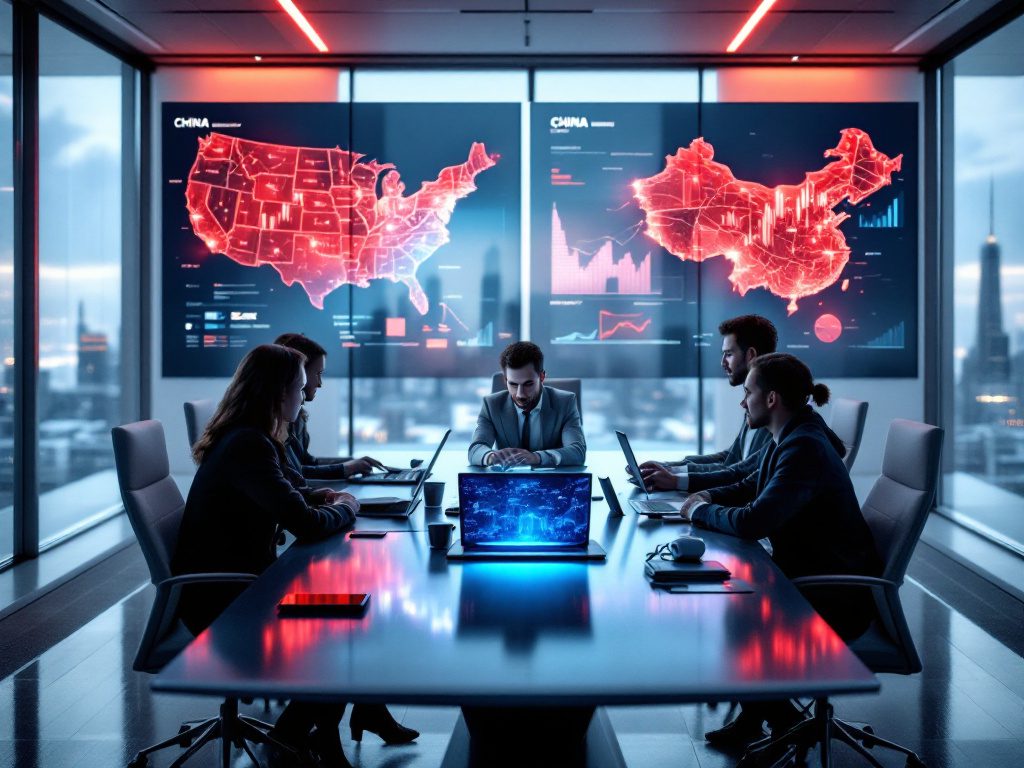
The High Stakes Behind Jensen Huang’s Arrival in Beijing
Jensen Huang’s sudden touchdown in Beijing this week did more than draw crowds and social media buzz—it starkly exposes the fragility of global tech cooperation in a new era of trade nationalism. Just two days before his visit, the U.S. government slapped fresh export curbs on Nvidia’s H20 AI chips, the very last AI hardware the company could legally send to China under current rules. Huang, CEO of Silicon Valley titan Nvidia, wasn’t just visiting for handshakes and photo ops. Officially invited by the China Council for the Promotion of International Trade—a state-backed entity under direct Ministry of Commerce oversight—Huang’s trip signals the mounting pressures on multinational tech players caught between dueling superpowers.
This is only Huang’s second visit to China in three months, but the context has shifted dramatically. On his previous trips, he skirted high-level, widely publicized government meetings. This time, he sat across from power brokers: Ren Hongbin of the trade council and Chinese Vice Premier He Lifeng. The subtext could not be clearer: Nvidia is fighting to preserve its access to one of its most lucrative markets, knowing full well that Washington’s policies threaten the lucrative commercial ties of yesterday.
Why all the fuss over a single chip? The targeted H20, Nvidia’s “lightweight” AI processor for Chinese customers, is still crucial for major firms like Tencent, Alibaba, and ByteDance, who have scrambled to secure orders before the window slams shut. U.S. regulators point to fears that even these restricted chips could supercharge China’s rise in artificial intelligence. The official line, echoed by U.S. Commerce Secretary Gina Raimondo, is about keeping advanced tools away from Chinese supercomputing clusters. Yet the collateral damage—tens of billions in potential losses for Nvidia, disruption for Chinese tech leaders—raises a simple question: at what cost?
Caught in the Crossfire: Business, Security, and Unintended Consequences
A closer look reveals how ordinary commerce is morphing into a battlefield. Nvidia’s projected $5.5 billion hit from these new restrictions is only the tip of the iceberg. According to market analysts at Bernstein, the Chinese market provided $17 billion in revenue for Nvidia last year, a staggering proportion that underscores just how intertwined American and Chinese AI ambitions have become. Wall Street reacted in turn; Nvidia’s share price tumbled in the wake of the White House’s announcement, amplifying investor anxiety and raising fresh doubts about Silicon Valley’s international playbook.
Huang’s meetings in China weren’t just ceremonial. Behind closed doors, executives from AI start-up DeepSeek and representatives of other Chinese tech behemoths pressed Nvidia for clarity and workarounds. According to a source cited by the South China Morning Post, the air was thick with urgency—no one wants to be left behind in the next technological revolution. Meanwhile, the U.S. House of Representatives’ bipartisan China committee is scrutinizing Nvidia to determine if export-restricted chips made their way into Chinese AI projects, highlighting the ever-present scrutiny and skepticism that define current policy.
“Whenever politicians design broad technology bans in the name of national security, the world’s most cutting-edge firms and their global customers often become collateral damage.”
Nvidia, for its part, claims it’s committed to the letter—and spirit—of U.S. regulations. Yet the paradox is chilling: each new workaround, each new “China-compliant” chip iteration, only delays the inevitable decoupling of shared technological ecosystems. Where does this arms race end?
Lessons from History: The Perils and Promise of Strategic Rivalry
Beyond that, thoughtful observers might recall past moments when nationalist fervor threatened to choke off global innovation. During the Cold War, the U.S. similarly sought to contain Soviet access to Western computing power. The unintended result? The USSR scrambled to clone or steal Western technology, and global progress slowed as resources diverted toward defense instead of mutual prosperity. Harvard economist Dani Rodrik recently warned that current efforts to “technologically quarantine” China risk backfiring much the same way—fueling parallel development, not preventing it.
Yet it’s not all doom and gloom for advocates of international collaboration. Progressive voices in technology and policy, like Stanford’s Fei-Fei Li, urge open scientific exchange while balancing legitimate security concerns. Li points out that diversity of thought and cooperation are the catalysts behind rapid breakthroughs in fields like artificial intelligence, from language models to medical diagnostics. Instead of walling off entire industries, there are smarter paths—multilateral controls, transparent review boards, and targeted sanctions for genuine bad actors.
For American workers, investors, and engineers alike, the stakes couldn’t be higher. Isolationism and unchecked rivalry may feel seductive in a polarized political age, but real leadership requires vision that rises above zero-sum instincts. If the U.S. aims to maintain its technological edge, it should invest in homegrown education, infrastructure, and research—not just penalties and bans for foreign rivals. The promise of technology is not in silos, but in bridges.
The Human Cost and the Road Ahead
This week’s drama in Beijing is a warning shot, not just for Nvidia or China, but for anyone who cares about the future of democratic innovation and collective well-being. New export curbs will inevitably impact workers across the supply chain, from California engineers to Shenzhen assembly lines. Chinese start-ups may accelerate local research, but the odds of mutual misunderstanding and miscalculation also rise. Meanwhile, middle-class consumers worldwide stand to lose out as prices surge and options shrink.
If leaders in Washington and Beijing are serious about balancing national security with global responsibility, they must create policies that are nuanced, evidence-based, and humane. That means listening to both industry experts and civil society, fostering forums for scientific dialogue, and remembering that true security stems from resilience—not fear.
Progressives must keep pushing for policies grounded in transparency and collective progress, not knee-jerk isolationism. Because, as Nvidia’s latest ordeal shows, the world’s most urgent challenges are bigger than any one wall, tariff, or trade fight can fix.
