
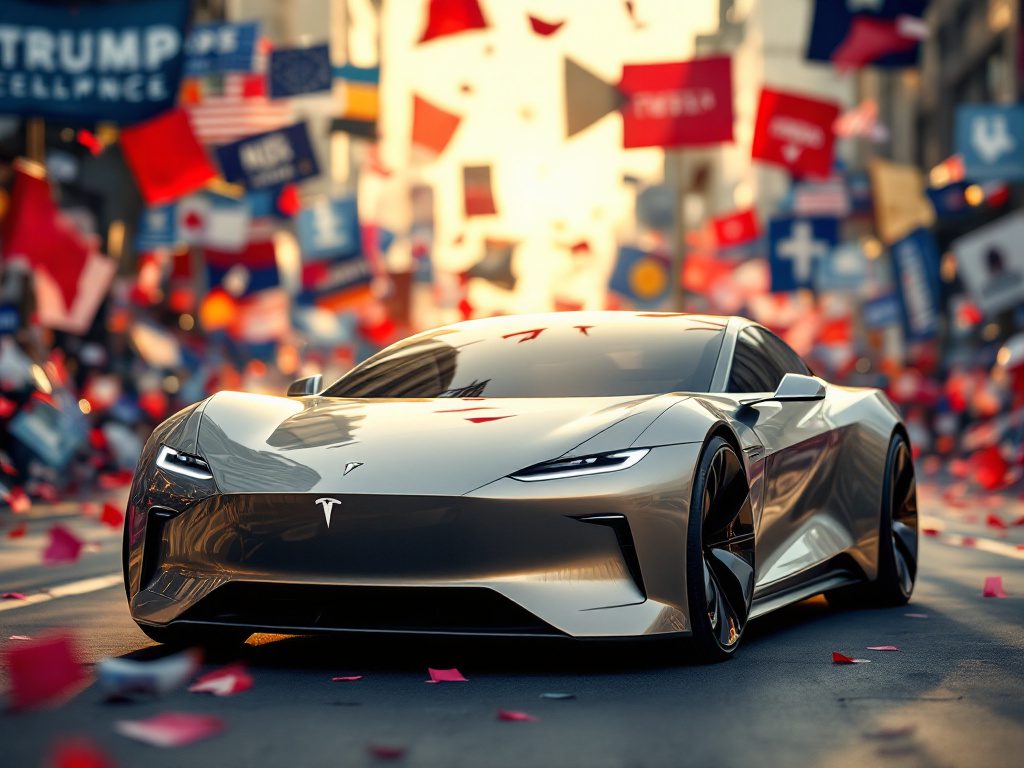
Brand in Crisis: When Innovation Collides with Identity
The story of Tesla used to be about outsmarting the establishment—about a brash upstart defying Detroit, Wall Street, and every oilman standing in the way of an electric future. But that high-voltage narrative has sputtered, replaced by boardroom alarms and protests outside vandalized showrooms on three continents. At the epicenter of this storm stands Elon Musk, a visionary whose cult of personality has become so enmeshed in our political moment that even the company’s staunchest allies are sounding the alarm.
Wedbush Securities analyst Dan Ives, long one of Tesla’s loudest Wall Street fans, isn’t mincing words: the company is at a “code red” inflection point. With Tesla set to report first-quarter earnings, Ives warns that Musk’s dual role—splitting his attention between running Tesla and leading the controversial Department of Government Efficiency (DOGE) under the Trump administration—has put the electric automaker on a dangerous path. He’s slashed his 12-month price target for Tesla by nearly half, citing “severe brand damage” that could mean a 15%-20% permanent destruction of demand.
What sparked this reversal from Tesla’s longtime bull? A perfect storm of slumping sales, bruising headlines, and Tesla’s evolution from tech darling to political lightning rod. As Ives told CNBC, “Tesla has become a political symbol globally of the Trump Administration/DOGE,” a shift that has triggered not just online boycotts but real-world violence—dealerships in California, Germany, and Shanghai have faced graffiti, smashed windows, and street demonstrations.
Market data echo Ives’s concern. According to Bloomberg, Tesla’s U.S. first-quarter deliveries dropped 8.5% year-over-year, dragging market share to its lowest in years. A closer look reveals Tesla’s dominance in critical markets like California—where it once accounted for a third of zero-emission vehicles—now stands at risk as consumers reassess what the brand represents.
Politics, Tariffs, and the Peril of Personal Brands
How did the icon of clean-energy cool become collateral damage in a trade-war crossfire? For critics, the unraveling was predictable. From the moment Musk accepted a position at DOGE, his every utterance and tweet became a litmus test for Tesla’s values. Under President Trump, DOGE’s aggressive rhetoric and the White House’s hardline tariff policies with China have cast a long shadow over Tesla’s future.
China, which delivered over a fifth of Tesla’s revenue in 2023, now looms as a potential flashpoint. Harvard economist Diane Wei Liang notes that “tariff escalations risk inciting nationalist backlash,” especially with brands closely entwined with American leadership. The ripple effects stretch beyond quarterly reports. China’s state-run media has hinted at possible retaliation, and protestors in Shanghai now explicitly link Tesla to U.S. policies, rather than to innovation or sustainability.
The tensions have real-world consequences. Tesla’s Shanghai gigafactory, a $2 billion jewel in the company’s global supply chain, could face the stickiest regulatory hurdles yet if Beijing decides to use foreign automakers as pawns. Not even the legendary Tesla ‘moat’—its lead in autonomy and battery technology—is immune. As Ives points out, “Tesla could see a permanent 15%-20% decline in global demand if the political winds don’t shift.”
“If Musk continues to divide his attention and Tesla remains a political football, the innovative spirit that made this company what it is could be lost.” – Dan Ives, Wedbush Securities
Why not just ignore the political distraction and focus on the numbers? Because modern brands are porous, defined by the headlines as much as the horsepower. According to Pew Research, consumer trust in brands tied to partisan figures has dropped by 23% since 2020, creating real market headwinds for companies caught in the culture wars.
The Road Ahead: Can Musk Reclaim the Tesla Narrative?
Wall Street and Main Street are watching for signs that Musk will heed the “code red” call and step back from his government post as a “special government employee”—a role legally capped at 130 workdays per year. While inside sources cited by Axios expect Musk to return full-time to Tesla once this limit is reached, the question remains: will the market grant him the opportunity to repair the damage?
The narrative Musk helped build—of audacious risk and relentless forward motion—now works against Tesla, casting it as Manichean rather than messianic. Sales are hemorrhaging, competitors like BYD and Hyundai are seizing ground, and Tesla’s much-promoted first-quarter results are suddenly under a microscope for all the wrong reasons. Investors are less obsessed with quarterly profits than with 2025’s outlook: Can Tesla pivot back to its disruptive core—autonomy, affordable models, and global sustainability—while untangling itself from divisive politics?
Bringing this vision back to earth will demand not just a redirection of Musk’s attention, but a recommitment to the essential values that drove Tesla’s ascent: innovation, inclusivity, and environmental stewardship. Imagine a Tesla that, rather than polarizing communities, unites them in pursuit of a cleaner future—that is the narrative shareholders and climate advocates alike crave.
History cautions that no company, no matter how dazzling its product, is immune from reputational decline. Think of Boeing’s brand struggles following safety crises, or Facebook’s meta-morphosis as it lost the trust of progressive audiences. Tesla’s edge has always been cultural as much as technological. Reclaiming that edge will require humility, focus, and the courage to recognize when to put ego—or politics—aside for the sake of the mission. As Dan Ives puts it: “Musk’s full-time return is Tesla’s best shot at a brand recovery and renewed growth.” For shareholders—and for anyone who still believes big tech can power real progress—the next few months will reveal what kind of company Tesla chooses to become.
