
Cracks at the Core: The Fallout of Undermining the Fed
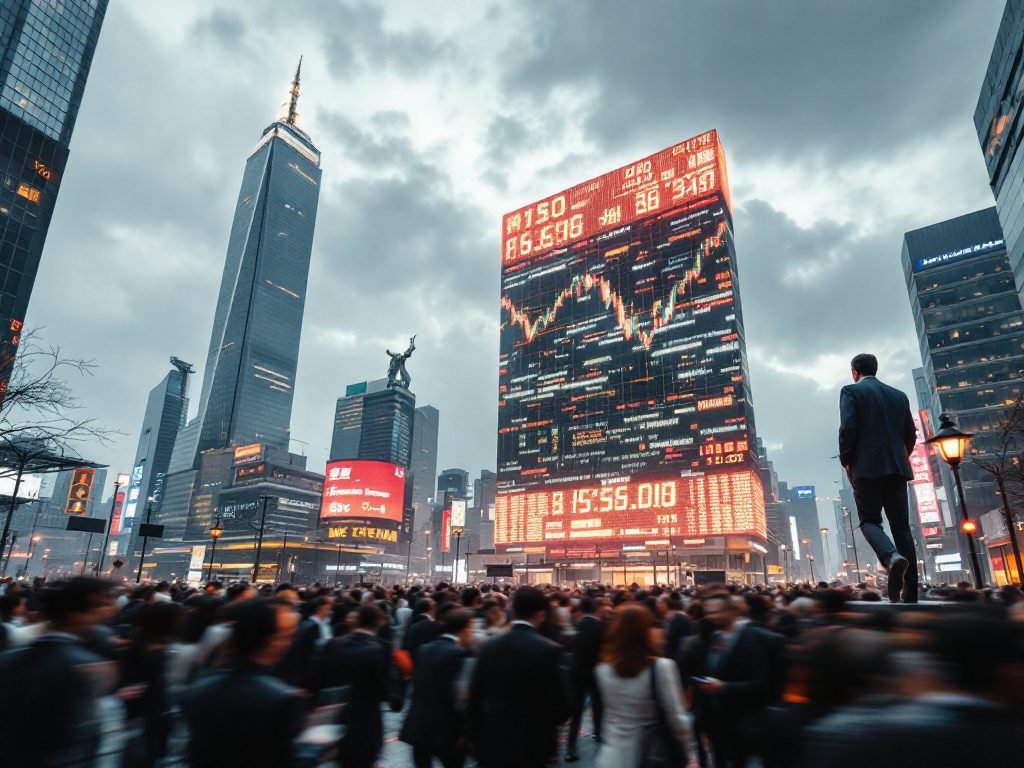
Early Tuesday, trading screens across Asian financial capitals glowed red – not from anything local, but from aftershocks rippling out of Washington, D.C. President Donald Trump’s ongoing assault on the Federal Reserve’s independence has sent tremors through global markets, leaving investors from Tokyo to Kuala Lumpur skittish and uncertain. Wall Street’s sharp 2.5% selloff triggered a wave of caution; once again, U.S. political turbulence dictated the mood from Shanghai to Mumbai.
The steady erosion of faith in central bank independence is no mere sideshow for the world economy. Harvard economist Carmen Reinhart reminds us that “the credibility of a central bank – its perceived ability to act free from political pressure – is the bedrock of modern financial stability.” Recent headlines blasted Trump’s reported threats to remove Fed Chair Jerome Powell, or pressure for easier interest rate policies, rankling not just establishment economists but also global allies who count on American predictability.
Market reactions have been swift and telling. The U.S. dollar plunged to near three-year lows against major currencies, sending gold climbing past $3,340 an ounce, as worried investors retreat to traditional safe havens. Bonds, a typical refuge in tumult, reflected volatility rather than calm, with the yield on the 10-year Treasury note rising in step with rumors of unprecedented executive meddling at the Fed. Such moves may sound like technical issues, but to anyone who remembers the inflation-ridden 1970s, or crises from Greece to Argentina, the lesson is clear: When short-term politics trump sound monetary policy, ordinary people pay the price.
Tariffs, Trade Wars, and the “Sell America” Avalanche
On top of the Fed drama, Trump’s protectionist crusade has further unnerved markets. Beijing fumed as the White House hiked tariffs on Chinese goods to a staggering 145%. China hit back swiftly with its own 125% levy, ratcheting up a trade war that shows scant signs of ending. China’s Commerce Ministry bluntly warned third parties against cutting deals with Washington “at Beijing’s expense,” accusing the U.S. of abusing the global trading system.
The economic casualties extend well beyond tariff-hit industries. Asian markets—especially those in Hong Kong and the export-driven economies of Southeast Asia—are at the mercy of these tit-for-tat escalations. As e-commerce giants like JD.com and Meituan suffered double-digit drops, the Hang Seng Index’s slump signaled just how contagious American uncertainty has become. Investors worldwide, once hungry for U.S. risk, are heading for the exits – a trend that international analysts have dubbed “Sell America.” Amid this exodus, even the once-bulletproof U.S. dollar faltered against traditional havens like the Swiss franc and euro.
“What we’re witnessing isn’t just about tariffs or tweets – it’s about an America willing to gamble with its own economic credibility. When Wall Street sneezes, the world still catches cold, but now the diagnosis is far more complicated and the medicine more uncertain.”
Historical parallels abound. The last major episode when a U.S. president overtly pressured the Federal Reserve—Richard Nixon in the early 1970s—contributed to a decade of runaway inflation and market malaise. Today, experts caution that undermining the Fed’s autonomy, paired with erratic policy on trade, risks a similar spiral. According to a recent Pew Research survey, global confidence in U.S. economic stewardship has slipped to its lowest levels in two decades, a trend attributed to “protectionist bluster and disregard for institutional norms.”
The Cost of Political Short-Termism: Asia and Beyond
Unlike the United States, many Asian markets tend to keep politics and monetary policy at arm’s length—a deliberate tradition forged in the aftermath of the 1997 Asian financial crisis. Still, the security of a distant fire offers little comfort when smoke is everywhere. Even Malaysia’s typically cautious Bursa struggled, weighed down by thin trading volume and a notable absence of institutional leadership as retail investors waited for signs of stability. Rakuten Trade analysts pointed out the “lack of catalysts and persistent uncertainty” as local equities drifted at multi-year lows.
Some policymakers in the region see an opportunity. If fund managers lose trust in American assets, could Asian equities benefit from “reallocation”? Not so fast, warn advocates of responsible globalization. Beyond that, if the world’s largest economy stumbles, no exporting country is immune from collateral damage. The flashpoint isn’t only tariffs – it’s the perception of a White House indifferent to rules-based order and insulated expertise.
Despite volatile markets, Asian economies have shown a measure of resilience, aided by deep reserves and cautious central banking. Still, few harbor illusions of decoupling from Washington’s influence. The global experiment with populist economics and executive overreach poses risks no one can dodge, least of all those on the economic front lines.
Looking forward, the world’s investors and policymakers face a stark choice: double down on nationalist impulses or recommit to the principles—independent institutions, stable rules, and international cooperation—that have anchored prosperity since World War II. As the uncertainty triggered by Trump’s maneuvers continues to reverberate, it’s clear the stakes stretch far beyond today’s stock tickers. The foundation of global economic order, and the trust that underpins it, hangs in the balance.
