
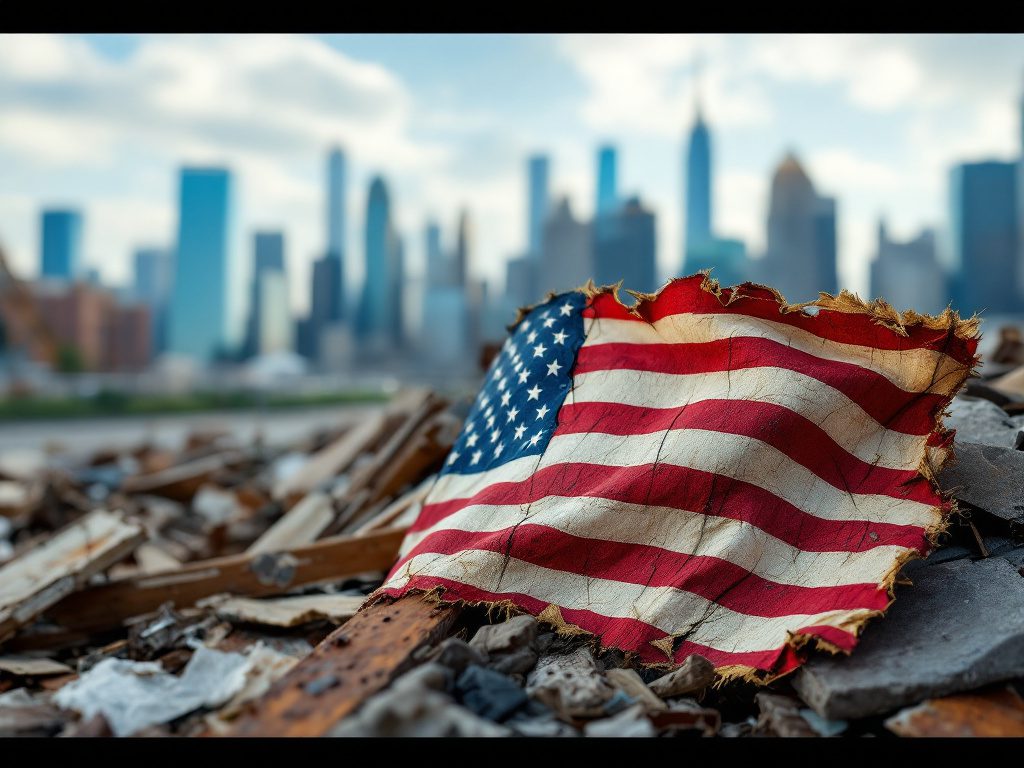
Shattering Market Confidence: Wall Street’s Animal Spirits in Retreat
Not often does a Republican megadonor take on the sitting president of his own party in such stark terms. Yet at the Semafor World Economy Summit, billionaire Citadel founder Ken Griffin pulled no punches. With traders hanging onto every global headline, Griffin’s words landed like a thunderclap: America’s most potent export—its reputation for economic stability—is under siege. This time, the attack isn’t coming from foreign adversaries, but from the White House itself.
Turn back the clock a few years and the U.S. emerged from the Great Recession with not just resilience, but renewed dominance. U.S. Treasuries were the gold standard, the dollar a symbol of safety in global turmoil. That was before President Donald Trump’s aggressive tariffs and unpredictable trade maneuvers began to chip away at foundational trust. “How does Canada feel about our country today versus two months ago? How does Europe feel about the United States today versus two months ago?” Griffin wondered aloud, channeling global anxieties.
According to Griffin, Wall Street’s so-called animal spirits—which once fueled bullish optimism from Silicon Valley to the New York Stock Exchange—have given way to concern, uncertainty, and, at times, outright despair. The catalyst? Tariff announcements that cause bond prices and stocks to plunge in tandem, sending a worrying message to investors everywhere that even America’s financial bedrock can shift.
Financial news outlets like Bloomberg and The Financial Times have clocked this shift too. Following Trump’s tariff escalations, the vaunted 10-year Treasury note—a traditional safe harbor—experienced a sharp sell-off. As Griffin emphasized, this market turbulence undermines America’s hard-earned reputation. “America’s brand is a universal brand—nothing rivals U.S. Treasuries or the dollar,” he stated. “But that advantage is being eroded.”
The Limits of Brash Leadership: ‘Breaking a Lot of Glass’
Trump’s administration, in Griffin’s estimation, didn’t just move quickly—they sometimes moved recklessly. The speed of change has led to ‘some missteps’, Griffin admits, borrowing a favorite corporate buzzword to soften criticism that could easily have been sharpened to describe chaos. According to Griffin, there’s no denying that early policy actions—pressuring NATO allies, rolling back diversity mandates, hard-line immigration stances—won cheers from conservatives keen on an America-first reset. Yet, as we have seen throughout history, the cost of brute-force policymaking is often discovered only in hindsight.
When Franklin D. Roosevelt reformed financial regulations in the 1930s, he did so with a steady hand and a vision for long-term credibility. Policies were communicated with transparency, balancing urgency with prudence. Fast forward to today, and the breakneck pace of executive orders, aggressive social media posturing, and direct attacks on figures like Federal Reserve chair Jerome Powell have injected doubt where certainty once reigned. Nothing undermines confidence faster than political interference in institutions meant to stand above politics.
This cascade of instability plays out not just in financial markets but in the international realm too. Allies accustomed to seeing the U.S. as a steady partner now see unpredictability. As Harvard economist Catherine Mann recently noted, “Frequent shifts and headline-grabbing threats erode global confidence. Even the perception of policy volatility can reduce foreign investment and weaken the dollar over the long haul.” The damage, she warned, is not quickly undone.
“America’s brand is a universal brand—nothing rivals U.S. Treasuries or the dollar, but that advantage is being eroded.”
— Ken Griffin
Repairing What’s Broken: A Long Road Back
The aftermath of hasty tariffs and public clashes with central bank leadership is only beginning. A closer look reveals just how fragile America’s position can become when credibility is sacrificed for short-term political wins. Griffin soberly reflects that “it could take a lifetime to repair” the global trust America has spent centuries building.
This isn’t mere hyperbole. In the 1970s, the U.S. endured a reputational blow from the Vietnam War and the Watergate scandal. International confidence in the dollar faltered, contributing to a decade of stagflation and market malaise. It took the combined efforts of policymakers, business leaders, and diplomatic mending to restore faith—lessons Republicans and Democrats alike would do well to remember now. The truth is, rebuilding trust on the world stage demands more than toughness; it requires humility, consistency, and respect for established global partnerships.
Beyond that, there’s a broader question: Whose interests do “America First” tariffs really serve? History and recent data suggest average Americans lose out when retaliatory tariffs drive up import prices, squeeze farmers, and push up costs for manufacturers. According to a 2019 report by the Peterson Institute for International Economics, Trump’s first rounds of tariffs cost American consumers and importers upwards of $900,000 per steel job “saved.” The ripple effects—from stunted job growth to decreased competitiveness on the world stage—are real, measurable, and deeply concerning.
While conservative talking points celebrate a show of strength, responsible leadership means asking whose strength is truly being projected. Is it the enduring might of our democratic institutions and economic principles, or is it the fleeting bravado of protectionist posturing?
Griffin’s warnings echo those of many business leaders and policy experts who fear the U.S. is “breaking a lot of glass” and shattering international trust in the process. It’s a call to return to thoughtful, evidence-based policymaking—one that values not only the assertion of American power but also the preservation of its good name. Without this, as Griffin and history both remind us, America’s greatest brand advantages may slowly—perhaps even irrevocably—slip away.
