
When Markets Run on Rumor: A Tale of Tariff Turbulence
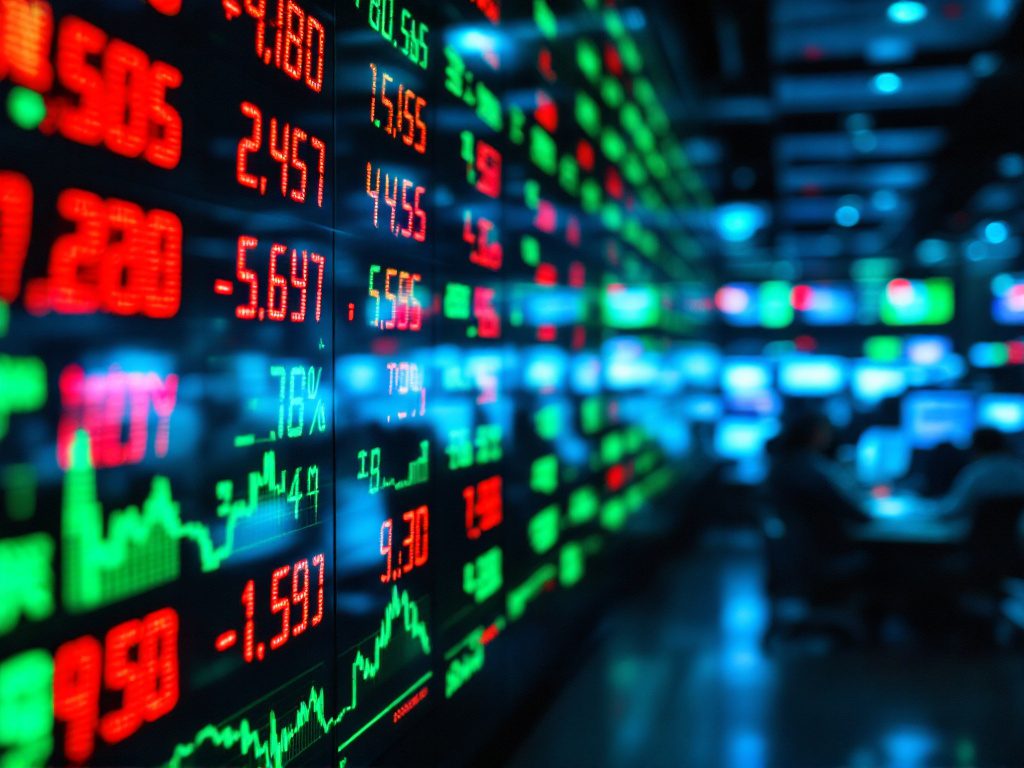
Imagine pouring your morning coffee, flipping to the financial news, and seeing that Wall Street’s brief rally—one cheered by white-collar traders and pension fund holders alike—has staggered to a halt. Why? Because across the globe, China’s Ministry of Commerce stepped up to a podium and coolly dismissed President Trump’s bold claims about ongoing tariff negotiations as “baseless rumors without factual evidence.” In a world gripped by economic uncertainty, this abrupt reality check sent stocks into a tailspin, with the S&P 500 futures sliding and investors bracing for more volatility.
Until yesterday, optimism was in the air. President Trump assured the public that “everything’s active” with China—fueling hope that those punishing tariffs, the ones driving up costs on everything from electronics to soybeans, might be eased soon. Yet, as is too often the case with this White House, the gap between rhetoric and reality proved wide and disappointing. China’s firm insistence that no real negotiations are happening threw cold water on the notion that a trade breakthrough was imminent.
Beyond the stock tickers, these diplomatic parries have real-world consequences. Ordinary Americans—especially those in agriculture, manufacturing, and export-dependent jobs—feel the pinch as tariff rates soar. With President Trump’s administration slapping an eye-watering 145% tariffs on Chinese imports, and China hitting back with 125% on U.S. goods, the myth of easy wins is exposed for what it is: a dangerous oversimplification that leaves livelihoods hanging in the balance.
The Consequences of ‘America First’—Who’s Really Winning?
So who benefits from this economic hostilities? It’s a question investors and everyday citizens are justified in asking. Historically, trade wars are rarely won. During the Great Depression, the infamous Smoot-Hawley tariffs only deepened global collapse—something even mainstream Republican economists now caution against repeating. Today’s standoff echoes that era: as both sides dig in, companies like American Airlines and PepsiCo have slashed profit forecasts, citing creeping costs and global supply chain snarls, per Bloomberg reporting.
China’s diplomatic language may seem reserved—“If you want to fight, we will fight to the end; if you want to talk, the door is open,” said Foreign Affairs spokesperson Guo Jiakun—but the message is unmistakable. These are not empty words. On the streets of Shandong province or the assembly lines of Ohio, the economic pain intensifies with every passing month that this standoff drags on. Exporters lose, consumers pay more, and working families shoulder the burden of a policy approach that favors antagonism over thoughtful negotiation.
This administration’s reliance on brinkmanship and bluster—rather than multilateral cooperation and mutual respect—turns global markets into a casino floor, where fortunes rise and fall not on fundamentals but on wishful thinking and Twitter pronouncements. Harvard economist Dani Rodrik has pointed out that economic nationalism, when untethered from strategic reality, “almost always leads to worse outcomes for workers and economic growth.” The latest policy confusion proves the point.
“Baseless rumors without factual evidence.”
—He Yadong, Chinese Ministry of Commerce spokesperson, flatly denying the existence of any trade talks with the U.S.
Is it any wonder that business leaders—once promised clarity and pro-business policy—now find themselves whipsawed by uncertainty? According to a recent Pew Research study, nearly two-thirds of Americans express concern about the impact of the U.S.-China trade conflict, and most fault the White House for poor handling of international relations.
A Path Forward—Or More of the Same?
Far beyond Wall Street’s jitters, the prolonged battle between Washington and Beijing threatens global economic stability. Allies in Europe and Asia are forced to recalculate trade commitments, as evidenced by mixed global stock performance following China’s unequivocal rejection of a U.S. negotiation breakthrough. The ripple effects of this standoff extend to everyone with a retirement portfolio, small business, or future job prospects on the line.
Trump’s approach to international negotiation—offer a temporary pause to some, exceptions for others, then dial up the pressure for maximum headlines—has clearly reached its limits. While other nations received a 90-day tariff reprieve for coming to the table, China faced the full brunt of escalation, with no sign of de-escalation in sight. This categorical divide, driven by a “winner-take-all” worldview, leaves little room for compromise or creative problem-solving. Former U.S. Trade Representative Michael Froman, speaking to NPR, warned: “Negotiating by ultimatum and bravado rarely secures sustainable wins—what’s needed is principle-driven engagement.”
A closer look reveals that progressive values—mutual respect, collective prosperity, and a commitment to global cooperation—offer the only real antidote. Policy rooted in these ideals could break the gridlock, restore trust between the U.S. and China, and finally deliver relief to families exhausted by endless economic gamesmanship. Until then, Americans are left watching the market’s anxious pulse, knowing that uncertainty, like tariffs, rarely trickle down to benefit anyone but the already wealthy.
