
Tariffs, Stockpiling, and a Record-Setting Deficit
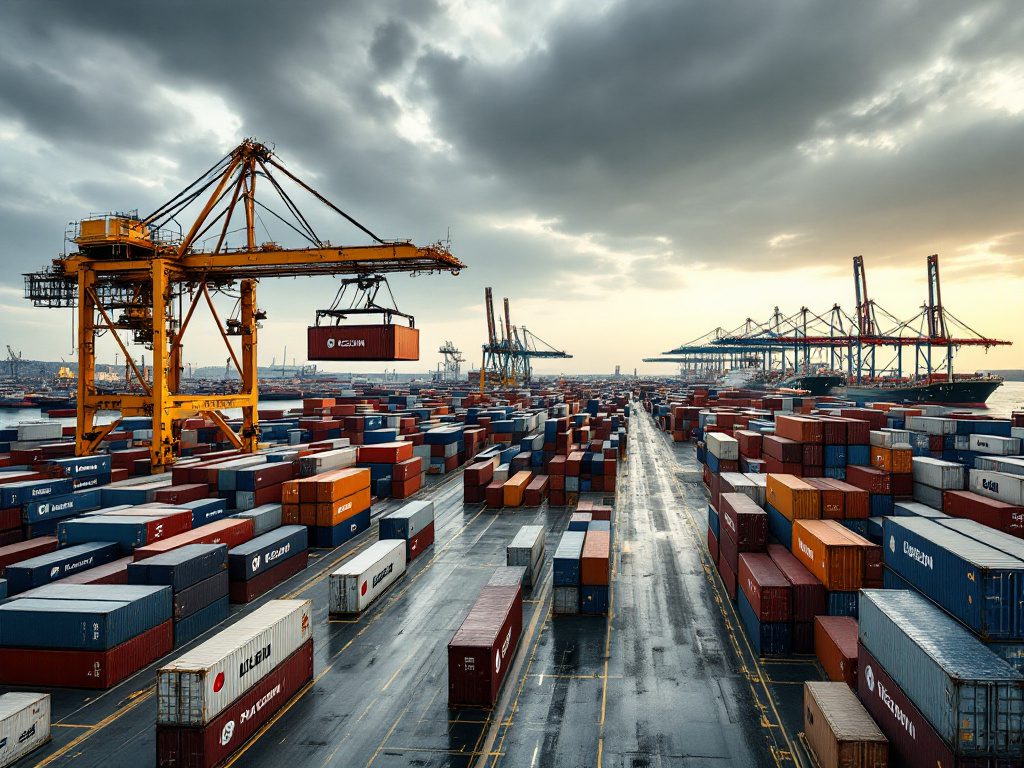
Looking at the latest numbers from the Commerce Department, it’s hard not to ask: what, exactly, did America gain from the Trump administration’s latest round of tariff brinkmanship? In March, the U.S. merchandise trade deficit in goods shot to a record $162 billion — a figure so large that it blew past every forecast in a Bloomberg survey of top economists. This spike wasn’t the result of some sudden resurgence in domestic demand or a renaissance in American industry. Instead, it was a direct consequence of businesses rushing to stockpile foreign goods before the President’s ‘Liberation Day’ tariffs slammed into effect in April. Retailers, distributors, and manufacturers alike filled warehouses with electronics, vehicles, and capital goods. Computer imports, in particular, went through the roof as tech firms and retailers sought to evade imminent price surges of up to 145% on goods from China — just the latest escalation in a long-simmering trade war.
This phenomenon, sometimes called “tariff front-running,” is hardly new in economic history. John Murphy, Senior Vice President for International Policy at the U.S. Chamber of Commerce, noted in an interview that “every time broad tariffs get announced, companies scramble to import while they still can. It’s a temporary sugar high for import data, but the hangover usually follows quickly.” And that hangover could be severe.
The Economic Price of Political Posturing
The driving factor behind this record deficit traces directly to a political gamble rather than to any meaningful plan to strengthen America’s economic position. President Trump’s signature tariffs — a 10% across-the-board import tax and up to 145% on most Chinese goods — were touted as tools to punish international competitors and reshore manufacturing jobs. Yet, the evidence tells a bleaker story for working Americans. According to a recent report from the nonpartisan Peterson Institute for International Economics, past waves of tariffs have not only increased the cost of consumer goods for American families but often failed to stimulate meaningful job growth in domestic manufacturing sectors.
By racing to import before the tariffs hit, U.S. businesses unintentionally exposed both the fragility of global supply chains and the shortsightedness of the federal government’s approach. When companies import at unprecedented levels within a short window, they’re left with swollen inventories — often more than they can store or sell. Retail inventories in March actually shrank by 0.1% rather than growing by the expected 0.4%, while wholesale inventories edged up just 0.5%. What does this mean for the average person? For one, overstocked warehouses and slower moving retail shelves could prompt layoffs or price wars, weighing on an already wobbling economic recovery.
Harvard economist Jason Furman, former chair of the Council of Economic Advisers, emphasized that “trade policy conducted on Twitter or with a sledgehammer rarely delivers the intended results. It injects uncertainty rather than confidence, and the consumers are the first to pay the price.”
The Perils of Tariff-Driven Volatility
Beyond that, data suggests the very measures meant to protect American industry may actually undermine it. A closer look reveals how rushed imports disrupt the delicate balance of America’s supply chain. When companies front-load orders, they create artificial surges in demand and subsequent lulls. That volatility throws off projections, disrupts hiring and logistics, and can even leave raw materials stranded in ports or warehouses — hardly a recipe for a robust industrial base.
“Trade wars are easy to start and nearly impossible to win. The biggest losers are invariably American workers and families, who bear the higher costs and economic instability.” – Mary Lovely, senior fellow at PIIE
The Trump tariffs were hardly the first of their kind—history offers clear parallels. In the 1930s, the infamous Smoot-Hawley Tariff deepened the Great Depression. Decades later, protectionist steel tariffs under President George W. Bush led to higher costs for American auto manufacturers and ultimately more job losses than gains, according to a U.S. International Trade Commission report. Today’s iteration may wear a nationalist badge, but the repercussions remain painfully familiar.
Expert consensus is clear: artificial trade barriers provoke retaliatory measures abroad, introduce uncertainty at home, and often spark inflationary cycles that eat into household budgets. The March trade data already hints at these risks. After this import spike, Americans could soon face shortages or price hikes, especially if retaliatory tariffs further upend global supply lines.
Looking Forward: Policy Lessons and a Progressive Path
The takeaway from this record-setting deficit isn’t just a matter of abstract numbers or fleeting headlines. It’s a warning about the consequences of careless economic nationalism. When policies prioritize short-term political optics over careful, evidence-based reform, workers, small businesses, and ordinary families pay the price. Progressive alternatives, championed by economists like Heather Boushey and trade advocates at the Economic Policy Institute, emphasize fair trade frameworks, multilateral cooperation, and investments in workforce development over blunt-force tariffs.
Visionary policy isn’t about punitive measures or isolation, but about building alliances, modernizing infrastructure, and supporting American workers through upskilling and adaptation. Given the challenges of global competition, the path forward must be guided by data, expertise, and genuine concern for collective well-being — never by zero-sum rhetoric or impulsive executive actions.
As April’s data rolls in and the effects of these tariffs truly hit home, Americans deserve more than headlines announcing record deficits. The country requires leadership willing to engage in nuanced, principled trade policy that advances economic justice, stability, and long-term prosperity for all.
