
Cracks in the Ivory Tower: What’s Really Behind Ohio’s DEI Shutdown?
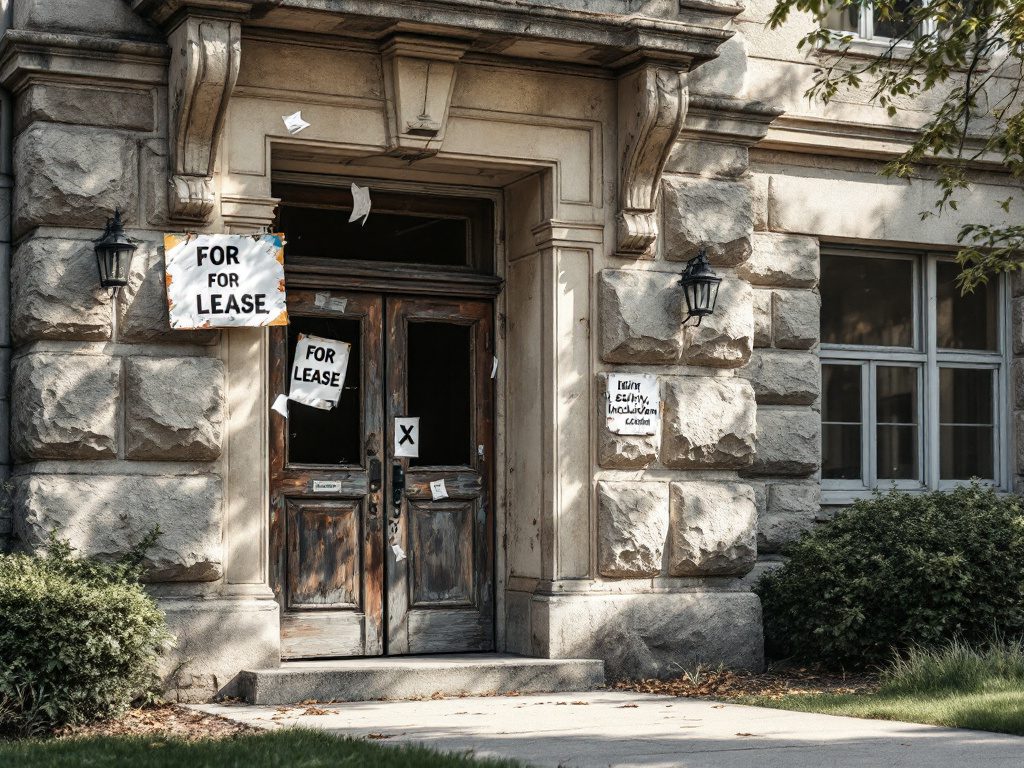
Students who once freely gathered in Ohio University’s Women’s Center, shared hard-won stories at the Pride Center, or found community through the Multicultural Center are now faced with shuttered doors—all in the name of a controversial new law. The abrupt closure of diversity, equity, and inclusion (DEI) offices at Ohio University and Ohio State University is more than an administrative reshuffling. It’s a seismic shift with implications that reach far beyond campus walls, echoing a broader national debate about who belongs—and who does not—within the American educational system.
The Advance Ohio Higher Education Act, better known as Senate Bill 1, passed by a Republican-led state legislature and signed by Governor Mike DeWine, bans DEI programs at public universities receiving state funding. The legislation doesn’t stop there. It also restricts university faculty from striking, drawing fierce criticism from campus unions. Although university presidents like Lori Stewart Gonzalez at Ohio University and Kristina M. Johnson at Ohio State promised they would proactively comply with the law, the real cost is shouldered largely by students—especially those from marginalized backgrounds longing for an institutional refuge.
Staff who spent decades fostering inclusion and community will either be reassigned or leave their posts entirely. Many of the affected offices—like the Multicultural Center, Pride Center, Women’s Center, and the Center for Belonging and Social Change—have offered resources for mental health, provided emergency assistance, trained faculty on anti-racism, and advocated for LGBTQ+ and first-generation college students. Ohio State students mounted protests as the Center for Belonging and Social Change closed, arguing that closures were implemented prematurely and in a way that disregarded the well-being of affected communities.
The Conservative Playbook: Rolling Back Inclusion, Amplifying Division
“Culture war” is an over-used phrase, but in Ohio, it feels all too literal. The closure of DEI offices at major state universities is not merely an Ohio phenomenon—it mirrors a national movement led by conservative politicians to aggressively, and often cynically, scale back or eliminate policies designed to address equity and foster inclusion.
In 2020, President Donald Trump signed an executive order threatening to withhold federal funds from colleges that required DEI-based accreditation. That top-down approach emboldened states like Ohio to pass legislation of their own, cementing a relentless campaign to marginalize already vulnerable groups under the guise of combating “political indoctrination.” Yet as any educator or historian will tell you, targeting support systems for underrepresented students seldom yields the promised academic neutrality. Instead, it often recreates a chilling effect, silencing voices that most need amplification.
“There is no empirical evidence that diversity, equity, and inclusion programs hinder academic achievement—in fact, study after study shows these support networks boost retention, narrow opportunity gaps, and create a better learning climate for all students.”
— Dr. Sylvia Hurtado, Professor of Education, UCLA
Supporters of the ban claim that axing DEI offices will cut “wasteful bureaucracy” and protect free speech. Yet, opponents counter that what’s truly being squandered is the progress hard-fought by students and staff over decades. Recent data from the American Council on Education underscores that students of color and LGBTQ+ students are more likely to report experiences of discrimination or alienation in the absence of institutional supports. So what kind of message does Ohio’s law send to these young adults?
The Rippling Cost: Who Suffers When DEI Is Gutted?
Looking under the hood reveals a troubling truth. When entire offices aimed at inclusion are erased overnight, the practical fallout is swift—and the symbolism even more chilling. Students who depended on the Pride Center to process hate incidents, or on the Multicultural Center’s peer mentorship programs, are left adrift. Staff members who specialize in inclusion, language access, and trauma-informed responses are either reassigned to generic posts within Student Affairs, asked to reapply for new roles, or pushed out entirely.
Universities attempt creative rearrangements: scholarships like the Templeton, Urban, Appalachian, and Margaret Boyd programs at Ohio University are shuffled into the Honors Tutorial College, and the LINKS program relocated to University College. But administrative reshuffling cannot make up for the loss of dedicated community hubs that served as safe harbors for students negotiating their identity on campus.
History offers precedent—and warning. After California voters approved Proposition 209 in 1996 banning affirmative action in public institutions, enrollment among Black and Latino students at top state universities sharply declined, along with retention and graduation rates for those who did enroll. “Programmatic supports are not window-dressing—they are lifelines,” states Harvard sociologist Anthony Abraham Jack, echoing the clear scholarly consensus that targeted programs narrow equity gaps, improve campus climate, and benefit entire university communities, not just those directly involved.
Beyond that, faculty unions, like Youngstown State University’s chapter of the Ohio Education Association, have protested not just the office closures but also the broader attack on labor rights—Senate Bill 1 bans strikes by faculty at public universities. Labor advocates have begun a petition drive to repeal the law, arguing it chills academic freedom and weakens collective bargaining, which are themselves cornerstones of democratic society.
What Comes Next: Resistance and Renewal
Legislative overreach—rooted in a backlash politics that prioritizes “protecting tradition” over social progress—has unmistakably shaped Ohio’s latest move. But students, faculty, and unions refuse to quietly accept these setbacks. Student protests at Ohio State, public petitions, solidarity teach-ins, and grassroots organizing are gaining momentum as the June deadline for compliance nears. “We will not be erased,” read placards at a recent rally, a sentiment with a long legacy in activist circles.
What you see on a college campus reflects the broader direction of the country. If conservatives succeed in rolling back programs that stood as lifelines for the vulnerable, history will not look kindly on this moment. Universities reflect not just who we are, but who we aspire to be. For every closed door, there’s an opportunity—a challenge, even—for progressives, educators, and students to demand these institutions do better by all members of their communities. The question remains: will Ohio’s leaders listen?
