
When Policy Sparks Pandemonium: Tariffs and the Windfall for Short Sellers
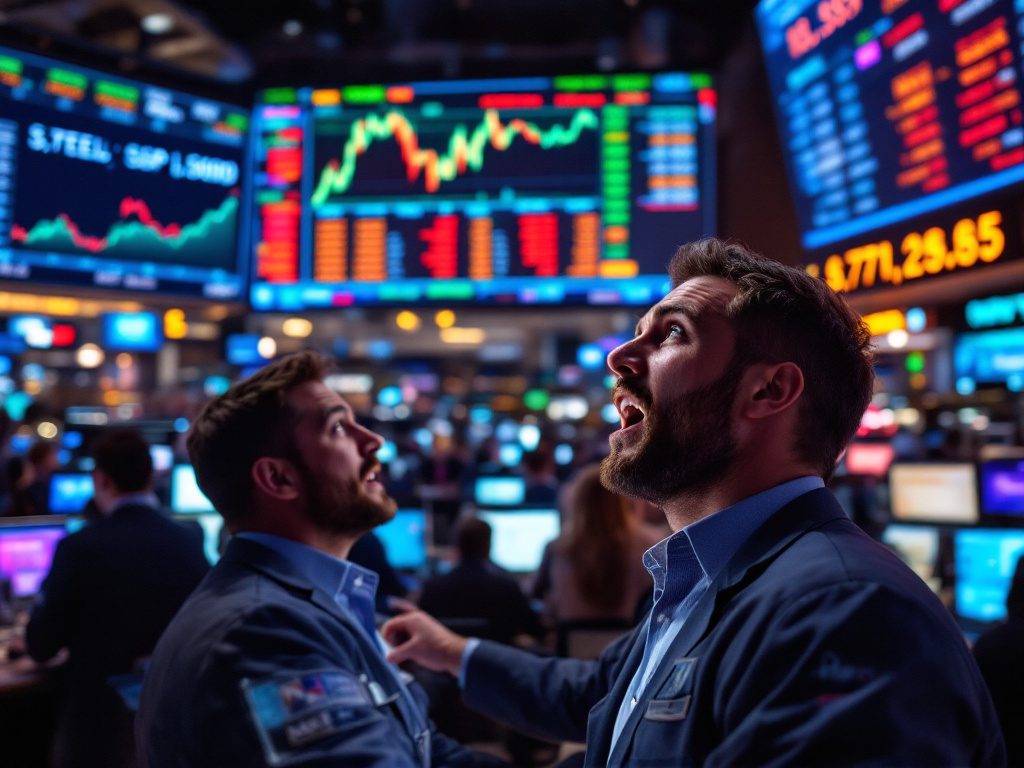
A single announcement shook global markets in early 2025. President Donald Trump’s move to impose broad global tariffs sent immediate shockwaves across Wall Street, causing the sharpest market downturn since 2022. Stock indices tumbled over 10% in just days, erasing trillions in market value and casting a shadow over working Americans’ retirement funds, college savings, and the real economy. This was not merely a market correction but a political choice with far-reaching human consequences.
While Main Street braced for uncertainty, a distinctive corner of Wall Street—short sellers—was momentarily elated. Short sellers, who bet on falling stocks, tallied $159 billion in paper profits across just six days, according to data from S3 Partners. The most lucrative short was the SPY ETF, which tracks the S&P Index. Traders raked in over $6.1 billion on that single play. New short bets surged as well, with $46 billion poured into new bearish positions in April alone, highlighting both the opportunity and peril such volatility introduces.
Yet all this begs a deeper question: Are we witnessing deft market navigation—or is this a symptom of dangerously unstable economic policy? For the everyday American, abrupt downturns caused by political gambles don’t just register as numbers, but as real anxiety about jobs, home values, and the future of their community. To understand the stakes, it’s essential to examine who profits, who loses, and what lies beneath the market’s feverish swings.
Short Selling’s Surge: Exploiting Volatility, Courting Risk
Across the spectrum, investors rushed to position themselves as markets see-sawed with news of tariffs and trade wars. Short sellers stood out, however, for their astonishingly high success rate during this market rout. Ihor Dusaniwsky, managing director for predictive analytics at S3 Partners, remarked, “Overall, the short side was an extraordinarily profitable trade up and down the market during this correction. 81% of every short trade was profitable and 97% of every dollar shorted was a profitable trade.”
The sectors most aggressively targeted—Automobiles, Commercial and Professional Services, and Food and Beverage—mirror familiar battlegrounds in every previous trade conflict: industries reliant on cost-effective supply chains and consumer resilience. Unsurprisingly, their vulnerability made them prey for speculative bears. Average short interest in US stocks swelled to 87 basis points over the month, underscoring a climate increasingly tilted toward pessimism.
“Every time a president tweets and markets convulse, short sellers profit, but the public pays the price in uncertainty—and the pain lands hardest on those who can least afford it.”
Short-selling spikes are nothing new in times of turmoil. The 2008 financial crisis saw similar waves, but there’s a dangerous modern twist: politically manufactured volatility amplifies the cycles of boom and bust, turning every pronouncement from the White House into a high-stakes financial event. Policy instability costs the real economy dearly, especially for lower- and middle-income families who lack the financial tools to hedge their futures.
Real-World Consequences: From Wall Street Bets to Main Street Dread
It’s tempting to view short selling as a rarefied financial sport. In reality, these windfall profits are mere paper gains until trades close, and can reverse just as violently on a market rebound. The underlying damage, however, is felt immediately across the broader economy. The sharp downturn wiped out trillions in value from pension funds, retirement accounts, and individual nest eggs. Cheap dividend stocks like UGI Corporation, SL Green Realty Corp., Sirius XM Holdings Inc., and Agree Realty Corporation—historically seen as safe harbors—became prime targets for short sellers as fear rippled outward.
Harvard economist Lisa Abrams points out, “Short seller surges after policy shocks aren’t harmless market adjustments; they signal deep investor skepticism in government stewardship and further destabilize the outlook for everyday Americans.” Anxiety among workers and retirees compounds as companies cut back on investment or begin layoffs in anticipation of uncertain demand and rising import costs.
A closer look reveals the ideological fault line at play. Conservative policies advocating “America First” tariffs invariably cause ripple effects well beyond the intended targets. Past experience with tariffs, from the Smoot-Hawley debacle of the 1930s to Trump’s own trade wars in the late 2010s, shows that *protectionist spasms* rarely deliver lasting domestic gains. Instead, they often spark retaliation, raise consumer prices, and slow economic growth. The current surge in short seller profits is not a sign of strategic strength, but a glaring indictment of policy that values headlines over long-term stability.
Historical precedent confirms that volatility driven by erratic policymaking intensifies economic inequality. Those with privileged access to information and advanced hedging techniques—hedge funds, institutional short sellers—can profit handsomely while ordinary families shoulder the risk. Calls for tighter financial regulation, greater transparency, and social safety nets are more urgent than ever. Progressive economists argue that in a just economy, policy should foster inclusive growth, not provide windfalls for the speculative elite at the expense of collective well-being.
Looking Ahead: Stability or More Spectacle?
This market episode offers a critical lesson about the power—and peril—of economic policymaking in an age of information overload. You might ask: Who truly benefits from perpetual uncertainty? As long as markets are hostage to political theater and abrupt decisions, Americans will keep paying the price in diminished security and shaken faith in government. The urgent need for thoughtful, stable, and forward-looking policies has never been clearer.
Only by prioritizing policies rooted in fairness, transparency, and shared prosperity can we break the cycle of crisis-driven profits for the few and build a future where working families, not just Wall Street, thrive.
