
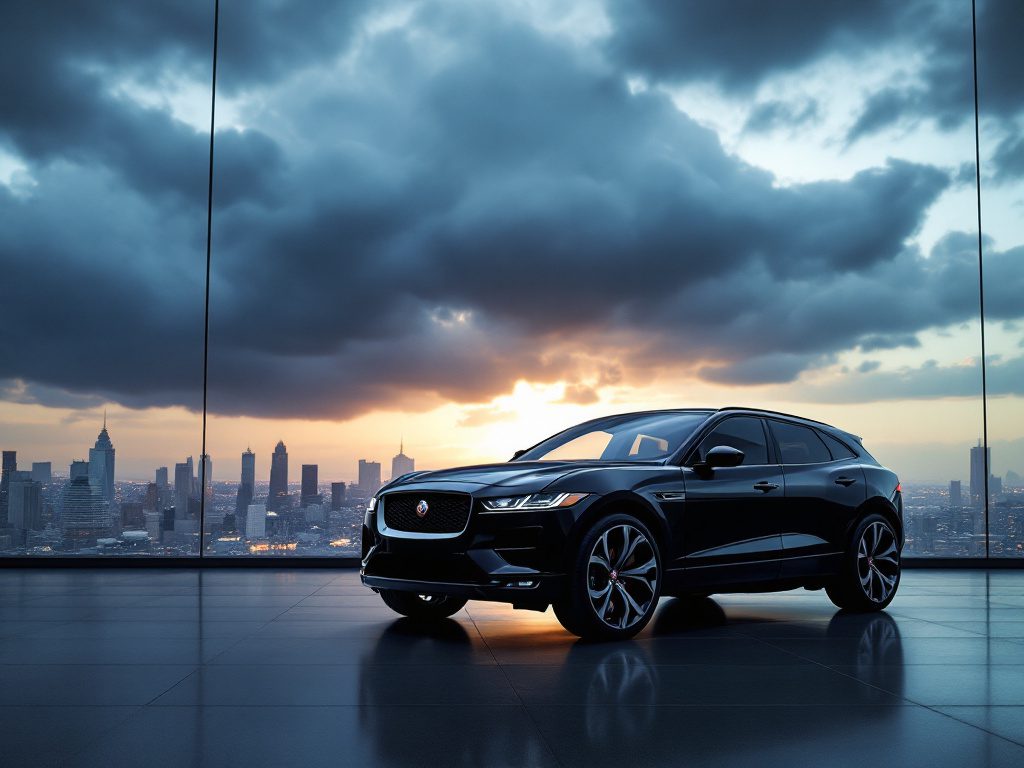
A New Era of Trade Tensions: JLR’s Difficult Road Back to America
How much extra would you pay for the car of your dreams if geopolitics determined the sticker price? This isn’t a hypothetical for American buyers of luxury vehicles—just ask those eying a new Range Rover or Jaguar. The recent saga of Jaguar Land Rover (JLR) and its fraught voyage back to U.S. showrooms lays bare the stark, personal costs of trade policy brinkmanship under the Trump administration’s aggressive tariffs.
After a tense month-long pause, JLR restarted car exports to the United States, its first shipment leaving Britain in a cloud of uncertainty. The reason behind the pause was clear: President Trump’s imposition of a sweeping 25% tariff on imported vehicles. For JLR—a company sending tens of thousands of British-made cars across the Atlantic each year—this meant either swallowing a financial hit or passing on price hikes as steep as $27,000 per car for some models. American consumers, dealers, and autoworkers found themselves caught in the economic crosshairs.
Economics professor Susan Houseman of the Upjohn Institute warned, “Tariffs don’t just target foreign companies—they reverberate through the entire supply chain.” After the sudden levy, U.S. Jaguar and Land Rover dealers faced empty showrooms and anxious customers. JLR was left scrambling to assess whether they could absorb the extra costs or risk losing their market share by making their luxury vehicles prohibitively expensive for all but the most affluent buyers.
Winners, Losers, and the High Cost of Isolationism
Trump administration officials touted the tariffs as leverage to “bring jobs home.” In practice, industry veterans see a pattern: automakers, both foreign and domestically based, enter survival mode, suspending guidance and freezing investments. Mercedes-Benz, Stellantis, and even General Motors joined JLR in withholding financial forecasts, evidence that the uncertainty stoked by isolationist policies spreads fast and indiscriminately.
Behind the rhetoric of economic nationalism are real-world trade-offs. Dealers in the U.S. pleaded for clarity as inventory dried up and jobs hung in the balance. But it’s not just American workers who pay the price—the impact ricochets back across the Atlantic. In the UK, where JLR employs 38,000 people and anchors local economies already facing Brexit-related volatility, the threat of markets going cold is existential. Reports from British industry groups echo a bleak assessment: the U.K. remains a “second-order priority” in U.S. trade policy, with Washington’s attention focused on South Korea and other Asian trading partners first.
“If the full tariff is passed on, the price of a Range Rover could rocket by $27,000 the moment it docks on U.S. soil. That’s not just sticker shock—it’s a statement about whose voices matter in today’s global economy.”
Harvard trade historian Emily Rosenberg draws a vivid historical parallel. In the 1930s, protectionist moves like the Smoot-Hawley Tariff didn’t rescue struggling industries; instead, they worsened the Great Depression. Today’s tariffs, she argues, may end up chasing manufacturing jobs to other countries, all while punishing local communities reliant on exports.
Seeking Solutions: Innovation or Economic Myopia?
Seen from Detroit, London, or Bangalore—where Tata Motors, JLR’s parent company, is headquartered—the policy uncertainties triggered by Trump-era tariffs clash directly with the spirit of global innovation required to tackle the real challenges ahead. As the electric vehicle revolution accelerates, automakers need predictability and access to international supply chains. Disruptive tariffs threaten progress on climate commitments and technological development by forcing companies to funnel resources into legal and logistical workarounds rather than research and job creation.
According to a recent Pew Research study, global confidence in America’s economic leadership took a sharp dive during the Trump administration, with unpredictability cited as a key concern by executives and policymakers alike. JLR’s quick resumption of U.S. exports is a short-term move, but the underlying instability still reverberates. Shipments to the U.S. typically take three weeks, so if no trade deal is in place upon arrival, those vehicles are taxed at the full rate regardless of last-ditch negotiations or executive orders doling out temporary credits. The uncertainty is exhausting for anyone whose livelihood depends on the fruits of global commerce.
Beyond that, progressive advocates argue that trade policies must account for more than profit margins and balance sheets. Labor rights, climate impact, and international cooperation deserve a seat at the table. Throwing up hasty tariffs creates ripple effects that weaken the very communities populist policies claim to protect.
The JLR experience offers a powerful reminder: thriving economies depend on smart, fair, and collaborative policy-making. Betting on trade wars or knee-jerk tariffs may grab headlines, but the long-term costs—in jobs, prices, and global standing—are borne by families and workers on both sides of every border.
