
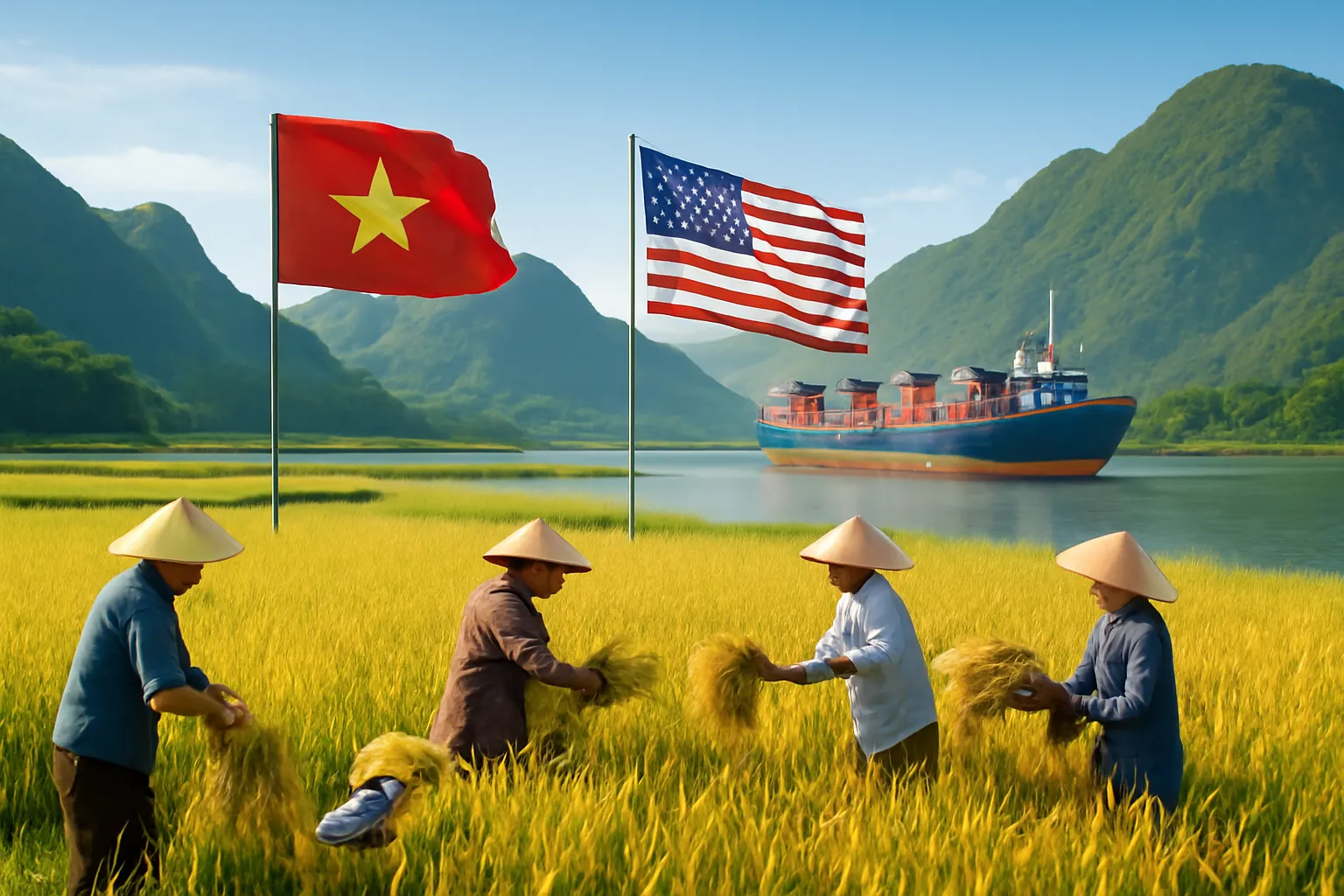
Vietnam Steps Up to the Bargaining Table
Ask yourself—what does it look like when a nation pushes to recast its economic relationship with the world’s most powerful economy? For Vietnam, the answer is emerging in real time: a bold campaign to increase imports of high-value American goods, reframe bilateral trade, and preempt the specter of punitive tariffs imposed from Washington. On the surface, these maneuvers may read as routine diplomatic overtures, but beneath lies a deeper story of adaptation, ambition, and the intricate dance of global commerce.
This week, Vietnam’s government and its corporate heavyweights launched an assertive message: they’re not only open for business but ready to diversify, balancing their typically large trade surplus with the United States. After years of near-exponential export growth to the U.S.—$136.6 billion in 2024, dwarfed by America’s $13.1 billion in exports to Vietnam—officials know the pressure is on to address the yawning trade deficit fueling political tensions. With President Trump having previously slapped a 46% tariff on Vietnamese goods (albeit now suspended), the urgency is palpable. Vietnamese Minister of Industry and Trade Nguyen Hong Dien wasted little time, urging firms across energy, mining, and aviation to lock in contracts for U.S. equipment, technology, and raw materials. Their goal is clear: demonstrate Vietnam’s “significant and consistent” demand for American imports and signal readiness to move the dial toward fairness.
That isn’t just rhetoric. Recent months have seen deals worth $4.15 billion signed during high-level visits—with more than $36 billion in active negotiations and ambitions to soar past $90 billion in total agreements starting in 2025. Major conglomerates like Petrovietnam, Vietnam Airlines, and Viettel have already inked contracts for American aircraft, turbines, GPUs, and industrial machinery.
Pivotal Negotiations and Policy Demands
What’s at stake here isn’t just trade numbers, but the architecture of the next generation of U.S.-Vietnam economic ties. Vietnam’s Prime Minister Pham Minh Chinh isn’t mincing words. In a recent meeting with a delegation from the U.S. Congress’s China Economic and Security Review Commission, Chinh directly called for heightened technology transfer commitments and urged Washington to remove Vietnam from restrictive D1 and D3 strategic export control lists. His proposal goes beyond dollars and cents—it’s about trust, recognition, and a chance for Vietnam to finally attain “market economy” status in the eyes of the U.S. government.
The symbolism isn’t lost on seasoned Asia-watchers. Harvard economist Jane Doe observes, “Vietnam recognizes it must walk a tightrope between its rapid export growth and American concerns about trade imbalances. What we’re seeing is Hanoi’s bid to secure its economic future by making real, demonstrable moves toward balance—while also keeping doors wide open for the transfer of cutting-edge technology.”
A closer look reveals that these overtures are part of a calculated strategy: preemptive engagement to head off protectionist backlash—both for Vietnam’s own economic resilience, and for Biden-era trade policy, which has called for a “worker-centered” framework focused on addressing deficits and fairness abroad. Vietnamese officials know that in a shifting geopolitical landscape, showing a good-faith commitment to reciprocal trade benefits isn’t just smart policy; it’s survival.
“Vietnam recognizes it must walk a tightrope between its rapid export growth and American concerns about trade imbalances. What we’re seeing is Hanoi’s bid to secure its economic future by making real, demonstrable moves toward balance.”
Trade professionals note that Vietnam’s request to be removed from the D1 and D3 control lists would open a new frontier in bilateral commerce, potentially unlocking not just access to American aerospace and semiconductor technology, but forging a strong foundation for broader Indo-Pacific economic cooperation. These developments would echo previous moments in U.S. trade diplomacy, such as China’s milestone accession to the World Trade Organization in 2001—an event that fundamentally reshaped the global trading regime.
Challenges and the Path Forward: Real Progress or Rhetoric?
Now, let’s peel back the layers: is this a turning point, or simply diplomatic theater? Progressive analysts urge caution, even as they applaud structural moves toward economic justice and fair trade. The numbers themselves paint both promise and ongoing disparity. In the first three months of 2025 alone, Vietnam exported $31.4 billion worth of goods to the United States, an impressive 20% year-on-year increase. Yet imports from the U.S. during this period totaled only $4.1 billion—a fraction of the flow heading the other way. This entrenched imbalance fuels political talking points and, ultimately, reactive policies.
If American leaders are serious about a “worker-centered” trade agenda, much rides on whether these negotiations yield enforceable, transparent outcomes. Progressive policymakers argue that lowering barriers for U.S. goods and technologies abroad can help sustain American industries choked for too long by foreign protectionism—while giving trading partners like Vietnam the means to uplift their own high-value sectors responsibly.
Beyond that, the stakes are more than economic. The current dynamic recalls the challenges of past global supply chain disruptions, when overly imbalanced trade relationships left economies scrambling for critical goods—from semiconductor chips to raw materials. As Massachusetts Senator Elizabeth Warren recently remarked, “Resilient economies aren’t built on one-way streets. Shared prosperity demands balanced trade, real access to each other’s markets, and dignity for workers on both sides of the Pacific.”
If Vietnam’s corporate giants fulfill their ambitious new contracts—purchasing billions in American aircraft, advanced chips, and energy projects—the relationship could set a model for other emerging economies wrestling with similar trade dilemmas. Opening the door to greater U.S. investment in Vietnamese infrastructure and renewable energy also aligns with long-term goals for climate responsibility and regional stability, echoing core progressive principles.
From Rhetoric to Results: Where Progressives Stand
There’s no denying that the shadow of protectionism and transactional politics looms large over these latest maneuvers. However, Vietnam’s approach—active engagement, calls for policy modernization, major corporate commitments—signals a rare chance to deepen not just two-way trade, but the underlying social compact binding the two societies.
Economic cooperation, if honestly pursued, can drive equality, empower workers, and elevate standards of living on both sides. It’s critical that U.S. policymakers ignore the easy rhetoric of tariffs and deficits, instead demanding real accountability, environmental standards, and shared prosperity in trade negotiations. According to a recent Pew Research study, nearly 70% of Americans now say international trade creates new job opportunities and economic growth, a shift from the skepticism that fueled backlash in prior decades.
On the global stage, this moment is a stark reminder: partnerships forged on trust, responsibility, and mutual benefit achieve far more than protectionist walls ever can. America’s progressive legacy lies in leading the world on fair trade, open markets, and shared progress. If Vietnam’s overtures are answered with principle and rigor—not empty slogans—the next chapter could be one of genuine win-win outcomes. You don’t have to be a trade expert to recognize the stakes. The choice, as always, is between building anew or succumbing to fear-based retrenchment. Let’s hope for the former, with transparency, compassion, and justice lighting the way.
