
A Trade Deal Shakes Industry Confidence
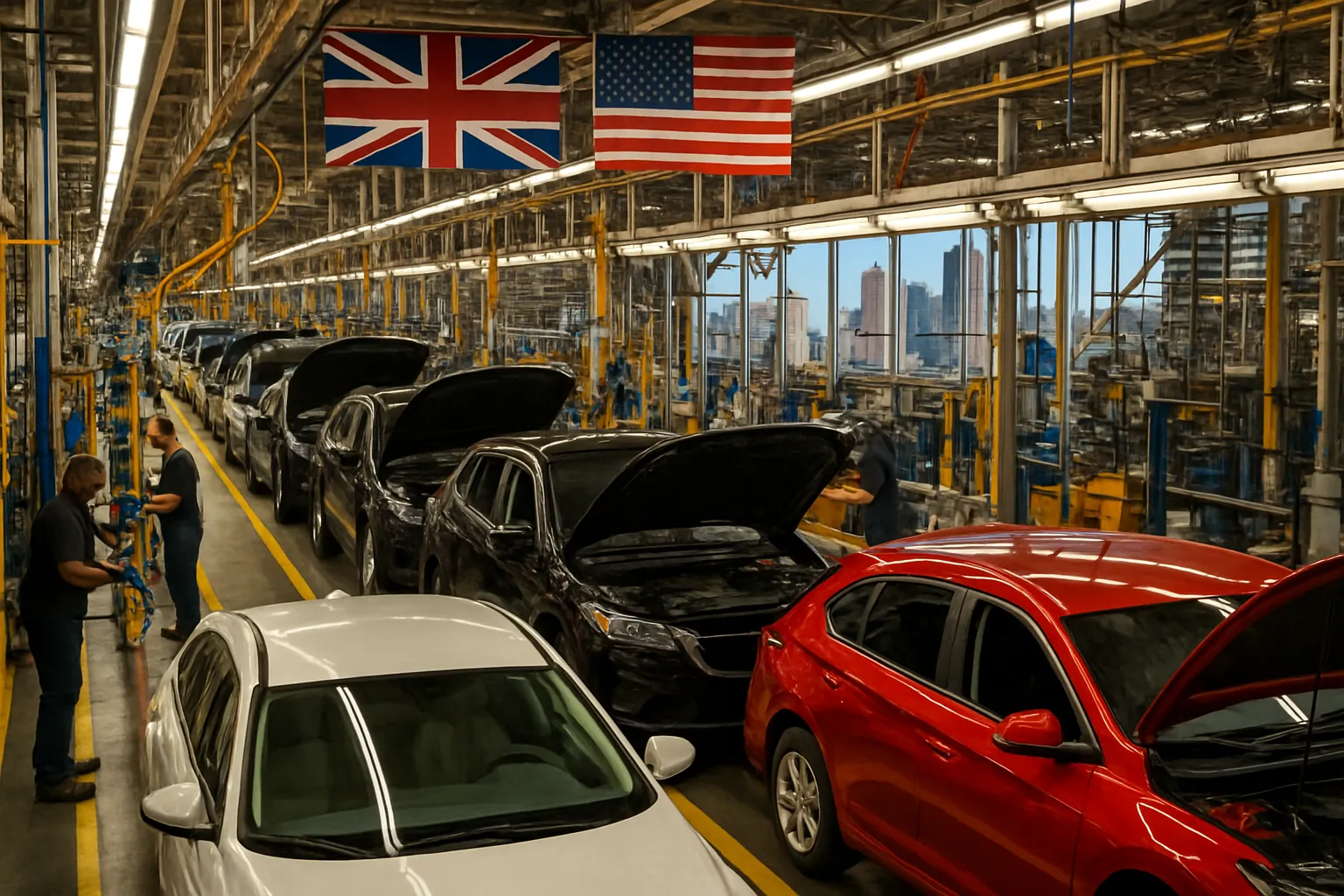
Picture a bustling Detroit, home to America’s storied auto giants—General Motors, Ford, and Stellantis—now echoing not just with the hum of production lines, but with the voices of executives who feel blindsided. The ink is barely dry on President Trump’s newly negotiated U.S.-U.K. trade agreement, yet the fallout is immediate and unmistakable: American automakers are sounding alarms, arguing that the deal threatens the competitiveness of North American manufacturing in favor of British imports.
What changed? Under the agreement, British carmakers can export up to 100,000 vehicles annually to the U.S. at a 10% tariff—down dramatically from the previous 27.5%. That’s a windfall for U.K. manufacturers, but a gut punch to American firms already contending with thin margins, shifting consumer demand, and the legacy of complex international supply chains. The American Automotive Policy Council, representing the Detroit Big Three, argues that this single line item could ripple outwards, hollowing the competitive core of the U.S. auto industry.
The trade deal doesn’t stop at cars. In an attempt to sweeten the pot, the U.K. agreed to lift tariffs on 1.4 billion liters of U.S. ethanol and increase market access for American agricultural products. For the farm belt, that’s welcome news. But for factory floors in Michigan and Ohio, the message seems clear: Your jobs—and the rules you’ve played by—may matter less than the geo-political optics of post-Brexit dealmaking.
The Double Standard of “America First”
Supporters of the agreement have pointed to gains for farmers and the symbolic strengthening of the so-called “special relationship” between the United States and Britain. Yet, when you scratch beneath the surface, the logic starts to fray. American automakers are subject to the USMCA (United States-Mexico-Canada Agreement), where rules require that vehicles contain at least 75% North American content to qualify for preferential tariffs. Those cars face stricter compliance—and higher tariffs if they miss the mark. Meanwhile, a British SUV with far less U.S.-made content glides into American showrooms at a friendly 10% tariff, undercutting the companies whose very identity is “Made in America.”
This glaring inconsistency exposes a fundamental tension: Is this deal truly putting America first, or is it sacrificing one industrial backbone in favor of another political narrative? The American Automotive Policy Council has expressed open worry that the deal sets a dangerous precedent: If other trade partners line up for similar sweetheart arrangements, what’s to stop a global race to the bottom for American manufacturing jobs?
“We have no issue with British cars being sold in America, but we simply want a level playing field for American factories, American workers, and the communities that rely on them.”
—Spokesperson, American Automotive Policy Council
Historical parallels aren’t hard to find. Recall the wave of rust-belt factory closures blamed, in part, on past trade policies that prioritized global alliances over local communities. Those were hard lessons about what happens when short-term political wins supersede “fair trade” for all. Today’s automakers argue that this deal risks replaying old mistakes, potentially jeopardizing tens of thousands of high-skill manufacturing jobs—just as the industry begins to stabilize after a tumultuous decade.
Harvard economist Dani Rodrik has long warned that trade deals constructed in smoke-filled rooms too often ignore the uneven ground working families must walk. “Deals like this reflect political expediency, not economic wisdom,” Rodrik cautioned in a recent symposium on global trade realignment.
Complexities, Unanswered Questions, and a Path Forward
Not every analyst is bearish on the new deal. Some believe that by harmonizing standards and lowering certain trade barriers, American and British companies may both benefit in the long run. According to a recent Pew Research study, modest increases in foreign vehicle imports historically correlate with slight declines in car prices for consumers, which could help lower transportation costs for working families. Yet these aggregate gains offer scant comfort to the local workers and communities left shouldering the burden of economic transition.
Key issues remain glaringly unresolved. The trade agreement sidesteps tougher negotiations on the digital services tax—a sticking point for U.S. tech giants who operate in the U.K.—and makes no headway toward granting U.S. drug companies access to Britain’s National Health Service. These loopholes echo past deals that hollowed out American industrial might while exporting few of the benefits legislators once promised.
The American automotive sector is uniquely integrated across North America, with parts crisscrossing the borders of the U.S., Canada, and Mexico multiple times before assembly. So why bend over backwards to accommodate U.K. manufacturers, when even the European Union has yet to secure such favorable U.S. terms? The answer isn’t economic; it’s geopolitical—a demonstration of strength-by-alliance that, ironically, may leave American workers on the back foot. At a time when rhetoric touts jobs and patriotism, actions like this send a very different message.
Many progressive lawmakers and labor advocates are pushing for safeguards in future trade negotiations: guaranteed domestic investment, enforceable labor standards, and transparent oversight. If Trump—and those who inherit his deals—aspire to serve the American middle class, it’s time for trade frameworks that prioritize more than export headlines. True solidarity means centering the well-being of workers, their families, and the long arc of national prosperity.
