
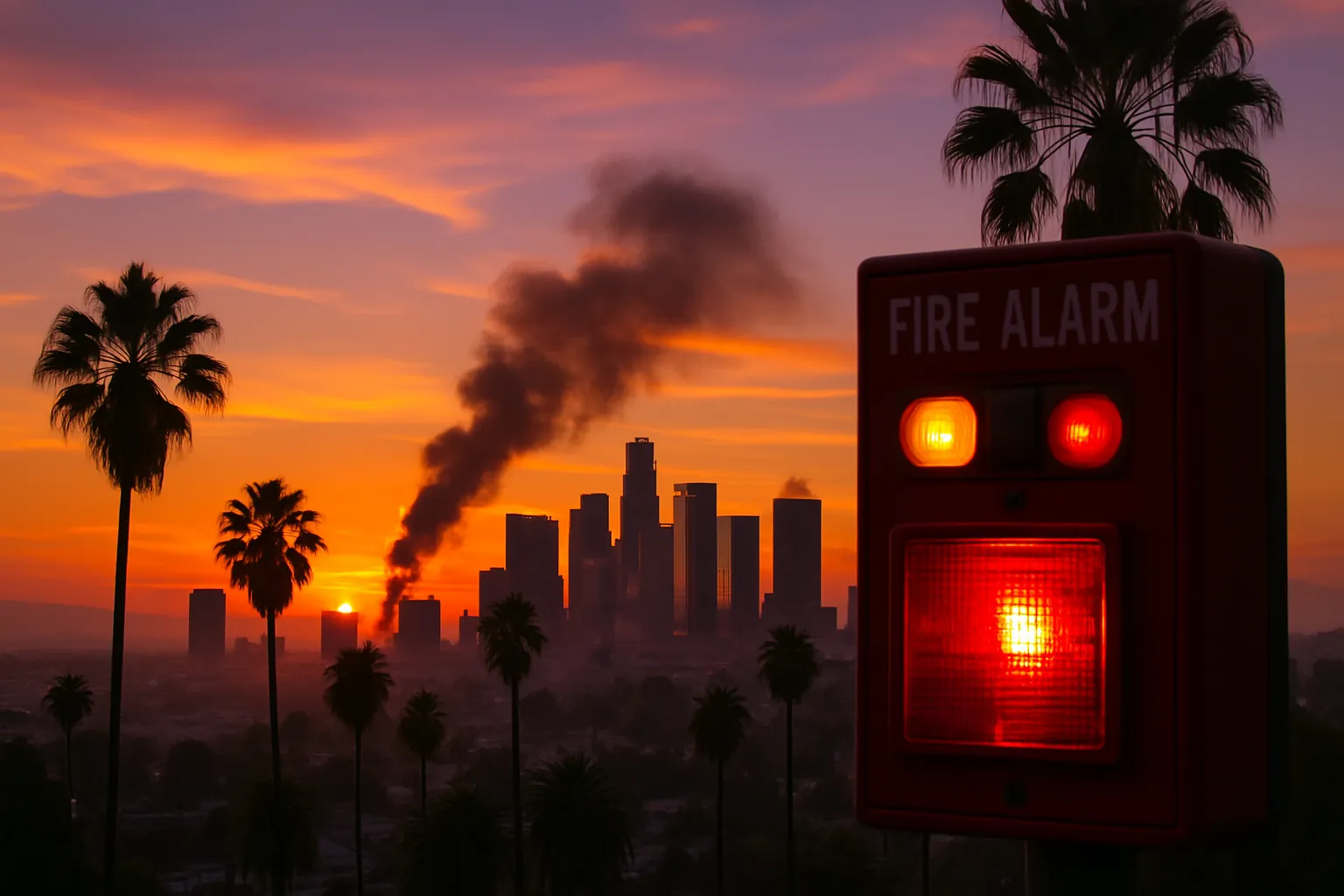
When Emergency Becomes Chaos: The Kenneth Fire Alert Fiasco
At 3 a.m. on a chilly January night, millions of Los Angeles County residents jolted awake as their phones erupted with blaring, official-sounding evacuation warnings. The culprit wasn’t a fast-moving wildfire devouring new neighborhoods—it was a software error. Intended for a small patch of homes near Calabasas threatened by the dangerous Kenneth Fire, the alerts ricocheted erratically across Southern California, reaching cell phones in neighborhoods up to 40 miles away. The message, repeated over and over due to cell carrier overload, stoked widespread panic and left local officials scrambling to clarify what was real—and what was a dangerous mistake.
The cascading alert failure exposed the fragile underbelly of America’s highly privatized, patchwork emergency notification system. According to a sweeping new Congressional report led by Rep. Robert Garcia, a single technical flaw within Genasys Inc.—the software company contracted by L.A. County—unleashed the confusion. Specifically, the report found that Genasys failed to upload an “evacuation area polygon” to the federal public alert platform. This omission meant the alert had no map boundary, resulting in a default transmission to nearly all 10 million cellphones in the region. And when cellphone providers became overwhelmed, they echoed these alarms again, flooding inboxes and compounding the crisis.
For Angelenos already living with the ever-present threat of fast-spreading wildfires, the false alarms were more than an annoyance. Trust—already a precious commodity in disaster-prone California—took another severe blow. Residents, unsure whom to believe, faced glaring reminders of the system’s vulnerabilities just as real emergencies grow more frequent and intense.
Anatomy of a Systemic Breakdown
A closer look reveals that this disaster was not the result of mere human error or a one-off glitch, but of entrenched systemic problems. The investigation concluded that technical flaws at Genasys weren’t caught due to insufficient oversight and a lack of clear certification standards for third-party vendors. When the system glitched, there were no guardrails or mandates ensuring precise, timely corrections. The result wasn’t just confusion, but “echo alerts”: repeated messages proliferating as carriers tried to keep up with overloaded networks.
Rep. Garcia, leading the effort for answers and action, put it bluntly: “People need to be able to trust that if there’s a natural disaster, that they’re going to get an alert and it’s going to have correct information.” The accountability vacuum allowed a technical slip to rapidly balloon into a regionwide panic. As Los Angeles County officials issued clarifications, residents in unaffected neighborhoods remained on edge, unclear if they were truly safe or if the next alert would signal a genuine threat.
“The public’s confidence in emergency warnings is essential for public safety. Without it, lives and property are put at even greater risk when the next real disaster strikes.”
This wasn’t an isolated stumble. The report points to a national patchwork where FEMA’s Integrated Public Alert and Warning System (IPAWS) relies on vendor software that’s too often poorly regulated, inconsistent, or inadequately tested. According to a Pew Research Center overview of public safety tech, the U.S. lags behind other developed nations in mandating uniform standards and robust oversight for warning systems. In Japan and South Korea, for example, government-run alerts are strictly controlled, with routine drills and consequences for failures—contrasting sharply with the market-driven approach seen in much of the U.S.
Beyond that, the investigation unearthed how unclear, generic language in these alerts deepens confusion. Messages lacked specific instructions, precise locations, and crucial time stamps. Residents in neighborhoods untouched by fire were told to “prepare to evacuate now,” an instruction both alarming and fatally vague. Harvard emergency management expert Dr. Angela Forras notes, “People are wired to heed clear, specific warnings—but vague, mass alerts lead to skepticism and eventually, apathy.”
The Path Forward: Reform, Regulation, and Restoring Trust
The Congressional critique didn’t just diagnose problems—it issued a suite of pointed recommendations designed to force a reckoning. Beyond fixing the software bug that initially caused the chaos, the report prescribes fundamental reform: increased federal funding for updated technology, enhanced training, and comprehensive maintenance of the national alert infrastructure. It calls for the Federal Communications Commission (FCC) to establish minimum performance standards, for the creation of third-party certification programs, and for more robust, ongoing federal oversight of any private vendor tasked with issuing emergency alerts.
Lawmakers are urging Congress to allocate more resources to FEMA’s IPAWS, warning that relying on outdated technology is a recipe for future disasters. Both Rep. Garcia and a coalition of 13 Congressional representatives underscore that without federal investment and stronger standards, communities will remain vulnerable not only to fires, but to hurricanes, shootings, earthquakes, and other sudden crises.
One of the report’s more practical recommendations: require that every alert contain detailed maps and geo-targeted information, allowing residents to instantly determine if the warning applies to them. Specifics matter. The wording, as well as the timing and delivery of each alert, must be scrutinized and standardized. Proper training for both software providers and local officials will ensure that technology serves—not betrays—the public’s trust.
What’s at stake here isn’t technical minutiae—it’s the basic social contract. When government outsources vital emergency duties to private firms without robust accountability, it’s inevitably everyday people who pay the price. In an age of climate change-driven mega-fires and extreme weather, emergency alert reform is no mere bureaucratic exercise; it’s an urgent need for public safety and collective well-being.
The Kenneth Fire debacle stands as a hard lesson. A community’s trust, once lost, is painstaking to rebuild—but ignoring these warnings courts even greater tragedy. Now is the time to demand a resilient, equitable warning system that serves everyone, no matter where they live or which phone carrier they use. That’s not just good policy. It’s basic dignity, safety, and preparation for the world we actually inhabit.
