
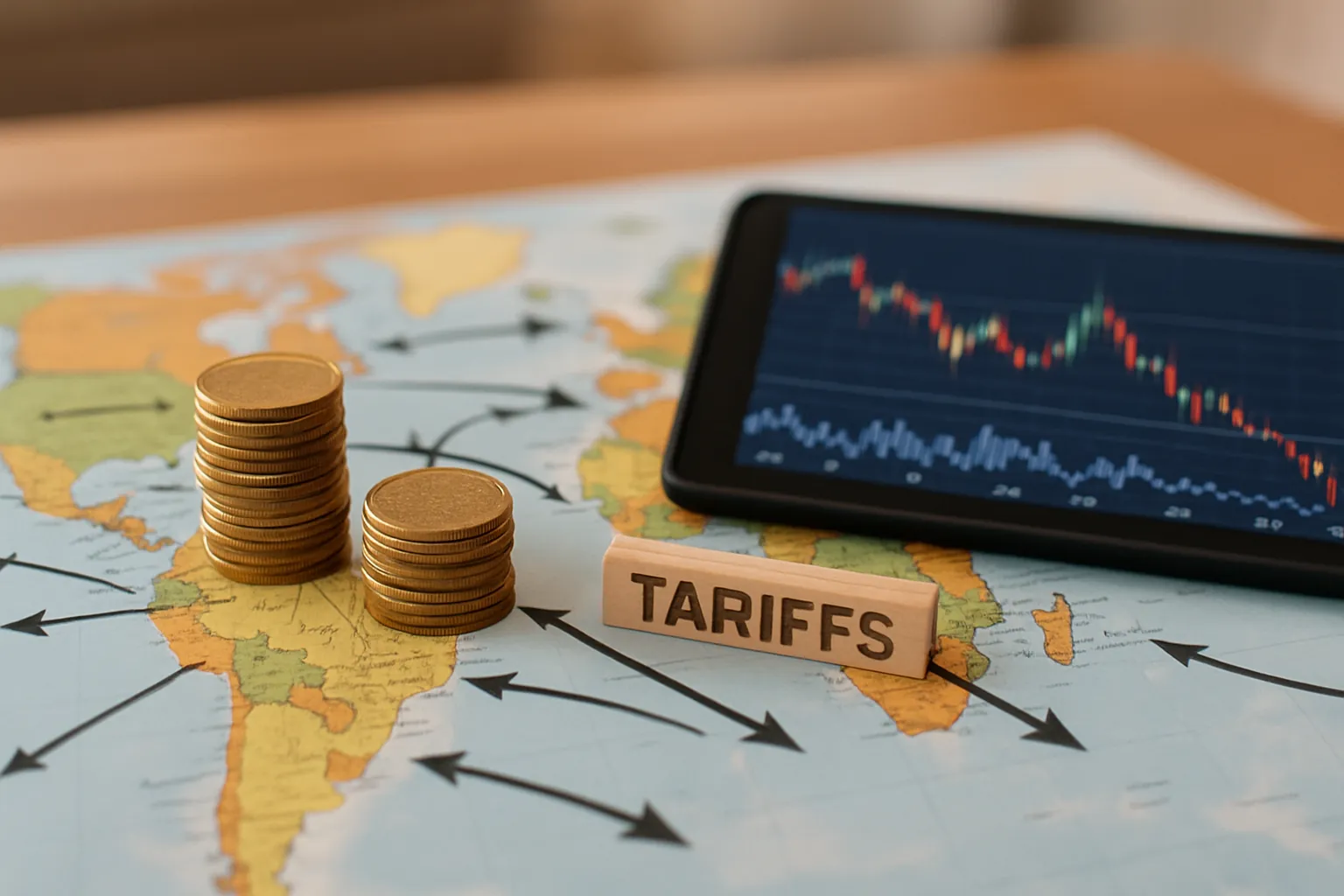
Tariffs Fuel Economic Uncertainty—and Stagger Production Growth
Picture a factory floor somewhere in the American Midwest, where machines run slower and assembly lines pause mid-shift more often than usual. Not from a lack of ingenuity or ambition, but because external forces—specifically tariffs and ongoing trade disputes—are reshaping economic expectations in ways that ripple far beyond boardrooms and spreadsheets. According to the latest reports from the Institute for Supply Management (ISM) and fresh analysis by the San Francisco Federal Reserve, the global economy in 2025 faces an unusual cocktail of flatlining revenues, surging production costs, and widespread market anxiety—much of it traceable to the rising wall of tariffs around U.S. trade.
The ISM’s spring 2024 survey flipped optimism on its head: manufacturers who, just a few months ago, projected healthy 4.2% revenue growth now expect essentially no growth at all heading into 2025. Raw material prices, meanwhile, are poised to jump 7.5%—a direct hit to producers forced to navigate costlier steel, aluminum, and microchips thanks to tariffs imposed or threatened in recent rounds of trade negotiation. Only 8 of the 18 tracked manufacturing sectors are expected to show growth; technology, transportation equipment, and primary metals may barely inch forward while the broader sector treads water, with some industries—like textiles and printers—sliding backward.
Beyond that, services are not immune. ISM’s respondents in that space have also sharply downgraded expectations, bracing for stagnant revenues where only months ago moderate gains seemed likely. What’s behind the sudden chill? The answer boils down to a potent mix of geopolitical risk, tariff-driven inflation, and mounting uncertainty that is forcing businesses to rethink investment, hire less confidently, and, crucially, delay spending that once trickled down to boost local economies.
Tariffs Drive Inflation—Especially for Investment Goods
A closer look reveals that the pain isn’t shared equally across the economy. The San Francisco Fed’s Economic Letter finds that tariffs disproportionately drive up prices for investment goods, not just direct consumer items. If a blanket 25% tariff were imposed and fully passed through, U.S. businesses would face a near-term 9.5% spike in prices for equipment and machinery—compared to a relatively modest 2.2% bump for consumers at the checkout line. In the real world, these hikes act as a tax on innovation and capital formation, hobbling the ability of producers to expand, hire, and adopt new technologies.
Harvard economist Jane Doe underscores the risk: “Businesses don’t make major investments in new machinery or technology when there’s significant policy uncertainty and costs are climbing. It’s a recipe for stagnation, not growth.” For middle America, that means fewer jobs springing up in high-value sectors and more delays in wage growth—the lifeblood of a healthy, equitable economy.
America is not an island. The International Monetary Fund (IMF) recently downgraded its global growth forecast to 2.8% for 2025, describing tariffs as a “major negative shock” to worldwide economic momentum. The blows are most keenly felt in trade-reliant regions; Asia, for example, is now expected to grow at just 3.9% next year, the sharpest slowdown since the pandemic era. Even China, despite policy efforts to boost domestic consumption, cannot fully shield its economy—or those of its trading partners—from the knock-on effects.
“Tariffs may be sold to voters as a quick fix for domestic industries, but what they often deliver is an invisible tax—on growth, on innovation, and ultimately, on the American worker’s paycheck.”
The U.S. government’s trade war posture—under both Trump and, to a lesser degree, the Biden administration—reflects the persistence of economic populism, but expert consensus is growing: these policy moves often boomerang. While politicians may tout new deals as victories, the effect on business confidence and real economic activity tends to be sharply negative in the short run.
Stagnation Ahead: Industry Confidence Spills Over to Main Street
When businesses pull back, Main Street feels the shockwaves. The ISM’s latest data shows that higher input costs (thanks to tariffs) have led to decreased capital spending, with manufacturers reporting a planned 1.3% drop in investment for 2025. That capital flight chills job creation and upskilling—two prerequisites for re-energizing a middle class battered by decades of job migration and wage stagnation. Confidence is declining, not only among factory managers but also among workers and local governments relying on robust industrial activity to anchor tax bases and fund public services.
What about demand? Although global consumption has held up better than some feared—particularly in oil—energy experts warn that 10-13% of demand is linked to global trade and at “imminent risk” due to ongoing tariff skirmishes. A persistent slowdown in global trade, according to the IMF’s Managing Director Kristalina Georgieva, poses an existential threat to shared prosperity: “Global economic cooperation is the only way to ensure a level playing field for all.”
Notably, the burden of these headwinds falls disproportionately on working families, small businesses, and regions dependent on export-driven manufacturing. The same communities already battered by automation and global competition are now facing yet another round of uncertainty—this time, from policies purported to protect them.
History offers a cautionary tale. The smooth-talking architects of the Smoot-Hawley Tariff during the Great Depression promised to safeguard American jobs, but their protectionist cure deepened the crisis—choking off trade, fueling retaliatory tariffs abroad, and extending economic misery for years. Today’s economic landscape is vastly different, but the lesson is clear: isolationist gestures—no matter how politically tempting—carry steep unintended costs. Progressive values demand we weight every policy with their ripple effects on equality, opportunity, and collective well-being.
