
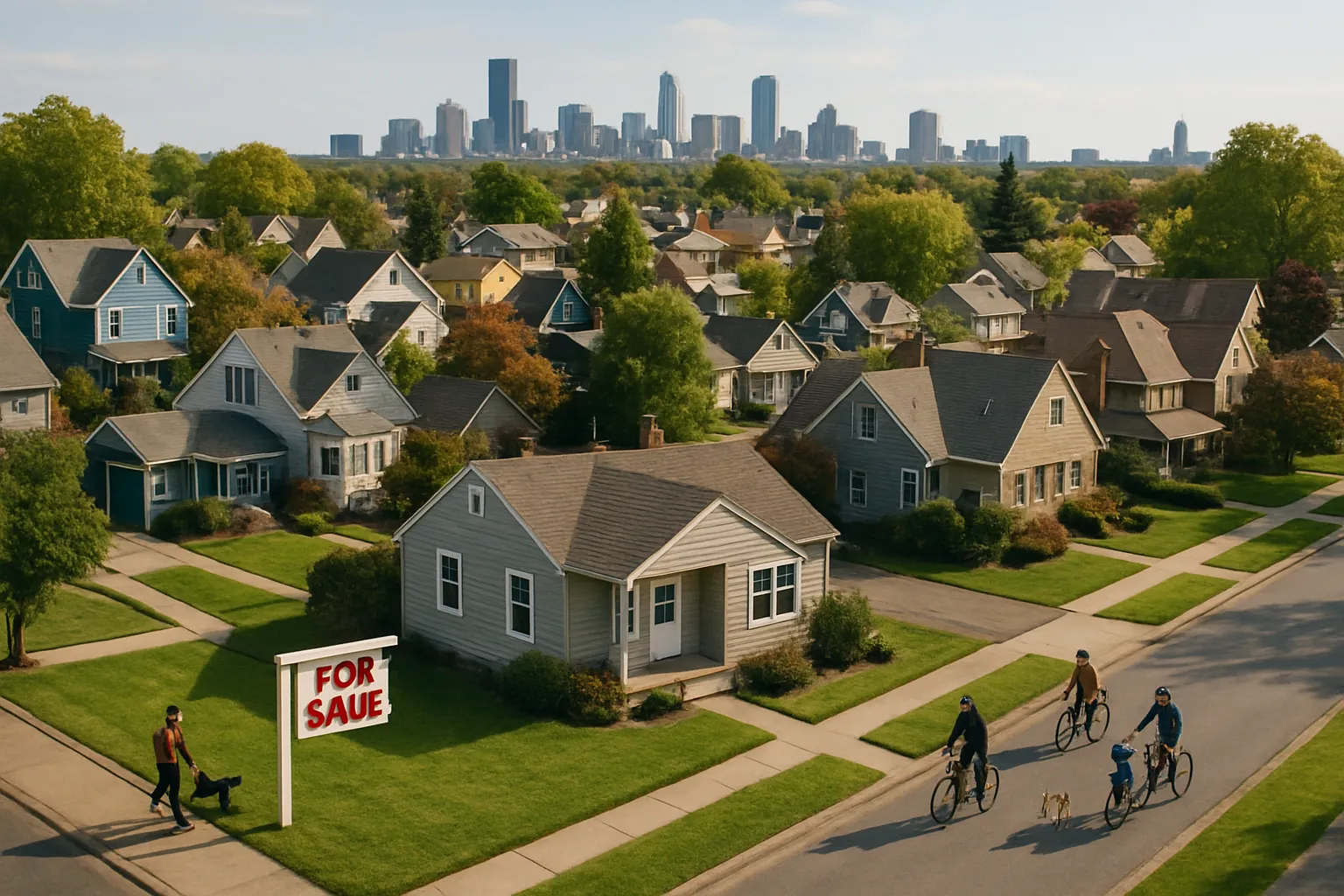
The New Reality: Middle-Income Homebuyers Struggling
Imagine earning a combined six-figure salary in America and yet waiting anxiously for months just to secure a modest two-bedroom home. Public school teachers Julia and Scott Whitnall, whose shared income of $140,000 sits comfortably above the national median, did not expect homeownership to feel so out of reach. Their story is emblematic of a much larger, nationwide crisis: Middle-income earners are increasingly priced out of the American dream, forced into bidding wars, grueling side gigs, and settling for less house than their parents owned.
Despite earning what previous generations would consider a solid middle-class wage, the Whitnalls faced a dizzying set of barriers. High interest rates and soaring home prices meant even their sizable salaries weren’t enough to guarantee access to an affordable home. Their two-bedroom, $509,000 house in Ripon, California, was only possible because they worked extra shifts at summer camps, accepted a long search, and made personal sacrifices—the kind of hurdles that now define the moderate-income buyer’s experience.
The affordability gap in housing isn’t just a coastal elite problem—it’s woven into the fabric of communities across the country. The latest National Association of Realtors (NAR) and Realtor.com reports lay bare a stubborn truth: Middle-income households—those earning between $75,000 and $100,000—can afford only about 21% of homes currently on the market. That’s barely one in five. As recently as 2019, nearly half of homes fell within reach for these buyers. The shift is not a minor market fluctuation; it’s a reshaping of who gets to own property in America at all.
Barriers Beyond Supply: The Fallacy of “More Homes”
A glance at national headlines might suggest relief is on the horizon—a 20% surge in homes for sale across the U.S. this year seems to promise good news. But a closer look reveals the darker side: many of these homes are still priced far beyond what teachers, nurses, and skilled tradespeople can comfortably afford. According to data from the NAR, markets like California, Hawaii, Idaho, Massachusetts, and Montana present the starkest challenges, with middle-income buyers able to afford fewer than 12% of available houses.
High interest rates layer onto high sticker prices, compounding the squeeze. As Harvard economist Eric Belsky notes, “Rising rates mean buyers are not only contending with expensive listings, but also with mortgage payments that eat up a bigger share of take-home pay.” For many, this renders a decent starter home unattainable—despite what conservative talking points might say about “just building more.”
The well-worn claims that reducing regulations or opening more rural land to development will alone solve the crisis stand on shaky ground. Without policy interventions to incentivize affordable construction and rein in speculative investors, the market continues to serve higher-end buyers and corporate landlords at the expense of working and middle-class Americans.
A Brookings Institution analysis warns that “simply increasing supply without controls on affordability risks worsening the exclusion of moderate buyers.” The Whitnalls’ story is not anomalous but increasingly representative: they, like so many others, managed to become homeowners only by stretching the bounds of financial prudence and personal resilience.
“Our friends call us lucky,” Julia Whitnall confided, “but if luck means two teachers working side hustles just to buy a tiny house in a working-class town, then something is deeply broken.”
The Progressive Path: Policy Solutions and the Road Ahead
Liberal policymakers have repeatedly called out the structural failings driving this affordability disaster. Emergency measures—like temporary interest rate buydowns or modest tax credits—have offered little more than short-term relief. The NAR estimates the U.S. housing market needs at least 416,000 more homes priced at or below $255,000 to close the affordability gap. But just how realistic is that target without aggressive, equity-focused intervention?
Real change requires facing uncomfortable facts about wealth distribution, zoning, and corporate influence. Local governments must update exclusionary zoning laws that place artificial limits on affordable multifamily development. Federal and state incentives for first-time and moderate-income buyers can help, but only if paired with regulatory action that demands a true pipeline of homes at attainable prices.
Progressive leaders point to successful pilots across the country—cities like Minneapolis and Portland have eliminated single-family zoning in some districts, opening the door to “missing middle” housing. Initial results are promising: a wider array of options for buyers, a moderation of price growth, and *less gatekeeping* by NIMBY interests.
The balance of power also matters. Corporations and hedge funds have snapped up a growing share of America’s housing stock, often outbidding families and turning homes into rentals. Senator Elizabeth Warren has pressed for a national antitrust investigation into these practices, warning, “Our economy cannot thrive when families must compete with Wall Street for the keys to a decent home.” According to a 2023 Pew Research study, 70% of Americans now say affordable housing should be a top government priority—a rare point of consensus across party lines.
What can you do if you’re facing similar struggles? Get informed about candidates’ housing platforms, advocate for local zoning reform, and support legislation that places families—not corporate profits—at the center of housing policy. Collective action, paired with thoughtful, data-driven reform, can shift the odds back to favor middle-income Americans who have long played by the rules.
These are not abstract debates: they’re the details that decide whether a teacher, nurse, or tradesperson can secure a foothold in the very community they serve. The right to a safe, stable, and affordable home should not feel like a lottery jackpot. It’s a foundation of a just and thriving democracy—a goal worth fighting for, not just for the Whitnalls, but for millions of Americans quietly wondering if the door to homeownership is closing for good.
