
A Fiery Assault Ignites National Alarm
On an otherwise peaceful afternoon at Boulder, Colorado’s Pearl Street Mall, what began as a gathering in solidarity with Israeli hostages ended in horror. Witnesses describe frantic chaos as Mohamed Sabry Soliman, a 45-year-old Egyptian asylum seeker, unleashed a makeshift incendiary device on the crowd, shouting “Free Palestine” as flames erupted. At least eight people suffered burns, their injuries a physical testament to a growing climate of fear for Jewish Americans nationwide.
Shavuot—a cherished Jewish holiday marking the receiving of the Torah—had just begun, lending the attack a doubly disturbing resonance. What does it mean for American Jews that a religious celebration is now shadowed by threats of violence? Security footage, social media posts, and interviews paint a picture of an attack that was chillingly premeditated; authorities discovered online messages from Soliman alluding to plans to “end Zionists.” The FBI quickly classified the incident as an act of terrorism, and Soliman now sits in Boulder County Jail as the investigation unfolds.
It would be easy—and perhaps comforting—for those not directly affected to see Boulder’s trauma as an isolated event. Jewish communities, though, read it as a disturbing link in a chain of mounting antisemitic violence. According to the Anti-Defamation League (ADL), antisemitic incidents in the United States reached historic highs in 2023, the worst year since the ADL began tracking in 1979 (ADL, 2024 Annual Audit). Why does this hate persist, and what is being done to stem its rise?
Heightened Security—and Familiar Fears
Across the country, reaction was swift and sobering. The NYPD announced an immediate increase in police presence at Jewish houses of worship and community sites. Nassau and Suffolk counties on Long Island, the Hudson Valley, and even cities as far away as Toronto scrambled to deploy officers, citing “an abundance of caution” as the Jewish community grappled with the attack’s emotional aftermath.
Mayor Eric Adams declared that New York would not be intimidated by hate, deploying heavy weapons teams and high-visibility patrols outside synagogues and Jewish centers—measures that were both reassuring and a stark reminder of the era we inhabit. For many older Jews, the sight of armed guards at temples evokes dark memories of another time and place, a somber echo of Europe’s past now resurfacing on American streets.
A closer look reveals this Boulder tragedy was not unique. Less than two weeks before, two Israeli Embassy staffers in Washington, D.C. fell victim to another antisemitic attack, the assailant also shouting pro-Palestinian slogans on arrest. These attacks, linked by tone if not direct coordination, point to an unsettling pattern threatening not just individuals, but the fabric of America’s pluralistic promise.
“My congregants feel wounded, they feel enraged, and vulnerable and sad,” Boulder Rabbi Fred Greene told CNN, his words capturing the collective anguish—and resolve—of Jewish Americans everywhere.
Oren Segal, Senior Vice President of Counter-Extremism at the ADL, emphasizes that vigilance is crucial in an environment where public displays of faith and culture become potential targets. “Antisemitism is a threat to democracy itself,” Segal says, noting that hate crimes rarely stop at one community’s borders. Segal and other experts argue for a reinvigorated, bipartisan commitment to rooting out extremism before it takes violent hold.
A Community’s Pain—and the Call for Solidarity
Weeks before the annual Boulder Jewish Festival—an event meant to showcase joy, culture, and endurance—attendees find themselves grieving and on alert instead. Organizers have urged allies throughout Colorado and beyond to show up in visible, vocal support. “The next attack could be thwarted if lessons are learned,” notes an editorial in the Boulder Daily Camera. That lesson, echoed after every high-profile hate crime in recent years, remains as urgent as ever: Vigilance and solidarity are not optional.
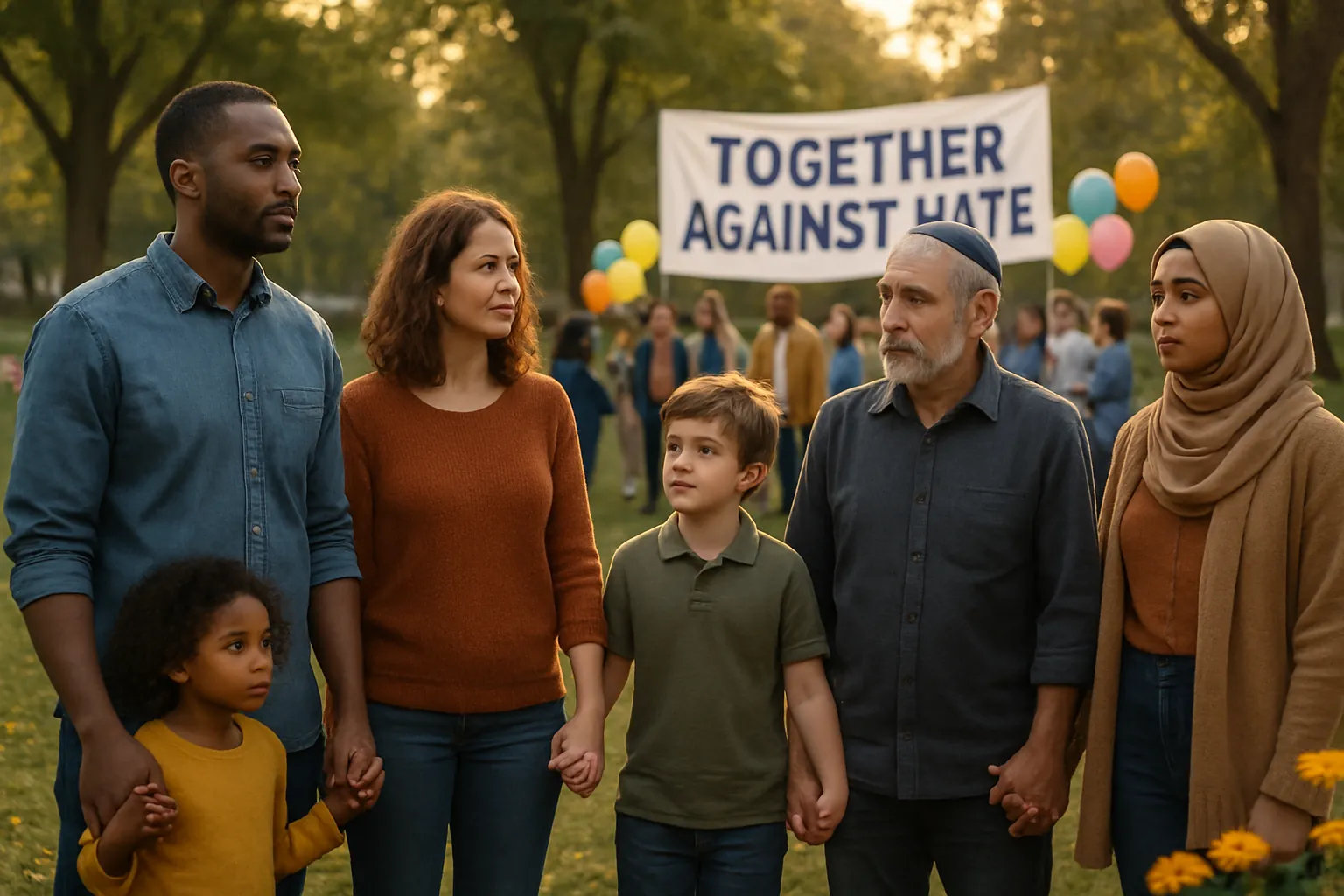
This vigilance does not mean living in fear. It means confronting the well-worn playbook of hate with a renewed commitment to collective safety, education, and allyship. Allies can take inspiration from the outpouring of support after Pittsburgh’s Tree of Life shooting in 2018, when Muslims, Christians, and people of all backgrounds formed protective circles around synagogues. That principle—of standing together against hate—is the bedrock on which free societies rest.
Political leaders, including those with progressive values, must confront the uncomfortable truth that their conservative counterparts too often downplay the threat of right-wing extremism or traffic in divisive rhetoric that emboldens hate. When a party’s base is stoked by grievance and scapegoating, the consequences are neither accidental nor isolated. According to a Pew Research Center survey in 2022, Jewish Americans are among the most targeted minority groups, and a majority believe antisemitism is getting worse. Turning a blind eye to this reality—or reducing it to a political talking point—undercuts the urgent need for systemic change.
Let’s be candid: “Thoughts and prayers” are not enough. Comprehensive hate crime legislation, coordinated law enforcement vigilance, enhanced monitoring of extremist activity online, and robust funding for community security are all essential. Most importantly, fostering empathy—through education, interfaith community building, and public condemnation of hate in all its forms—remains the surest antidote.
As the Boulder Jewish Festival approaches, let us not forget that the Jewish community’s pain is not theirs alone to bear. The soul of any democracy is measured by how fiercely it defends its minorities. As long as even one American feels unsafe practicing their faith, the promise of America remains unfinished.
