
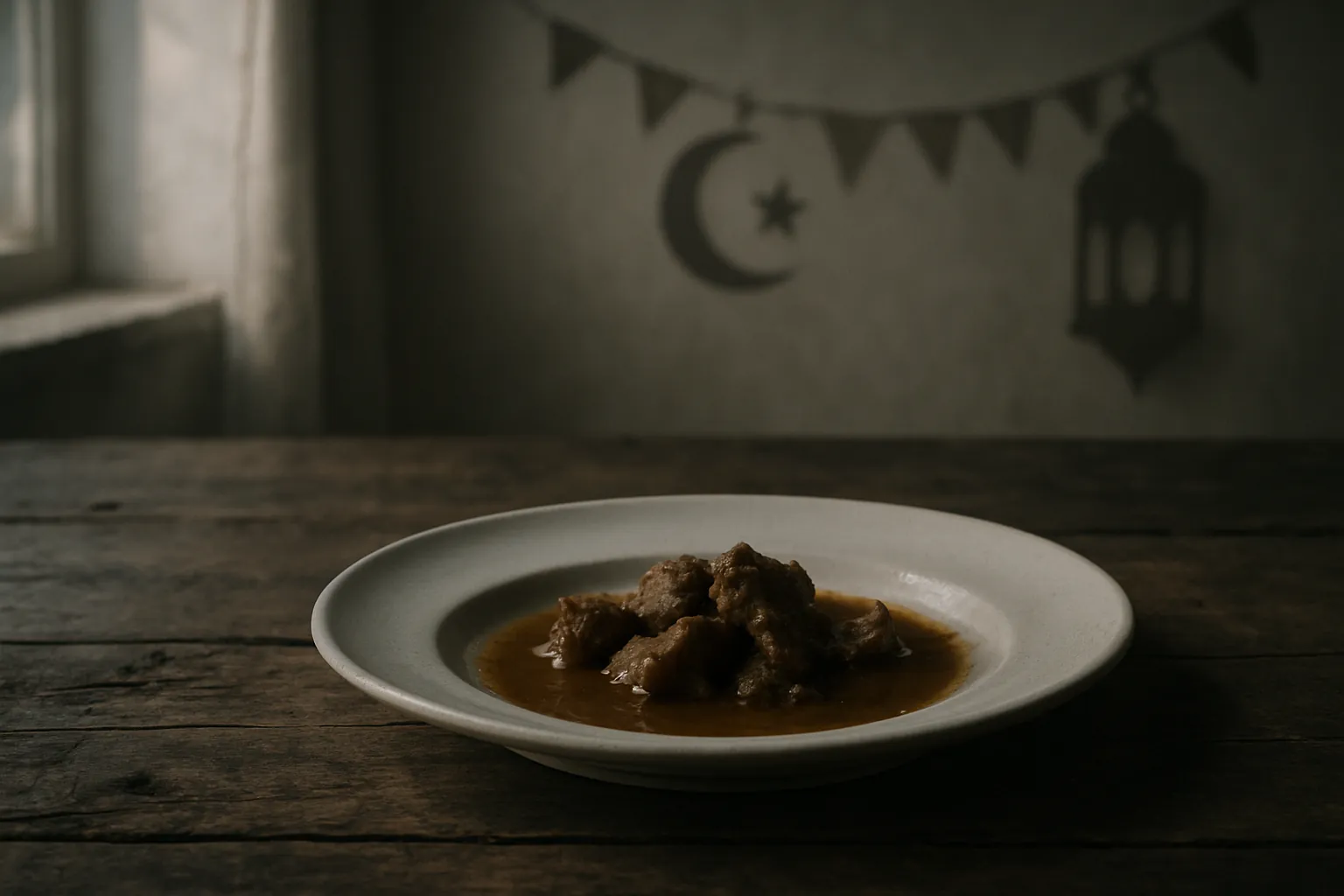
Joy Extinguished: Famine and War Darken Gaza’s Sacred Holiday
In years past, Gaza’s Eid al-Adha mornings would dawn with laughter echoing from family homes, the aroma of roasted meat wafting from bustling kitchens, and streets alive with the rhythm of life and community spirit. This year, those familiar scenes slipped into memory. Instead, Gaza is gripped by a silence broken only by the distant thunder of explosions and the quiet sorrow of its people.
For 11-year-old Imad Dib, the war orphan whose tears made local headlines, Eid now means survival. Dib lost both parents to an Israeli air strike. He sits in a cramped shelter with hundreds of others, clutching his younger sister, their faces marked with hunger and fear. “When will Eid come for us?” he asks a visiting aid worker, echoing the lament of thousands deprived not only of loved ones, but of the very rituals that have defined their faith and resilience for generations.
This year, there is no meat for sacrificial feasts. Markets that once teemed with sheep, goats, and festive treats stand empty—victims of a blockade that has drained Gaza’s resources and choked off supply lines. According to a March 2024 U.N. report, “96% of livestock and 99% of poultry in Gaza are gone, while 85% of cropland lies devastated.” Not a single shipment of sacrificial animals reached the enclave, and food prices are now measured not in shekels, but in hope and desperation.
The humanitarian situation turned grimmer on June 5th when the Gaza Humanitarian Foundation (GHF), backed by U.S. and Israeli authorities, postponed reopening critical aid centers following deadly incidents and renewed fighting near their premises. Eid al-Adha, a sacred marker of faith and charity, arrived with little food, less solace, and a lot more pain.
Aid Blocked, Justice Denied: The Political Calculus of Humanitarian Relief
Any careful observer might ask: Why are children like Imad denied even the most basic crumbs of holiday comfort? The answer isn’t simply logistics—it’s politics. The United States, a key sponsor of Israel’s military campaign, exercised its veto privilege at the U.N. Security Council in June to block a resolution demanding a ceasefire and unrestricted humanitarian access to Gaza. Israeli Prime Minister Benjamin Netanyahu thanked then-U.S. President Donald Trump for shielding Israel from international scrutiny, praising the blockade of what he called “one-sided” U.N. resolutions.
On the ground, these high-level decisions mean that tens of thousands of Gaza’s most vulnerable go without food, water, or even the means to mark a central tenet of their faith. According to Human Rights Watch, “U.S. opposition to international intervention has emboldened Israeli authorities to tighten restrictions on aid entry, contributing to famine-like conditions in northern Gaza.”
Traditional Eid foods—ka’ak, ma’amoul, and hearty communal meals—have faded into dreams as families now ration what little they possess. Many parents, haunted by guilt, admit their children have forgotten the meaning of the holiday. Mosques that once hosted Eid prayers now function as shelters for those displaced by the war. The public squares, once filled with celebratory song, now collect dust beneath the weight of loss.
“Eid used to be a time to share what little we had. Now there’s nothing to share but sorrow.” — Fatima Marouf, Gazan mother of three
War, blockade, and international paralysis have stripped away the ritual of giving—the very heart of Eid al-Adha. The holy act of distributing meat to the poor, a centuries-old tradition imbued with meaning, is now impossible in a city starved by policy and siege.
Lost Childhoods, Stolen Inheritance: Gaza’s Social Fabric Unravels
A closer look at Gaza’s predicament reveals the deeper, generational wounds of war and blockade. The scale of deprivation extracted by this conflict is staggering: estimates from UNICEF and the World Food Program suggest that nearly two million Gazans—about 85% of the population—are now internally displaced, with children comprising the vast majority. Instead of Eid presents, thousands face malnutrition, trauma, and the loss of their homes or families.
The psychological toll is just as profound. Psychologist Dr. Adel Mohanna, working with children in southern Gaza, notes, “We are treating children who have never known anything but hunger, fear, and loss. This war is stealing their sense of belonging—and their future.” The bright colors of Eid clothing have been replaced by the muted grays of rubble, and laughter has been replaced by the anxiety of survival.
Beyond that, the rupture of communal traditions threatens to unravel the social bonds that have long sustained Gazans under siege. The loss of rituals is more than just a cultural casualty; it is the erasure of memory and the weakening of identity. Each uncelebrated Eid compounds this wound, making recovery ever more distant and the prospect of peace ever more fraught.
The words of historian Rashid Khalidi are salient: “When a community is systematically denied the chance to celebrate, mourn, or gather, it further destabilizes not only families but the very idea of society itself.” Gaza’s fate is not simply a humanitarian failure—it is a warning against the normalization of despair and collective punishment masquerading as policy.
Must the world accept a holiday season marked by hunger and bombardment for those whose only crime is where they were born? Every year that Gaza is denied relief erodes the moral foundations of international law—and undermines the shared values of justice and compassion.
