
The Echoes of Resistance: Veterans, Community Leaders, and the ‘No Kings’ Movement
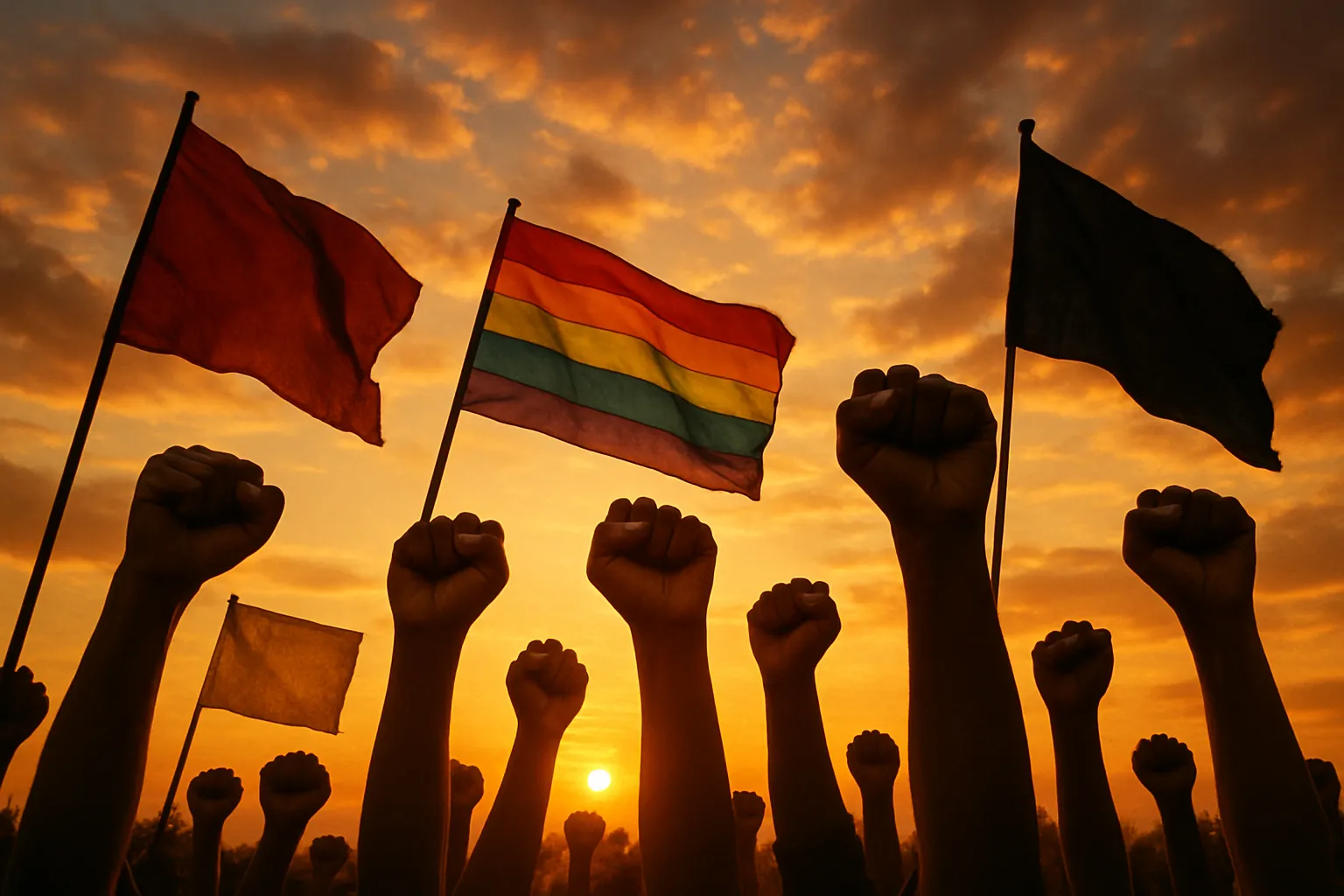
On a recent June weekend, thousands of Americans—from Anchorage to Huntsville to the very steps of the U.S. Capitol—took to the streets under a banner proclaiming a centuries-old warning: There will be no kings in America. On the periphery of a $45 million military parade in Washington, D.C., commemorating both the 250th anniversary of the Army and former President Donald Trump’s birthday, faith leaders, military veterans, and everyday citizens gathered in solidarity to protest what they saw as creeping authoritarianism and misplaced national priorities.
It’s difficult to ignore the symbolism in the moment. As fighter jets roared above Constitution Avenue and armored vehicles rolled past the Lincoln Memorial, more than 100 pro-democracy groups united in calling for realignment: away from martial spectacle and toward the foundational pillars of democracy—equal justice, transparency, and the rule of law.
One vivid scene unfolded outside the Supreme Court and later the U.S. Capitol, where roughly sixty veterans and their families initiated a sit-in, undeterred by a wall of police bike racks or by the threat of arrest. These veterans weren’t seeking spectacle or glory for themselves. Their message, according to organizers from About Face: Veterans Against the War and Veterans for Peace, was plain: Stop spending billions on displays of force when so many veterans—and countless other Americans—suffer without basic necessities like housing, healthcare, and food security.
“We are here because democracy is not a parade. It’s not who can flex the most muscle,” said Vietnam-era Air Force veteran Vernon Headrick as he was led away in handcuffs, his walker rattling on the marble steps. Their act of civil disobedience, repeated in city after city under the rallying cry “No Kings,” lent urgency to a growing sense among progressives that the America they know is in the crosshairs of authoritarian ambition.
Diverse Voices, Shared Warnings: Defending Democracy from Coast to Coast
Beyond Washington’s streets, ‘No Kings’ rallies rippled across the nation. In Montana, more than 2,400 people crowded the state capitol’s lawn, listening as speakers, including former Governor Marc Racicot, warned how the concentration of executive power under Trump echoed the very autocracies that America’s founders fought to avoid. “Presidents aren’t monarchs. They are public servants,” Racicot reminded the crowd, drawing knowing applause from both sides of the political spectrum.
In Anchorage, Alaska, the protest drew an unusually broad coalition: Republicans, pastors, veterans, and newcomers to activism. Their motivations were as varied as their backgrounds, yet united by a common anxiety over recent events. Immigration crackdowns, exemplified by the arrest and out-of-state detention of 42 individuals by ICE, drove home for many that Trump’s deployment of law enforcement and the military threatened constitutional norms regarding due process and civil liberties. Methodist Pastor David Barnhart, leading a prayer circle amid the rally, invoked values of compassion and justice, reminding all present that Christian teaching “demands we care for strangers and protect the vulnerable.”
A closer look reveals that the protest’s message transcended partisan lines. According to political scientist Amanda Hollis-Brusky, movements like ‘No Kings’ have tapped into longstanding American discomfort with unchecked executive power. “A parade is not just a celebration. It’s a signal of power—and sometimes, its misuse,” she remarked to NPR.
“This is what democracy looks like—not in the firepower on display, but in the willingness of ordinary people to stand up, speak out, and demand better from their leaders.”
Protest organizers underscored their commitment to nonviolence, even as the threat of state power hung over the proceedings. In Fairfax, Virginia, despite ICE threats and a history of agitation against immigrants in the region, hundreds protested peacefully, echoing the ‘No Kings’ mantra and demanding fair, humane treatment for all—especially the most vulnerable.
The High Cost of Spectacle and the Rising Price of Silence
The juxtaposition could not have been starker. As tanks traversed Pennsylvania Avenue and spectators cheered, protesters decried the wasteful spectacle—an estimated $25-45 million spent to fete not only the Army’s history but the ego of a single president. Economists like Harvard’s Linda Bilmes have long warned that such displays siphon public funds from more urgent needs: shoring up the social safety net, addressing rampant homelessness (including among veterans), and investing in climate resilience.
These choices are not made in a vacuum. History brims with cautionary tales of republics shifting, almost imperceptibly, toward autocracy under the guise of national strength or unity. Yale historian Timothy Snyder, in his seminal work “On Tyranny,” writes, “The symbols of might can become the mask behind which a leader exerts unchecked authority.” The ‘No Kings’ protests force us to confront this very possibility—not merely as a matter of policy, but as a question of cultural and moral identity.
The protests also carried a warning: authoritarianism isn’t always declared overnight. Often, it is ushered in by the erosion of norms, the normalization of excessive policing, and the undermining of free expression in the name of order. When law enforcement interrupts a peaceful veterans’ sit-in—in front of the very building meant to enshrine constitutional rights—it raises urgent questions for all Americans: If not now, when do we defend our republican ideals from the temptation of a crown?
Organizers vowed to keep up pressure through the 2026 elections and beyond, urging every citizen to take seriously their own role as guardians of democracy. These moments signal hope as well as warning—proof that dissent and civic engagement remain vibrant, defiant threads in America’s national tapestry.
