
The Real Motive Behind Trump’s Vietnam Deal
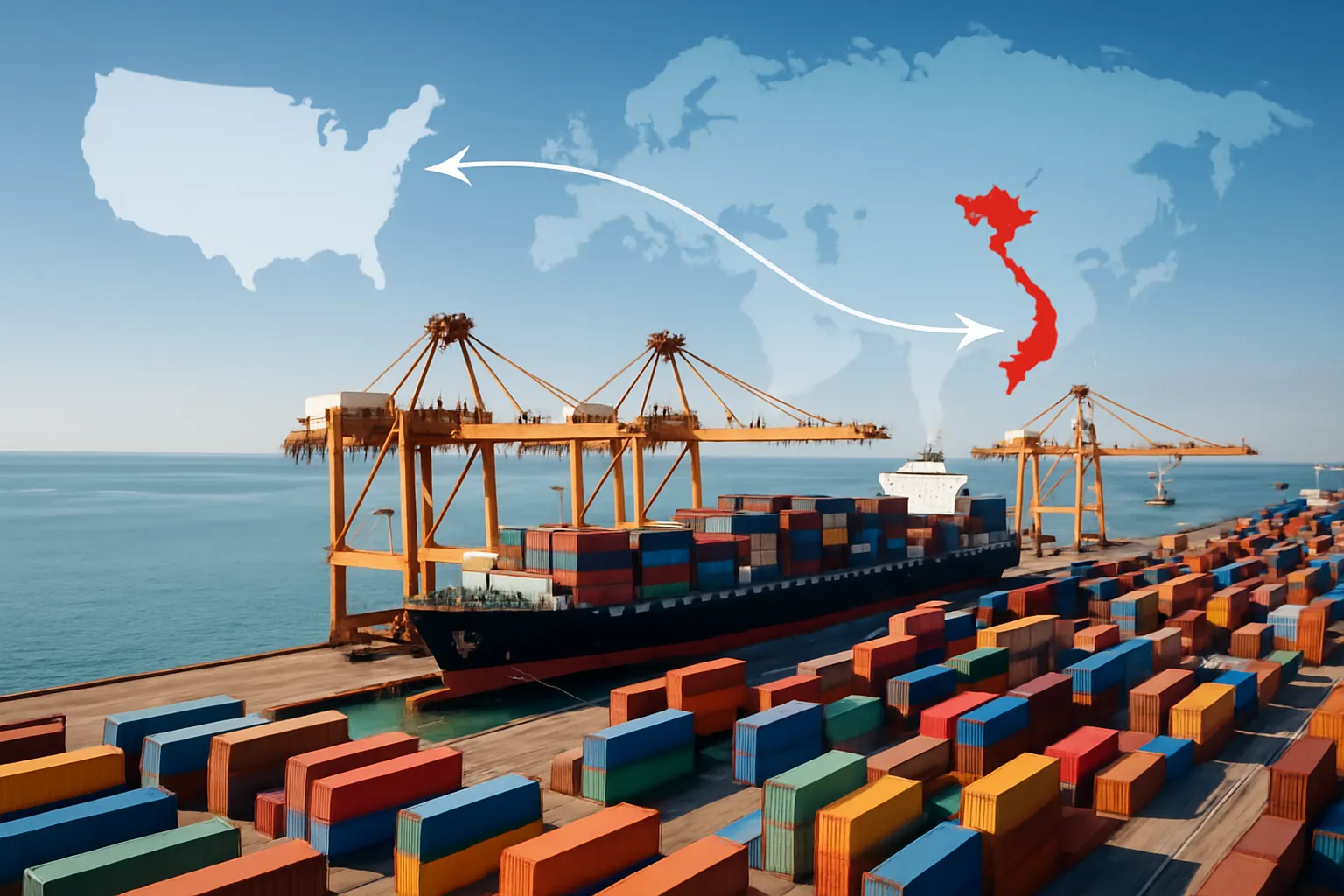
Flash back to a White House announcement that sent markets fluttering: President Donald Trump declared a breakthrough trade agreement with Vietnam, preempting a major tariff hike. The 20% tariff on Vietnamese exports—down from a previously threatened 46%—looked, at first blush, like a rare win-win diplomacy moment. Retailers with deep ties to Vietnam, from Nike to Lululemon, saw their shares pop instantly. Yet beneath the surface, this trade deal reveals the White House’s true target: not Vietnam’s modest industrial base, but the global reach of China.
According to a research note by Capital Economics, the U.S.-Vietnam deal ups the ante not just for Vietnam but for the region at large. By levying a stiff 40% penalty on “transshipped” goods—those originating in China but re-labeled in Vietnam—the Trump administration is signaling its intolerance for what trade hawks call a “backdoor” into the U.S. market. Dr. Mary Lovely, a trade expert at the Peterson Institute, commented, “The U.S. is essentially deputizing Vietnam to police its own trade flows—and by extension, those of its giant neighbor.”
Chinese exporters have notoriously routed products through Southeast Asia to skirt earlier U.S.-imposed tariffs. With this deal, Washington is attempting to slam the door on that loophole. Yet as is often the case with such reactive policy, unintended consequences may abound.
Winners and Losers: Retailers, Vietnam, and U.S. Exporters
For a fleeting moment, the biggest names in American retail sighed with relief. Nike, having warned of a nearly $1 billion tariff hit, watched its stock rebound as the deal averted harsher costs. Lululemon, Lands’ End, and On Holding—all with substantial manufacturing operations in Vietnam—benefited as well. These companies, like many in the apparel sector, migrated production from China to Vietnam over the last decade, betting on Vietnam’s lower labor costs and relative trade stability.
But dig into the details and the deal isn’t as rosy as initial headlines suggested. The 20% tariff, though lower than the former threat, still compresses Vietnamese manufacturers’ razor-thin margins. According to Michael McAdoo of the Boston Consulting Group, costs like this risk “cutting into Vietnam’s comparative advantage.” Some of those price hikes could ripple right back to your local retailer or stretch into higher price tags for American shoppers.
Vietnam, for its part, agreed to eliminate tariffs on U.S. goods and to open its market particularly for large-engine vehicles and energy products. General Secretary To Lam personally pledged to President Trump easier access for American SUVs and light trucks in Vietnam—on paper, a sizable win for U.S. automakers.
Yet a closer look reveals the disconnect between diplomatic declarations and economic reality. Vietnam’s streets are still dominated by motorbikes; according to the International Organization of Motor Vehicle Manufacturers, over 90% of vehicles on Vietnamese roads are motorcycles, with just 22 cars per 1,000 people. Structural and infrastructural challenges—limited urban road capacity, high vehicle taxes, and a cultural preference for two-wheelers—don’t disappear with a signature on a trade deal.
“For American carmakers, Vietnam isn’t the goldmine the White House imagines yet—the market, at present, just isn’t ready to absorb a flood of SUVs,” notes Harvard urban studies scholar Dr. Linh Tran.
On the energy front, the U.S. expects to ramp up liquid natural gas (LNG) exports to Vietnam, another stated aim of Trump’s team. But Vietnam’s energy mix still leans heavily on coal, and infrastructure for LNG imports is nascent at best. The oft-promised American export boom may be slower to arrive than press releases suggest.
Collateral Damage: China, Global Supply Chains, and Geopolitical Games
The Vietnam trade deal stands as a critical node in the Trump administration’s strategy to decouple global supply chains from China. There’s no mistaking the geopolitical undercurrents at play: by enlisting Vietnam as a partner and border guard against Chinese transshipment, Washington is playing a longer game aimed at undermining Beijing’s dominance in manufacturing and trade.
Yet, this approach brings both risks and contradictions. First, China is Vietnam’s largest trading partner; the two economies are deeply interlinked, with Vietnamese factories frequently reliant on Chinese raw materials. If China moves to retaliate, as economists at Capital Economics warn, Vietnam could find itself squeezed at both ends—paying U.S. tariffs on one side and facing Chinese reprisals on the other.
There’s also the question of whether such bilateral deals square with World Trade Organization rules on most-favored nation treatment and tariff uniformity. As Wendy Cutler, vice president at the Asia Society Policy Institute and a former U.S. trade negotiator, points out, “When trade policies become chess moves in a geopolitical rivalry, compliance and cooperation fall by the wayside.” The lack of clarity around enforcement mechanisms—especially for those 40% transshipment tariffs—only adds to doubts.
Beyond that, the aggressive tariff regime may set off a cascade of tit-for-tat measures regionally. U.S. trading partners are watching closely: if future deals impose similar terms, global supply chains risk greater fragmentation and volatility. These uncertainties threaten not just corporate profits but working people around the globe—especially in countries like Vietnam, where manufacturing jobs are a ticket out of poverty for millions.
Across the Pacific, U.S. progressives should ask hard questions about whose interests these deals serve. Tariffs that pad corporate profits in the short term can ripple outward, raising costs for struggling families and eroding global labor standards. If trade diplomacy is to benefit the many, not the privileged few, the next administration must make transparency, worker protections, and a climate-conscious industrial policy the cornerstones of any future agreement.
