
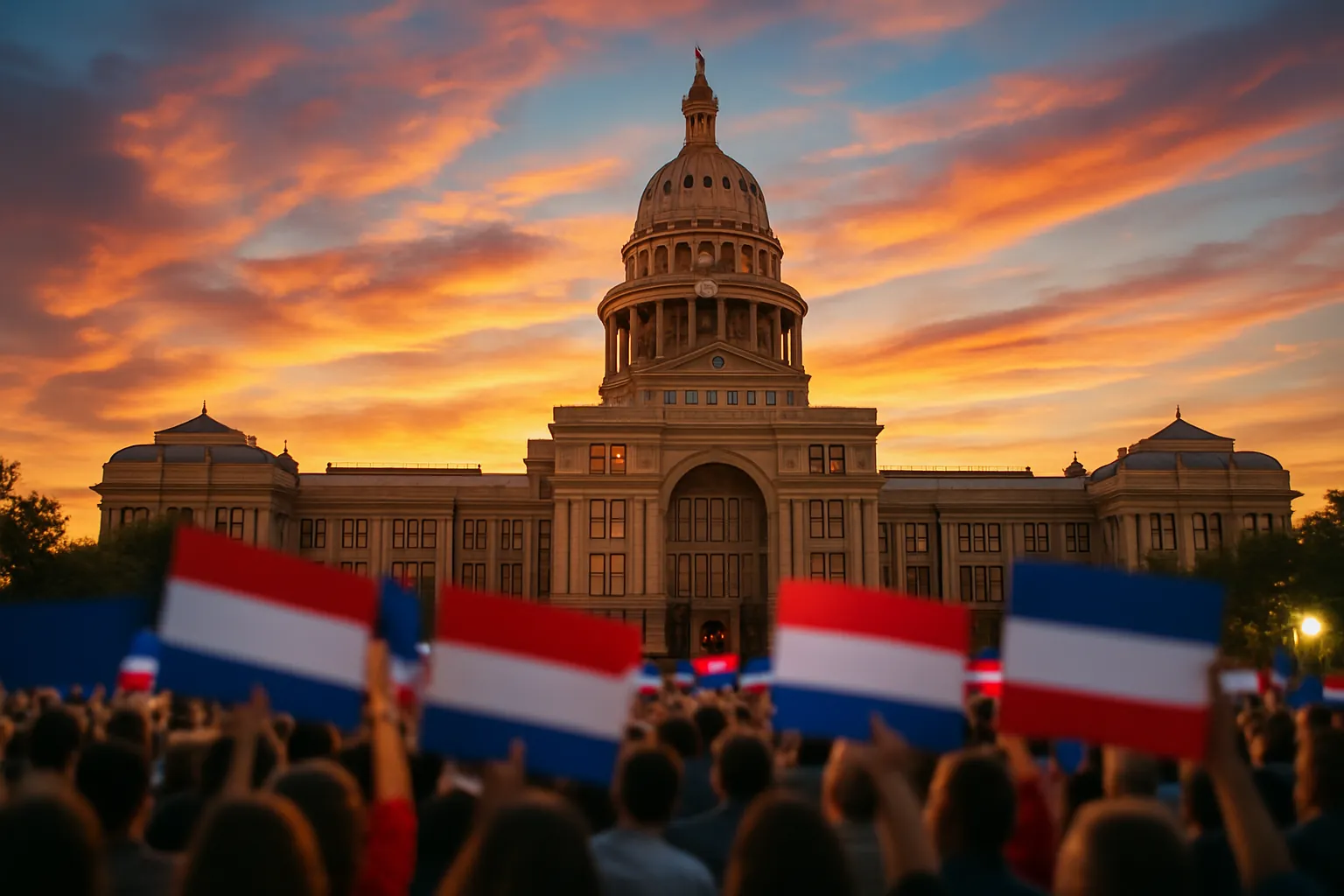
The Long Game: O’Rourke’s Relentless Push for Change
Three election defeats might break the spirit of a typical politician, but Beto O’Rourke’s endurance challenges Texas’s status quo. This weekend, O’Rourke refused to rule out a 2026 Senate bid in an interview on CNN’s “State of the Union,” saying simply, “I don’t know,” when pressed about running for Senator John Cornyn’s soon-to-be-vacant seat. But indecisiveness isn’t inaction. O’Rourke has been crisscrossing Texas, hosting town halls and listening to Texans’ frustrations, aiming to turn voter anger into a potent electoral force.
Democrats have been stymied in Texas for decades, yet O’Rourke remains “very optimistic” about the party’s prospects. He referenced the 2018 midterms, when a coalition of energized progressives shocked the establishment: twelve insurgent Democrats flipped Republican-held state House seats, and a historic slate of 17 Black women became judges in Harris County. “Transformation isn’t just possible here—it’s happened,” O’Rourke declared.
It’s no coincidence that O’Rourke points to 2018. That year, Donald Trump’s divisive midterm politics roiled the electorate, but, as O’Rourke argues, the resulting extremism may boomerang, creating consequences for Republicans in 2026 and beyond. Harvard political scientist Theda Skocpol warns, “Polarization breeds instability, but history shows the backlash to anti-democratic trends has its own momentum—even in red strongholds.” Texas may be on the cusp of such a reckoning.
Democratic Hope vs. GOP Disarray: The Texas Battleground
The Republican Party’s hold on Texas isn’t ironclad—especially now that Sen. Cornyn faces a brutal primary challenge from the scandal-plagued Attorney General Ken Paxton. Paxton, recently impeached but acquitted by the Texas Senate, has made himself a darling of Trump loyalists and far-right base voters. Polls show him leading Cornyn, a signal that the party, at least in the primary, is swinging toward its trumpiest fringe. The tension is so high that even Senator Ted Cruz is evading any endorsement—a remarkable sign of internal strife. The struggle for the GOP’s soul is no longer simmering but at full boil.
Texas Democrats, for once, see a potential opening. O’Rourke and allies cite recent wins by candidates like Rep. Colin Allred and Lizzie Pannill Fletcher, who snatched suburban seats from entrenched GOP incumbents. Voters in metro areas like Dallas and Houston, increasingly diverse and energized, have delivered electoral shocks the Republican establishment once dismissed as impossible. “The shift in these cities is undeniable,” says Rice University political historian Mark Jones. “If rural dominance erodes even slightly, the GOP firewall cracks.”
Still, the path to victory for Democrats is steep. Past efforts to turn Texas blue have stumbled over voter suppression, gerrymandering, and low turnout. O’Rourke, though, is blunt: “We’ve got to be ruthless in redistricting, the way Republicans have been for years. Playing fair when your opponent has rigged the game only locks in minority rule.” This isn’t empty rhetoric. Republicans are already signaling yet another round of congressional map manipulation that could further entrench their power—even as a new generation of Democratic leaders, from Allred to Joaquin Castro, hint at their own runs for higher office.
“Playing fair when your opponent has rigged the game only locks in minority rule.” — Beto O’Rourke
Watching the GOP fissure and Democrats mobilize, one question lingers: can Texas’s progressive coalition finally overcome the barriers engineered by its conservative rulers?
Hard Lessons and the Road Ahead
The turmoil over Texas’s Senate future is a microcosm of America’s battle for democracy writ large. O’Rourke’s strategy—organizing town halls, registering voters, holding politicians accountable—seems inspired as much by Obama-era grassroots organizing as by resistance to Trumpism. According to a 2024 Pew Research study, voter enthusiasm among Texans under 35 has ticked upward for the first time in a decade, an instructive sign that sustained outreach works—even in hostile terrain.
Expectations remain tempered, however. Texas is hardly a blank slate: Republican voter suppression efforts, ranging from strict ID laws to aggressive redistricting, will test even the most energetic Democratic surge. Still, O’Rourke’s optimism is infectious. If recent history teaches anything, it’s that political resilience matters as much as demographics or money.
Many Dems still wonder: Is O’Rourke the right messenger after a string of losses, or is his real legacy the infrastructure he’s building for the next generation of candidates? Colin Allred’s Senate campaign, for instance, drew from O’Rourke’s ground game and energized new volunteers who stuck around after the ballots were counted. “No one individual will flip Texas, but the work O’Rourke’s done is foundational,” observes Cynthia Hester, a longtime Dallas Democratic organizer.
The fault lines are clear. On one side stand those willing to gamble with democracy for short-term partisan gain—a strategy that history often judges harshly. On the other, a coalition pushing for a Texas where the electorate actually reflects its diversity and energy. Which vision prevails may hinge on whether Democrats heed O’Rourke’s challenge to be as assertive about fair representation as Republicans have been about power.
The 2026 Senate race looms as another test for America’s largest red state—this time, with outsized implications for national politics. As conservative policies increasingly limit voting rights and deepen social divides, it’s urgent for progressives, whether you live in Amarillo or Austin, to demand not just a seat at the table, but an honest deal for all Texans. The stakes, as O’Rourke makes clear, have never been higher.
