
The Promise of Access—and Its Limits
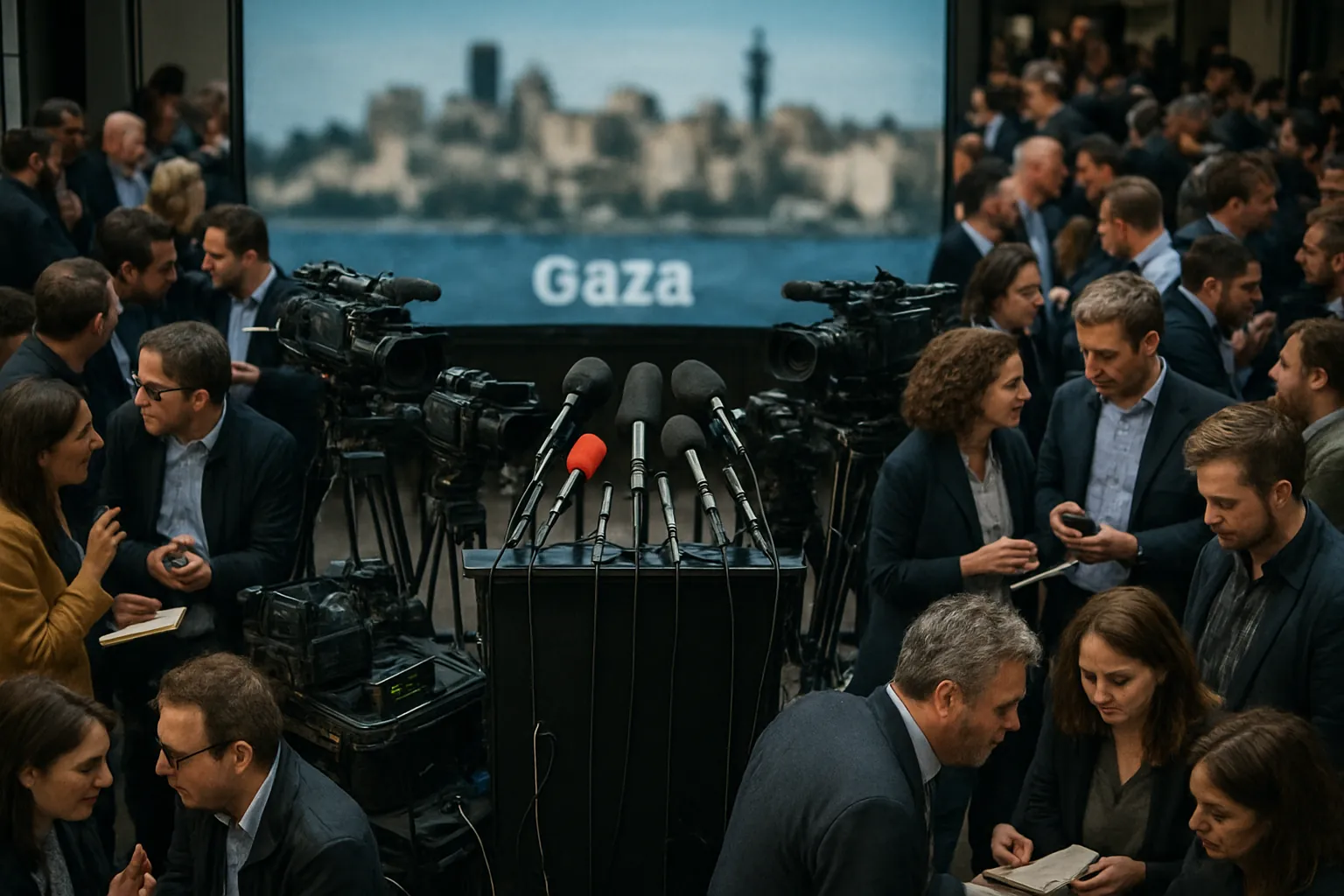
In a move framed as a step towards greater transparency, Israeli Prime Minister Benjamin Netanyahu recently announced that more foreign journalists will be allowed into the Gaza Strip alongside the military. The decision comes on the heels of mounting international criticism over restricted media access and conflicting narratives about the scale of destruction and humanitarian crisis inside Gaza. Netanyahu’s rationale: let the press see for itself—as long as it’s conducted on Israel’s terms, under security restrictions, and notably, coordinated with military oversight.
Gaza, a sliver of land now scarred by war, has seen up to 70 percent of its buildings damaged or destroyed, according to the United Nations Office for the Coordination of Humanitarian Affairs (OCHA). The devastation has cut deep into the lives of over two million residents, who remain largely voiceless amid ongoing violence and displacement. For months, foreign journalists could enter only by embedding with Israeli forces, subjected to tightly choreographed tours that left little room for independent investigation.
The Foreign Press Association (FPA) in Israel and the Palestinian Territories announced it was seeking clarification about the new policy—and with good reason. The history here is one of meticulous control. During previous conflicts, access often meant being shepherded through war zones, shown what authorities wanted seen and little else. As NPR’s Daniel Estrin reported earlier this year, “journalistic freedom on the ground has been virtually nonexistent inside Gaza since war reignited.” If this latest order really signals a shift toward openness—or if it’s just more window dressing—remains uncertain.
Spin, Censorship, and the Battle for Narrative
Netanyahu has repeatedly accused international media of “spreading Hamas propaganda,” stoking a war of narratives that has only intensified as evidence of humanitarian catastrophe mounts. The Israeli government’s message: the world must see our version of events. To critics who note the nearly total media blackout inside Gaza, such posturing rings hollow. Global news organizations like Reuters and the BBC have called repeatedly for unfettered access, arguing that accurate reporting serves both truth and the public good.
Experts in international press freedoms don’t see this as mere semantics. Sarah Leah Whitson, executive director of Democracy for the Arab World Now, warns that “managed access under armed escort is not independent reporting. It’s public relations.” A closer look reveals how such limitations can silence the stories of ordinary Palestinians—the parents searching for children in the rubble, aid workers pleading for safe passage, doctors making impossible choices.
Netanyahu claims the destruction in Gaza is chiefly due to Hamas fighters booby-trapping civilian structures, making Israeli military action not only justified but necessary for ‘de-mining’ entire neighborhoods. But reporters want to verify these claims. When every interview and photograph is monitored by military minders, how can the world trust what it sees? History offers chilling reminders. In past wars from Vietnam to Iraq, official control of the press has often meant slow revelations of civilian harm long after the shooting stops.
“When journalists cannot move freely, the stories of the vulnerable remain untold—and power goes unchecked.”
Supporters argue that Israel faces real security risks by letting journalists into active conflict zones—risks borne out by the deaths of multiple reporters and media workers in Gaza since the start of fighting. Yet blanket restrictions sweep aside the press’s fundamental role as a check on power. Without real-time, independent coverage, harmful myths flourish and accountability evaporates.
Beneath the Headlines: Political Calculus and Human Consequences
Announcing the ‘opening’ to foreign media, Netanyahu thanked former President Donald Trump for his support during the conflict. It was a symbolic nod to a trans-Atlantic alliance grounded more in political expediency than in the values of press freedom or humanitarian concern. Experts like Harvard’s Rami Khouri note that such gestures are designed more for Western audiences than for improving life on the ground for Gazans.
The reality: as of mid-2024, Gaza is a landscape of unfathomable loss. OCHA estimates place the percentage of destroyed buildings at 70-90 percent in the hardest-hit areas—Gaza City, Khan Younis, Rafah—leaving vital infrastructure decimated. Humanitarian convoys, already operating at risk, are throttled by security checkpoints and air strikes. That foreign journalists might now pierce this fog of war is cause for hope only if the access proves meaningful.
Some defenders of the policy say that Israeli media also faces dangers in war reporting, and that embedding is a necessary evil. But press freedom expert Joel Simon, writing for Columbia Journalism Review, counters that a real commitment to transparency means risking uncomfortable truths. Letting in more journalists without relaxing restrictions—without guaranteeing their safety and editorial independence—is unlikely to change the global narrative or bring the world an unvarnished view of Gaza’s agony.
Why does this matter to you, thousands of miles away? Because when press access is filtered through the lens of military interests, the foundational ideals of democracy—truth, accountability, justice—are diminished everywhere. As Senator Patrick Leahy once said, “Sunlight is the best disinfectant.” Now, more than ever, Gaza’s suffering—and how it’s covered—will test whether the world really believes that.
