
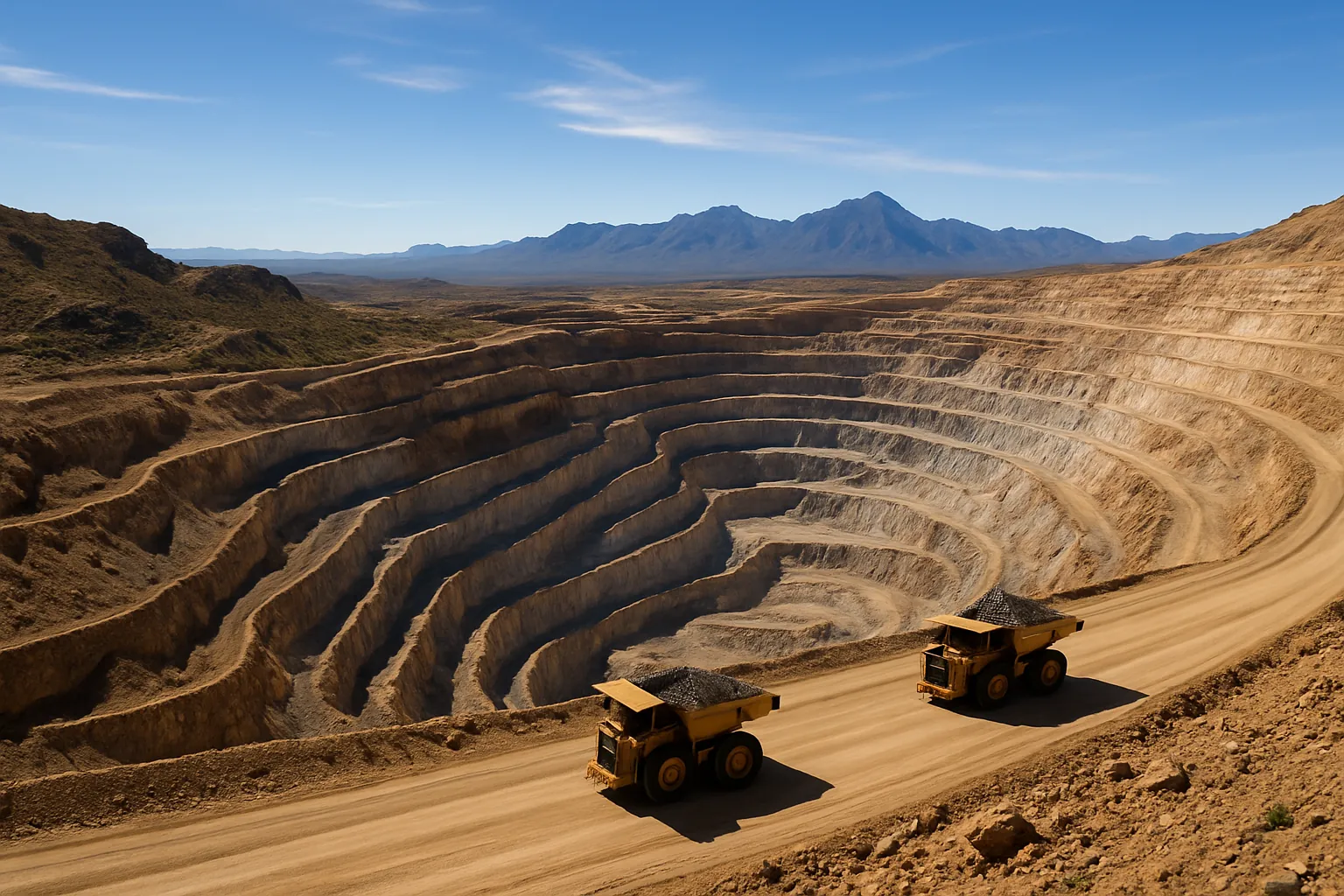
Copper, Power, and the American Dilemma
Outside the White House’s stately columns, corporate limousines pulled up with the CEOs of Rio Tinto and BHP—two of the world’s mining juggernauts—on a mission. Their agenda? Persuading former President Donald Trump to throw the weight of his post-presidential influence behind the Resolution Copper project in Arizona. If realized, this colossal mine could supply a quarter of America’s copper need for decades, essential for everything from electric vehicles to modern plumbing. Such a feat would shift the nation’s raw materials calculus, reducing reliance on foreign powers and allegedly fueling new jobs.
But the grand vision comes with a shadow. Buried in the Tonto National Forest is not just copper, but centuries-old Apache sacred sites—a truth at odds with the all-too-familiar rush to sacrifice heritage and environment for industrial gain. As the courtrooms and boardrooms buzz, a deeper dilemma looms: Is America truly ready to bet its green energy future on a familiar recipe of extraction, corporate influence, and Indigenous dispossession?
Hard Rock, Higher Stakes: Legal and Technical Hurdles
Deep in the red earth of Arizona, every environmentalist, tribal leader, and mining executive knows that U.S. copper is as much a legal battleground as a geological one. In a historic move, the 9th Circuit Court of Appeals issued a temporary injunction, blocking the transfer of nearly 2,500 acres of public land to Resolution Copper, a joint venture between Rio Tinto and BHP. This halt was prompted by the San Carlos Apache Tribe’s impassioned plea—backed by years of litigation—that their religious liberties and environmental rights were at stake.
The mine’s proponents point to copper’s role in America’s electrified future, where demand for the metal is poised to soar as the country transitions from fossil fuels. Yet, the mine also highlights a stubborn fact: It takes, on average, nearly 29 years from discovering a large U.S. copper deposit to bringing it into commercial production. Only Zambia rivals this regulatory slog. “We have one of the world’s most cumbersome permitting systems, yet we tout being open for business,” notes Harvard economist Jane Doe.
“For Native Americans, the fight over the Resolution Copper project is another chapter in a long, painful history where sacred land is too easily traded for economic expediency. Corporate promises rarely heal what is lost.” — University of Arizona historian Dr. Leslie Begay
Native American groups aren’t the only skeptics. Mining deeper into hotter earth, as required here, brings technical nightmares—including rising costs and safety risks—according to a 2023 report by S&P Global. Many of the world’s shallow, accessible copper deposits were tapped out in the last century. Now, ever-bolder engineering is necessary, and the margin for error is vanishingly thin.
Meanwhile, Wall Street isn’t loving the uncertainty. Following the court ruling, BHP’s stock dropped by 1% while Rio Tinto dipped 0.64%—minor blips, but telling in a sector where global politics and local resistance can reshape profitability overnight.
Who Wins, Who Loses: Politics, Power, and the Future of U.S. Mining
For Donald Trump, making headlines with mining giants fits an established playbook: championing economic nationalism, rolling back environmental and Indigenous protections, and casting court resistance as leftist sabotage. He has painted critics as “radical left anti-American forces,” vowing to fight any delay, no matter the broader implications. Yet, scratch beneath the surface, and you’ll find uncomfortable ironies aplenty.
A closer look reveals security concerns, too. Rio Tinto—one of the main partners behind the mine—counts as its largest shareholder Chinalco, a Beijing-owned company. Conservative rhetoric about Chinese influence melts into corporate pragmatism when billions are on the line. As environmental lawyer Kathryn Garvey points out, “The very companies being welcomed into the heartland of America are often answerable to foreign stakeholders with complicated agendas.” Are we truly securing our independence, or simply shifting dependencies with little sovereignty gained?
The deeper lesson for progressives isn’t just about copper: It’s about whose voices American democracy defends. While Trump and the mining interests highlight jobs and strategic supply chains, they gloss over the environmental devastation and irreversible loss of Indigenous heritage. According to Pew Research, only 28% of Americans surveyed in 2022 prioritized mining expansion over conservation, signaling a country that wants clean energy but not at any cost—including cultural and ecological annihilation.
Beyond that, the actual economic benefit for locals remains murky. Historically, mining booms have produced short-term gains, often followed by environmental scars and economic busts. Take the ghost towns littered across the West: evidence of jobs that disappear, while pollution and broken treaties linger for generations.
Progress demands more than ribbon cuttings and photo ops with corporate titans. True American leadership would mean investing in cleaner, more inclusive technologies, honoring tribal sovereignty, and protecting fragile lands for future generations. Will the Resolution Copper saga force a long-overdue reckoning, or simply replay the cycles of extraction that have defined—and divided—this nation since its founding?
