
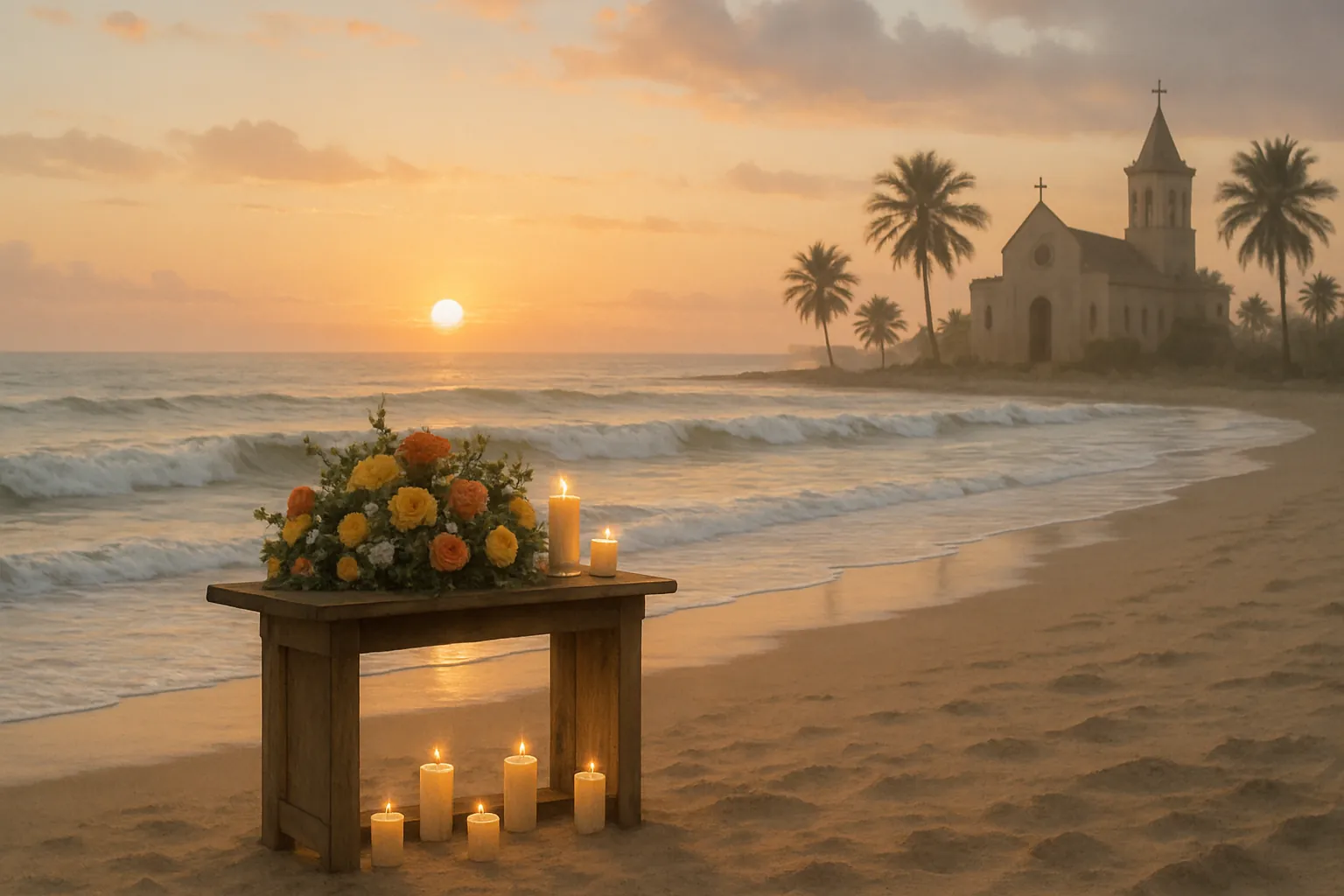
Honoring Loss, Uplifting Resilience: The Power of Community Remembrance
In the hush of the Our Lady of Fatima Parish Hall in Biloxi, Mississippi, the 20th anniversary of Hurricane Katrina was marked not just by somber silence, but by the stirring voices of survivors, faith leaders, and advocates calling for justice. This year’s memorials stretched across the Gulf Coast, spanning from New Orleans’ historic St. Louis Cathedral to Baptist churches in Baton Rouge. Through interfaith prayer services, these communities did more than commemorate a devastating hurricane—they cast a spotlight on those often left out of mainstream narratives: immigrants, workers, and families whose lives were upended and whose hands rebuilt what the storm swept away.
The trauma of Katrina lingers in physical scars and memory. Richard Sharif, a Katrina survivor, returned to his home after the waters receded and encountered a surreal scene—”fish speared on shrubs” where a neighborhood yard once flourished. This evocative detail, shared during a Baton Rouge service, underscored not just the scale of personal loss but the deep absurdity and shock that followed the storm’s onslaught.
Beyond the statistics and headlines, Katrina’s true legacy persists in the stories of those who lost everything and those who gave everything to help the Gulf Coast rise again. Gwendolyn McAfee, who journeyed from Houston back to New Orleans to honor her lost loved one, expressed, “We have a duty to celebrate the perseverance and beauty of this city, even as we grieve.” Her journey mirrors the resolve of a region determined to honor its pain—and transform it into hope.
Acknowledging the Unseen: Immigrants and Unsung Heroes of Recovery
In Biloxi, the prayer service took on a unique urgency. Hosted by El Pueblo, a nonprofit dedicated to supporting immigrants in South Mississippi, the event amplified testimonies rarely heard in public. Fears of immigration enforcement kept many from sharing their stories openly—but their voices echoed through pre-recorded messages, putting faces and feelings behind the data points. According to a study by the Migration Policy Institute, thousands of Latin American immigrants flocked to the Gulf Coast in the aftermath of Katrina, not only seeking jobs, but becoming indispensable to the region’s reconstruction.
Robert Avila, board member of El Pueblo, did not mince words when he urged the faith community to “take action against mass deportations” and to press for pathways to legal citizenship for Katrina’s immigrant workers. The stakes, he warned, were not just moral but existential. ‘There is no recovery without these hands,’ Avila said, framing both the gratitude owed and the precariousness faced by immigrants whose status remains alarmingly tentative even now.
