
The Power — and Danger — of Presidential Perception
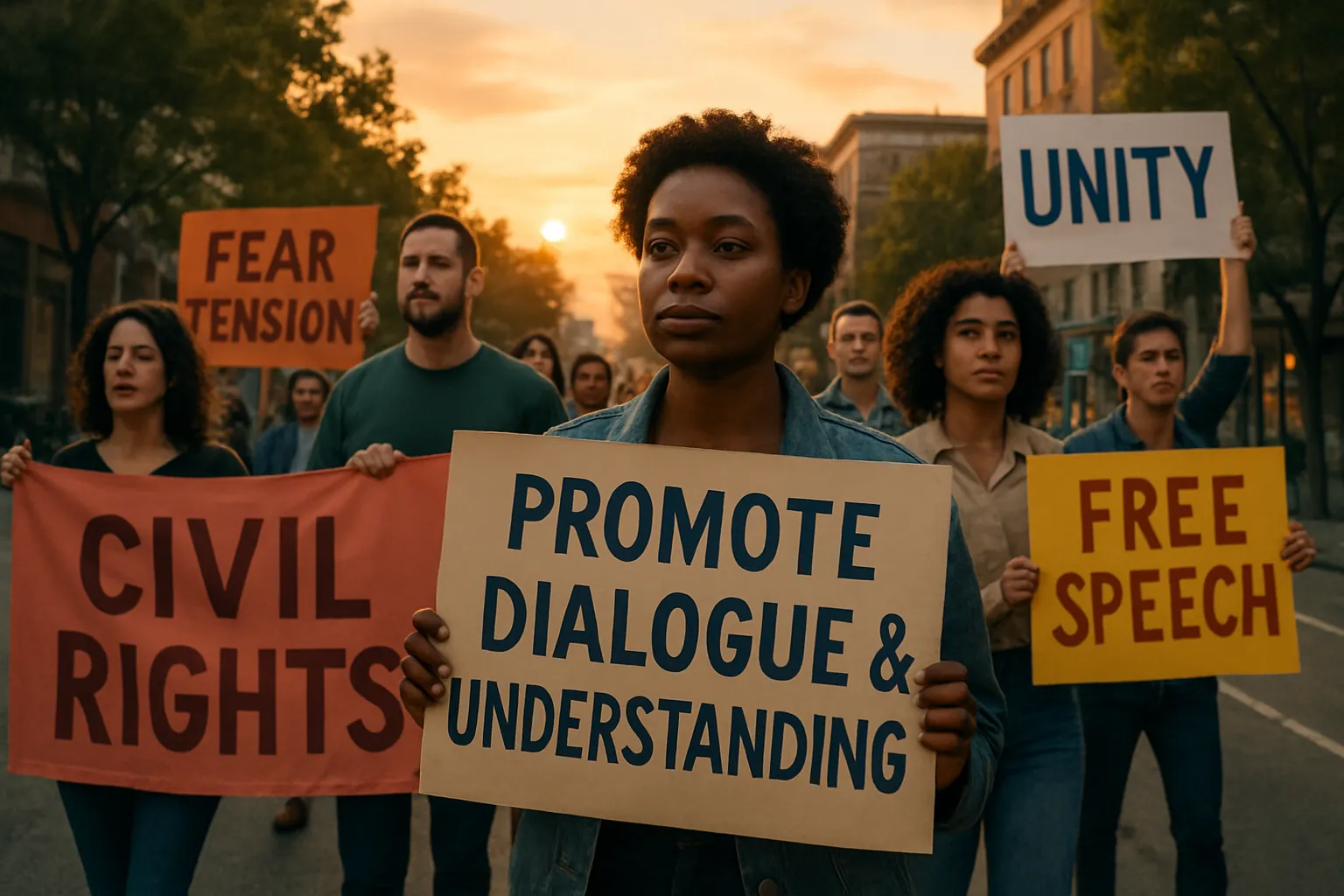
Glancing at a television segment, a president pauses. What he sees — scenes of smoke, chanting protesters, shattered glass — compels him to act. But does his perception match reality? This question looms acutely over President Donald Trump’s recent threats to deploy the National Guard to Portland, Oregon, in response to protests that, according to on-the-ground reports, have largely subsided since their 2020 peak. The answer exposes not only the chasm between political narrative and factual reality, but also the collateral damage that governmental overreach can inflict on American democracy itself.
Trump’s fixation on Portland sprang from a misleading television report — Fox News, experts have since confirmed, aired archival footage of 2020’s mass protests alongside current, much more subdued anti-ICE demonstrations, conflating the two in a way that painted the city as a war zone. As historian Timothy Snyder notes, “Control over images is control over memory — and over policy.” The president interpreted these images not as snippets of the past but as a clarion call to action, publicly calling Portland “unbelievable” and “like living in hell.”
Yet facts on the ground tell a different story. Mayor Keith Wilson made clear that Portland had not, and would not, request federal troops. The city, the mayor insisted, is committed to both public order and protest rights, balancing the safety of its communities with constitutional freedoms. Statements from Oregon’s Attorney General Dan Rayfield echoed this: the state would “respond assertively” to preserve its sovereignty.
Federal Force Versus Local Sovereignty
Deploying the National Guard domestically is not unprecedented, but it has always been fraught. Trump’s approach, relying on media sensationalism instead of local input, marks a disturbing escalation in the federal-local power struggle. In Los Angeles, roughly 300 National Guard troops linger in the city after being sent in response to immigration-related protests; a federal judge recently ruled that continuing to keep them there is illegal, given the lack of local consent (Los Angeles Times).
This pattern is familiar: the Trump administration often invokes threats of chaos, then leverages these perceptions to justify deploying federal resources — whether Border Patrol agents in Portland in 2020 or troops in Washington, D.C. after the George Floyd protests. The resulting scenes — camouflage uniforms, military vehicles in city streets, and heavily armed responses — are meant to evoke order but often deepen division. Civil liberties organizations, such as the ACLU, stress that such deployments militarize protest, stoking fear rather than reducing violence.
Why attempt federal intervention in cities like Portland, Chicago, or Baltimore? The answer, in part, is political theater directed at a base hungry for “law and order” messaging. Trump’s rhetoric about “paid terrorists” and “professional agitators” — a claim with little credible evidence — plays into old tropes of othering dissent, linking protest to criminality, and casting progressive movements as existential threats. Harvard sociologist Vanessa Williamson explains, “Such language is used strategically to delegitimize organic grassroots activism and construct an enemy within.”
“Control over images is control over memory — and over policy.” — Historian Timothy Snyder
If New Orleans, recently mentioned by Trump, sees National Guard deployment, it could be partly because its Republican governor, Jeff Landry, requested federal help. In contrast, Portland’s officials have categorically rejected such intervention, underscoring a core principle: local communities know best how to address their own challenges.
Troubling Parallels and the Cost to Democracy
History offers sobering lessons about the dangers of blurring the lines between protest response and outright military action. In 1968, President Lyndon B. Johnson reluctantly used federal troops to quell unrest after Martin Luther King Jr.’s assassination. Even then, such moves were met with anxiety and accusations of federal overreach. That context was one of tragedy and historical rupture; today, the impulse seems driven more by political expedience than national crisis.
The repercussions of such decisions are not theoretical. Residents of Portland still recall the summer of 2020, when federal agents without insignia detained protestors in unmarked vehicles. The American Bar Association later criticized these tactics for violating due process and escalating tensions. According to a recent Pew Research study (Pew Research), a majority of Americans see peaceful protest as a vital democratic expression, even amid concerns about isolated violence. When a president can so easily intervene — sometimes based on misinformation from friendly media outlets — the checks and balances designed to preserve local democracy grow worryingly thin.
Beyond that, Trump’s repeated threats send an intimidating message not just to Portlanders, but to people in every city where dissent may take the form of public protest. The specter of military force is meant to, as Harvard’s Jane Mansbridge puts it, “constrain the political imagination” — suggesting that collective action risks not just arrest, but military confrontation.
Yet, Democratic norms depend on upholding the messy, sometimes uncomfortable spectacle of protest. The late Rep. John Lewis called civil disobedience “good trouble,” insisting that democracy grows stronger when people challenge the status quo. Portland’s leaders have tried to embody this spirit:
their commitment to both public safety and protest rights stands as a rebuke to heavy-handed federal intrusion.
Weighing Order Against Liberty
A closer look reveals how fragile the balance really is. Demanding order at the expense of liberty is a false bargain that history warns against accepting. When the president amplifies misrepresented television clips and threatens drastic action, he isn’t just stoking fear; he is undermining the trust necessary for communities to govern themselves.
In a time when so much public discourse is shaped by deception, exaggeration, and selective memory, it matters more than ever to insist on truth, transparency, and respect for local governance. The right to protest survived the test of 2020’s unrest. It must not be sacrificed now at the altar of political convenience or media distortion.
When decisions about policing and protest are made in Washington, D.C. rather than city halls, the American experiment with self-government is imperiled. Are we prepared to accept that future — or will we rise, as Portland’s leaders insist, to defend both security and the sacred, untidy practice of free speech?
