
The Science Behind a Universal Organ
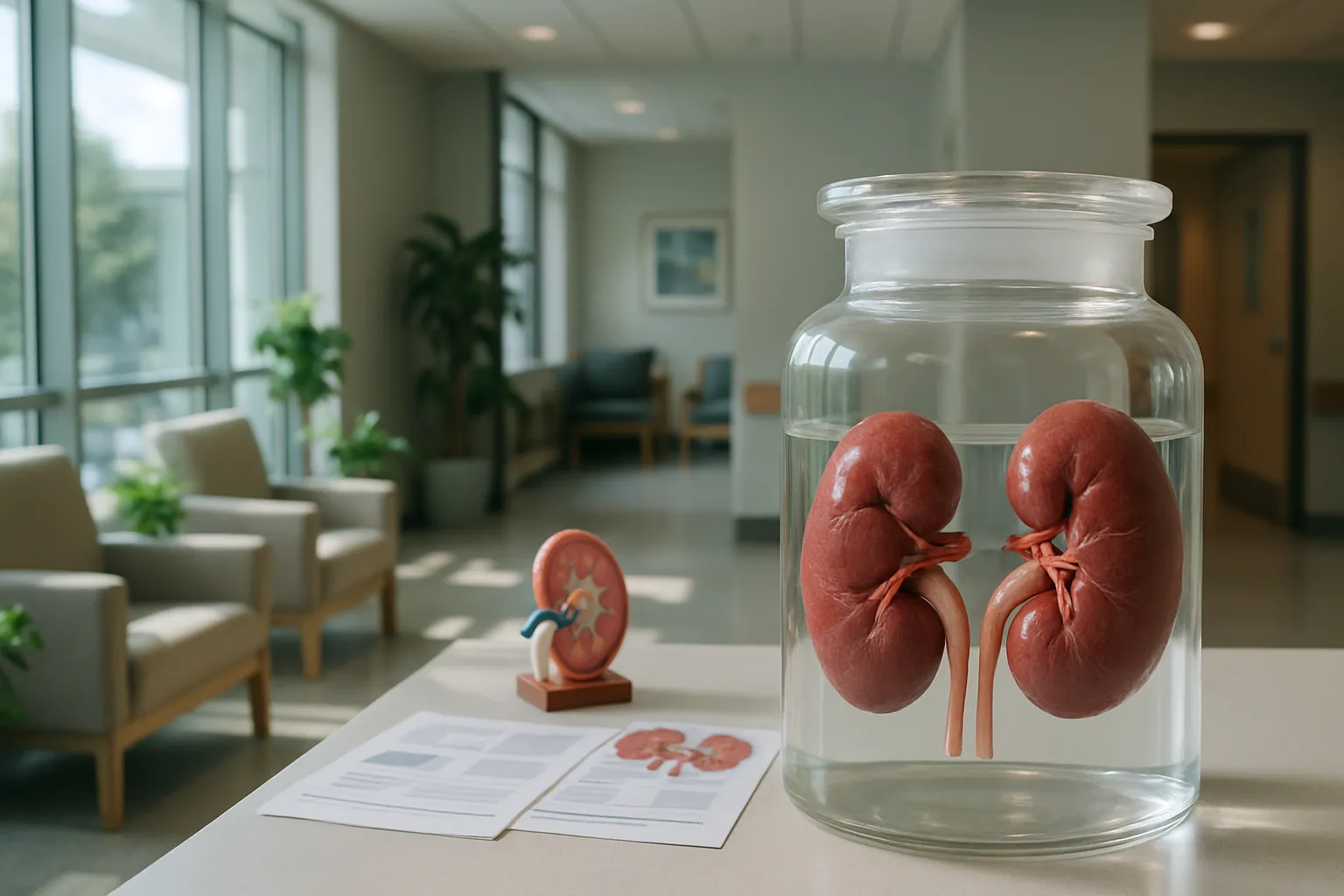
Picture this: A 68-year-old man in Chongqing, China, lies in an operating room, his kidneys failed beyond repair. What makes this moment exceptional isn’t the severity of his illness or the drama of the hospital—it’s the kidney about to be transplanted. For the first time in human history, the donated organ has been genetically altered to mask its blood type, effectively rendering it a “universal donor” kidney. This leap forward stems from the work of international scientists who harnessed specialized enzymes to erase the blood type identity from the organ’s surface, a discovery that stands to revolutionize organ transplantation at its very core.
Historically, organ compatibility has depended not just on factors like tissue matching and overall health, but critically on matching blood types. The U.S. waiting list for kidney transplants is daunting; over 100,000 patients, with blood type O individuals typically enduring long, uncertain waits. According to a 2023 analysis by the Scientific Registry of Transplant Recipients, type O patients wait a median of 85 months for a kidney, compared to just 59 months for those with other blood types. The biology is simple, but the human cost is immense: incompatible organs are swiftly rejected by the recipient’s immune system, turning a rare opportunity for life into another setback.
What if that barrier could be erased? The promise of universal organs—that precious gift of a donor could be offered to anyone, regardless of blood type—has hovered on the horizon for decades. Now, courtesy of researchers at the University of British Columbia (UBC) and their Chinese partners, this promise inches closer to reality. Their work, chronicled in Nature Biomedical Engineering, may represent a turning point not just for transplant science, but for the values of equity and access in medicine.
How Enzyme Technology Outmaneuvered Nature
The pathway to this breakthrough began where many game-changing discoveries do—with frustration at the status quo. Dr. Steve Withers, co-lead developer of the enzyme at UBC, describes the challenge in evocative terms: “We realized that blood type molecules, those little sugars on the surfaces of red cells, were like the paint jobs on cars. Remove the paint, and all you have left is the neutral primer underneath.” Armed with this analogy, his team set out to find biological “paint strippers”—enzymes sourced from gut bacteria that could efficiently remove type-specific antigens from the kidney’s blood vessels.
Applying these enzymes, researchers were able to strip a type A kidney of its distinctive signaling molecules, converting it to the neutral type O. A trained immune system sees nothing to attack, and in the first human test—performed ethically in a brain-dead recipient for safety—the converted kidney functioned almost immediately. Urine poured into collection bags for six days, with no immediate signs of rejection until day seven. While the experiment’s effects are temporary, the results ignite hope across the medical world.
This technology could open organ transplants to countless patients who would otherwise be turned away—not because of medical urgency, but because of the arbitrary genetics of blood antigens.
“For thousands waiting on the transplant list, this isn’t just a scientific milestone—it’s a chance at life that blurs the lines of genetic luck.”
Kidney transplant recipients and their families understand too well the heartbreak of mismatched organs. The weight of waiting—sometimes for years—nurtures a dull despair. According to Dr. Weixia Luo, transplant surgeon and co-author on the study, expanding the pool of universal donor organs could drastically shorten wait times and shift the focus to the medical need of patients, not the genetic lottery of blood groups. “We envision a not-so-distant future where organ availability is determined by urgency, not immunology,” Luo explained in an interview with Reuters.
The Road Ahead: Promise and Peril
Excitement around this innovation does not mask the formidable obstacles that remain. Enzyme-converted organs are only compatible for a short window—once in the recipient, the body’s own biochemistry can rebuild antigens, opening the door to later immune rejection. Scientists are now racing to discover how anti-rejection drugs and immunosuppressants might extend the antigen-free period, or even render it permanent. It’s a puzzle that echoes earlier battles in medicine, such as the struggle to prevent HIV transmission through transfusions—a public health crisis ultimately conquered through research, government action, and sustained investment.
While the usual suspects in conservative circles may decry the costs or offer knee-jerk skepticism toward regulatory fast-tracking, history demonstrates the moral imperative to invest in science, especially when the outcome is measured in lives saved. When organ compatibility becomes more universal, the specter of the “haves” and “have-nots”—those whose genes, race, or socioeconomic status place them first or last in the medical queue—diminishes. For progressives, this is a clarion call: equity in health care isn’t just possible; it’s necessary.
“The next steps will require careful regulation and clinical trials,” emphasizes Dr. Jane Smart, a Harvard public health expert. “But to slow this innovation, given the tens of thousands dying on waitlists, would be a failure of our collective duty.”
Beyond that, this research is already inspiring parallel breakthroughs. Studies are under way to test enzyme-conversion methods on lungs and even hearts, with early evidence suggesting that the approach can potentially apply across the entire spectrum of donor organs. In a world where the pace of transplant medicine too often stumbles behind need, embracing transformative science is no longer optional—it’s required.
Turning Breakthrough Into Policy—and Justice
A closer look reveals that the path from scientific discovery to standard care is fraught with roadblocks. The U.S. approval process for new transplant techniques is intentionally rigorous, balancing safety against speed. But is caution sometimes an excuse for inertia? Health policy expert Dr. Mark McClellan, former FDA commissioner, points out an uncomfortable truth: “We’re in a crisis of organ availability, and every extra step demanded by red tape brings a literal cost in lost lives.”
It’s time for lawmakers and regulators to listen—to science, to the plight of families on waiting lists, and to the evolving consensus among medical ethicists. Investing in large-scale trials, expanding funding for translational research, and reducing bureaucratic friction will help ensure this breakthrough benefits all, not just the lucky few.
This isn’t mere science fiction. It’s unfolding in real hospitals, for real people, right now. And while the journey from lab bench to bedside is rarely swift, the imperative is clear: health justice demands that policy keep pace with laboratory ingenuity.
