
Why These Local Deadlines Are a National Issue
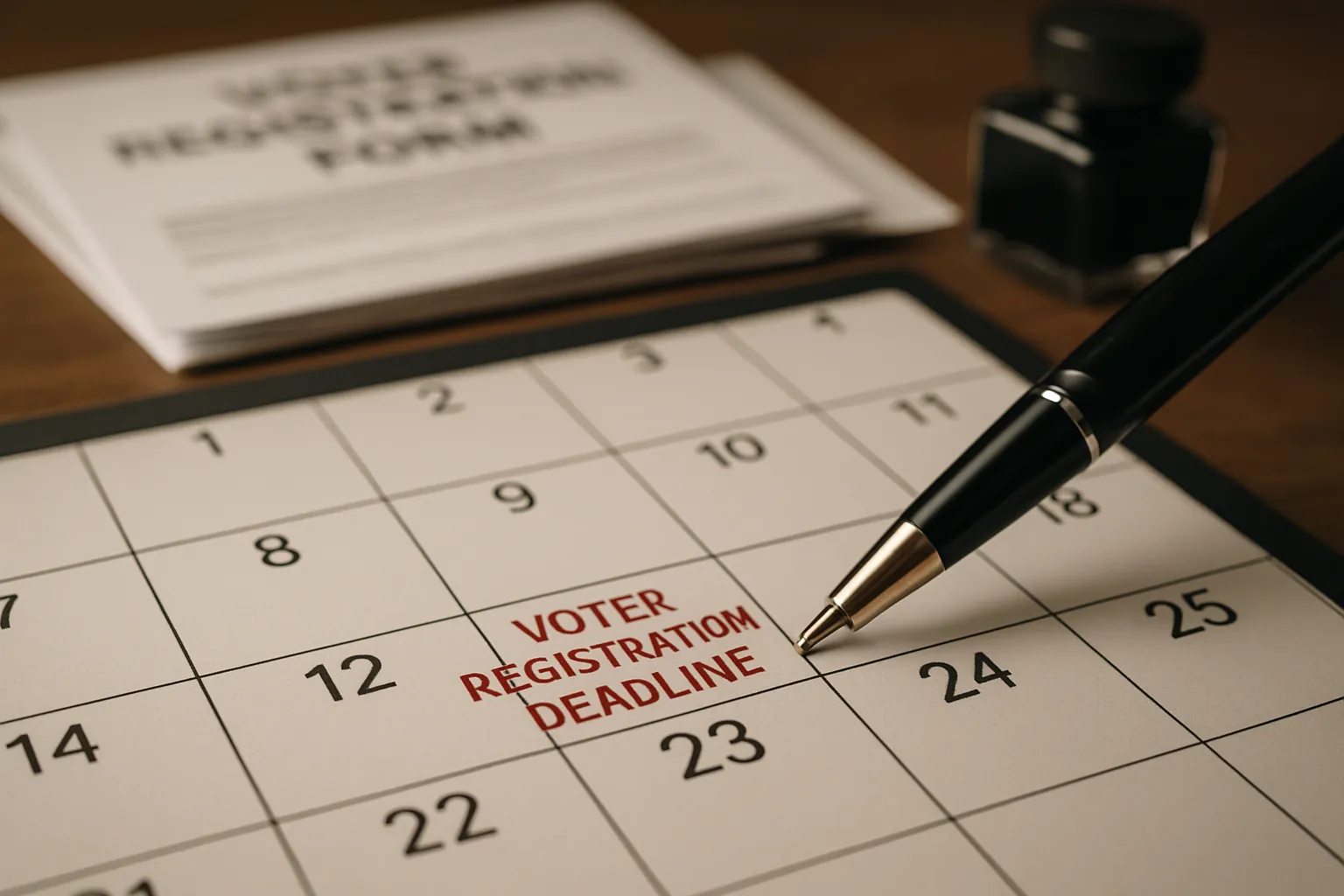
Just days remain before one of the most consequential dates for democracy enthusiasts in Texas and Georgia: the fast-approaching voter registration deadline for November’s pivotal elections. In both states—where political winds have begun to shift and new generations demand their voices be heard—the fate of local school boards, city councils, and even utility regulation balances on who makes it onto the voter rolls by the cutoff date.
Consider the reality: In Texas, October 6 marks the last chance for eligible voters to register, while Georgians face a similar deadline for registering to participate in a range of vital municipal and statewide races. This year’s ballot features more than the typical city and county contenders. In Georgia, voters are poised to select two members of the powerful Public Service Commission, the very group responsible for regulating the state’s essential utilities and, by extension, the affordability and reliability of daily life for millions. With energy costs and infrastructure worries looming over so many Americans, seemingly local races can have far-reaching implications—making it all the more urgent to ensure every eligible voice can be heard.
Yet, year after year, these critical deadlines slip past many, erasing voices before they can even be raised. According to research from the Brennan Center for Justice, as many as one in four eligible Americans remain unregistered, with vulnerable and younger voters especially at risk of being excluded. Why is it, then, that some politicians continue to back policies that compound these barriers?
The Ongoing Battle Over Access—and Whose Voices Get Heard
Dig deeper and the urgency of registration deadlines takes on a darker hue. Texas, for instance, has some of the strictest registration procedures in the nation: registration forms must be physically submitted or mailed; there’s no online voter registration statewide. This isn’t just bureaucratic inertia—it’s the blunt reality of a system designed, intentionally or not, to suppress participation under the guise of security or tradition.
Harvard law professor and voting rights expert Nicholas Stephanopoulos underscores the impact: “When you raise the barriers to registration, you skew the electorate toward those who already hold power—older, wealthier, and overwhelmingly white voters.” The convoluted process in Texas, where voter registration applications are scattered across public libraries, post offices, DPS offices, and high schools, puts an unnecessary burden on working-class families, college students, and transient populations. For them, each step—from locating a form to understanding eligibility to mailing it in by the right date—becomes an obstacle, not a gateway. This kind of procedural complexity isn’t value-neutral; it shapes whose interests are represented long before a single ballot is cast.
Contrast this with Georgia’s adoption of online voter registration, which at least modernizes the first step toward participation, though hurdles remain for those without reliable internet access. Why should something as fundamental to democracy as registration be so fraught with difficulty in the year 2025? Every Democratic lawmaker and civil rights organization with a pulse has been shouting for reforms: automatic registration, same-day options, and expanded mail-in voting. But resistance remains entrenched among GOP leadership, often cloaked in rhetoric about fraud prevention—a problem study after study, including data from the Heritage Foundation and MIT’s Election Data and Science Lab, has shown to be vanishingly rare.
“When voters have to leap a series of administrative hurdles just to exercise their rights, it’s not democracy—it’s a rigged game.”
What’s at Stake: Local Power, Everyday Life, and the Future of Participation
Decisions made in these ‘quiet’ off-year elections may not generate the pageantry or wall-to-wall cable coverage of a presidential contest, but their outcomes shape the fabric of daily life in ways that demand attention. Who serves on city councils matters for decisions about policing, infrastructure, affordable housing, and local business investment. School board members directly influence classroom content and school safety policies, as Texas families know all too well after heated debates over book bans and curriculum changes.
The Public Service Commission races in Georgia, relatively obscure to outsiders, can alter the price of electricity and natural gas for years to come. According to data compiled by the Center for American Progress, low-turnout elections allow special interests and entrenched lobbies to punch above their weight—widening inequality, entrenching environmental harm, and perpetuating deregulation at public expense. Allowing deadlines or bureaucracy to keep people from having a say is a silent surrender to these undemocratic forces.
Early voting offers the promise of convenience—but only if you’re registered and aware of the process. In Dallas County, absentee voters must request their ballots by October 20 and can begin casting ballots in person as early as October 15. These flexible options should empower voters, not trip them up. Yet for those kept off the rolls by missed deadlines or administrative confusion, these provisions are irrelevant. These systems presuppose you’ve already run the gauntlet of registration—a gauntlet made needlessly arduous for far too many.
The Choice Ahead: Removing Barriers or Preserving Power?
You might wonder: why do the obstacles persist? Republican-controlled state legislatures invoke voter fraud as cover for keeping archaic processes in place, even as evidence mounts that such fraud is practically nonexistent. It’s a rhetorical fig leaf hiding a deeper political motive: the fewer who vote, the more predictable the outcomes become—and the less representative our democracy. A 2023 Pew Research study found that states embracing online and automatic registration saw not only higher turnout but more engaged, educated voters across demographic lines. Isn’t that the very definition of democracy working as intended?
The fight for easier, fairer access isn’t over. Advocacy groups such as the League of Women Voters and Fair Fight Action continue to battle in courts and statehouses to modernize the process, chipping away at voter suppression tactics designed to keep new voices sidelined. Meanwhile, local election officials urge all citizens to double-check their status and encourage friends and neighbors to do the same. “Don’t wait until the last minute,” El Paso County Elections Administrator Lisa Wise recently told the Texas Tribune. “Your participation is your power.” Missing a single date shouldn’t decide who governs or what policies shape tomorrow’s world.
No progressive should turn a blind eye as exclusion—by design or neglect—narrows the boundaries of our shared future. With each election cycle, the stakes for inclusive participation rise even higher. The deadline may be on the calendar, but the struggle to turn the page on outdated barriers belongs to all of us, every day.
