
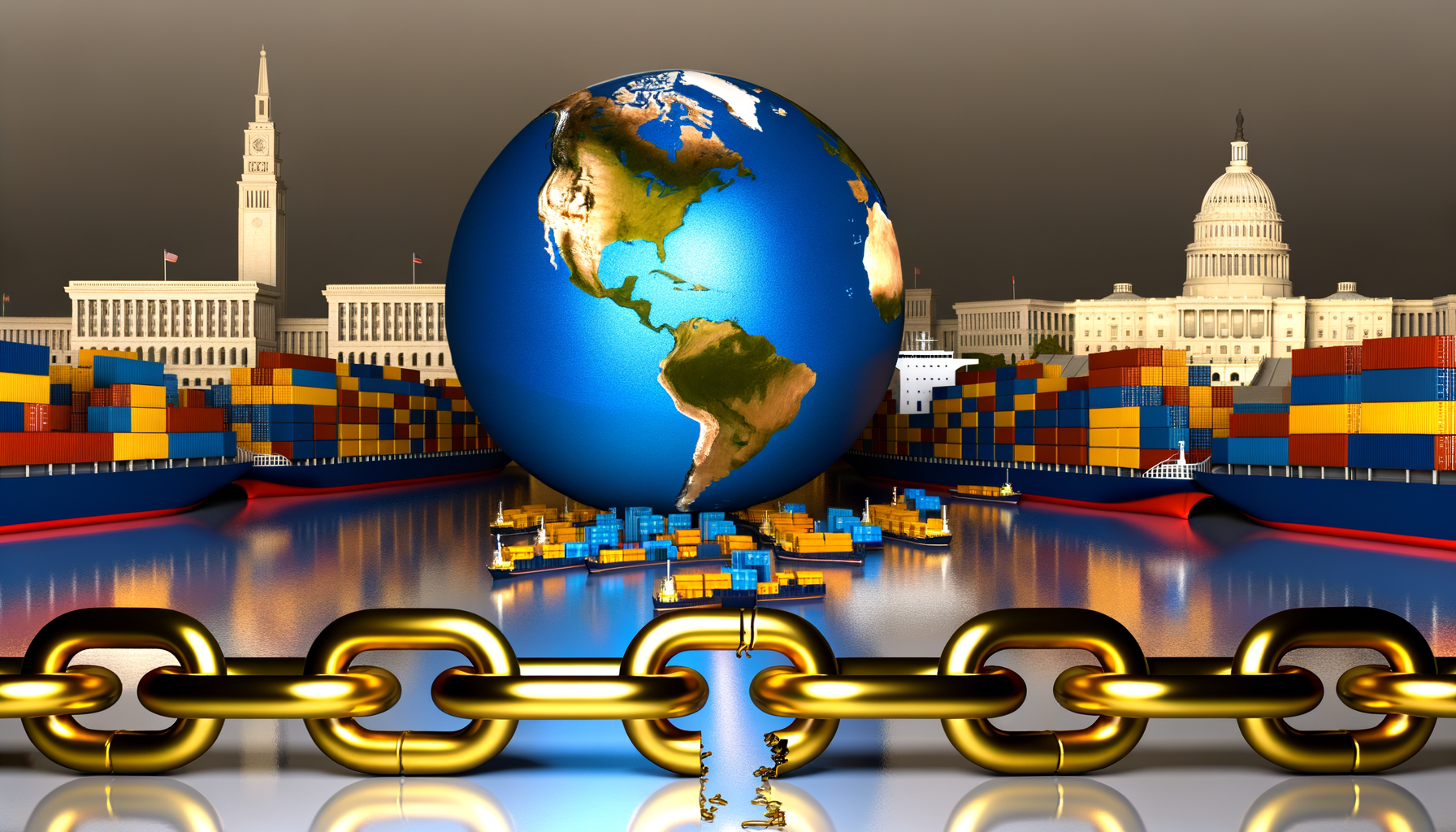
Amid escalating tension between the United States and Europe over recent tariff implementations, there grows a critical concern: could this burgeoning trade war damage an economic relationship valued at an astounding $9.5 trillion? As factions on both sides brace for potential economic fallout, the American Chamber of Commerce (AmCham) has sounded a clear alarm, emphasizing the magnitude of the risk posed to businesses, markets, and millions of livelihoods embedded in this vital transatlantic partnership.
A Deeply Integrated Economic Partnership at Risk
Contrary to the simplistic narrative often touted in conservative circles, the U.S. and Europe relationship is more intricately connected than mere trade numbers alone. This profound integration stems from mutual investments, shared business operations, and interdependent economic ecosystems. According to AmCham, U.S. affiliates operating in Europe produce revenues four times greater than the total value of U.S. exports to the region. Similarly, European businesses operating within the U.S. generate more than three times the revenue of their exports to America.
Malte Lohan, CEO of AmCham EU, encapsulates the strategic importance of this relationship succinctly:
“For companies on both sides, the transatlantic economy is more than just a source of profit. It is a common geoeconomic base that gives them an edge in a fiercely competitive world.”
In light of these high stakes, the rationale behind the administration’s decision to impose sweeping tariffs becomes increasingly hard to justify. President Trump’s introduction of steep tariffs on steel and aluminum imports—ostensibly meant to rebalance what the administration describes as unfair trade imbalances—now threatens not just immediate exports, but deep-rooted mutual investments and supply chains.
Responding to Tariffs With Retaliation Instead of Dialogue
Beyond the visible costs at the ports and factories of transatlantic businesses lies a more subtle, yet perhaps even more damaging, effect: a potentially irreversible erosion of mutual trust. Upon imposing a 25% tariff on steel and aluminum from Europe, President Trump signaled further willingness to escalate tensions, even hinting at exorbitant 200% tariffs on European alcoholic beverages. Such aggressive posturing might appeal to certain protectionist factions domestically but substantially weakens cooperative dynamics crucial for resolving genuinely complex trade disputes.
Europe, predictably, has responded firmly. Europe’s retaliatory measures, aimed particularly at symbolic American products like whiskey, signal an escalating tit-for-tat cycle that may quickly spiral further out of control unless cooler heads prevail. Such exchanges of punitive economic blows can hardly be seen as productive; indeed, history vividly teaches us through past U.S.-Europe tensions that the repercussions of these trade conflicts most severely impact those least equipped to handle them—small businesses, workers, and consumers.
Consider Prime Minister Keith Starmer of the UK, who recently expressed willingness to “keep all options on the table,” a stark indication that even traditionally steadfast American allies may feel compelled to take blunt countermeasures if pushed too far. This mirrors larger global anxiety: in a time of geopolitical turbulence, alienating critical economic partners serves little strategic purpose.
Finding Progressive Alternatives in Economic Cooperation
AmCham, along with progressive economists, urges leadership on both sides of the Atlantic to understand that cooperative economic frameworks offer greater long-term benefits than protectionist policies administrations find tempting in politically turbulent times. These frameworks focus not merely on immediate transactional gains but potential avenues for mutual economic growth, technological innovation, and sustainable development.
Indeed, European and American investments are already pivoting towards advanced states of collaboration in technological advancements like renewable energy, AI, and biotechnology—fields where mutual cooperation can cement global competitive advantages for decades. Placing undue emphasis on tariffs distracts from the potential of innovative, future-oriented partnerships designed to address chronic global challenges like climate change, health crises, and extreme poverty.
History shows us vividly that trade conflicts rarely benefit either party involved. Remember the transatlantic tensions triggered by the Bush administration’s steel tariffs in 2002? They resulted in increased production costs, job losses, and soured international relations, leading ultimately to their revocation under immense economic and political pressure. It is an important historical lesson the Trump administration appears dangerously close to repeating.
Facing these realities, AmCham EU emphasizes that negotiation, rather than retaliation, is the pragmatic and ethically sound path forward. Companies, economies, and citizens across both continents stand to win if leaders replace damaging brinkmanship with genuine engagement and dialogue.
As the situation stands, Trump’s aggressive tariff measures represent much more than a temporary inconvenience. They threaten decades of careful economic bridge-building, cultural exchange, and mutual security assurances that have defined progressive and flourishing international relations.
Progressive leaders and citizens alike should openly question this direction. Is protectionist posturing worth the price of a potentially weakened transatlantic economic ecosystem, with risked employment, higher consumer prices, and reduced international standing? The answers provided in this crucial moment will significantly affect the state of both American prosperity and global economic balance for years to come.
