
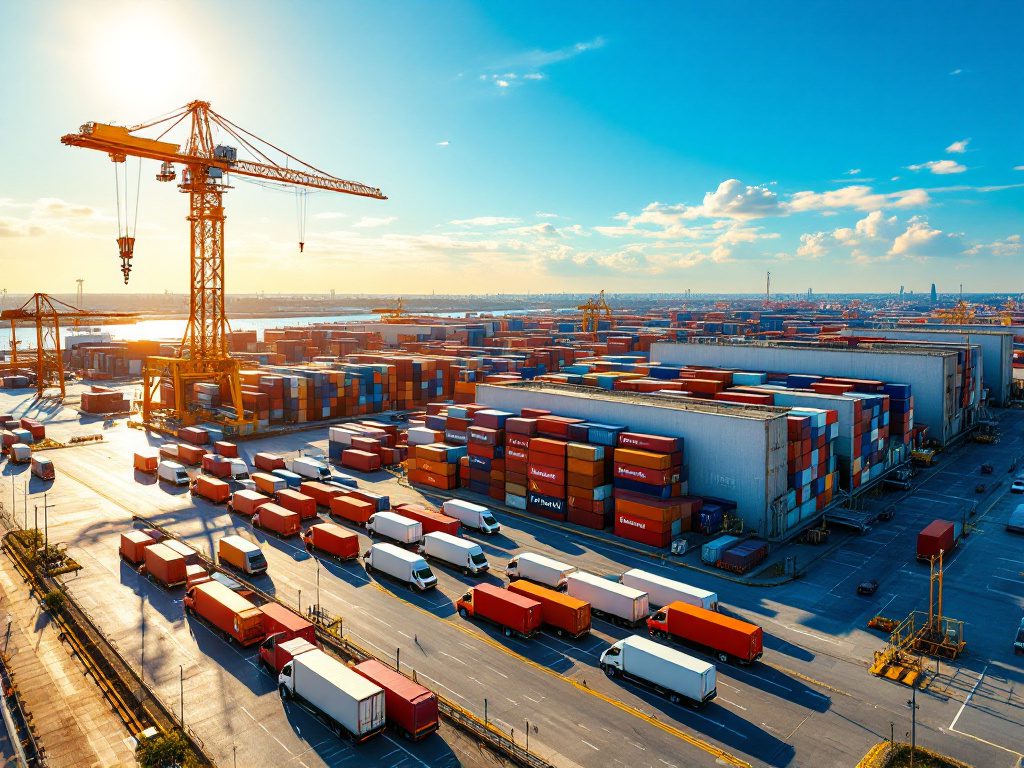
If you’ve ever wondered how quickly your online purchases can travel from warehouses to your doorstep, you understand the strategic importance of logistics infrastructure. Right now, Amazon is making headlines again—not for what it’s shipping, but for the characteristics of its rapidly evolving distribution network. The e-commerce titan is contemplating a monumental $15 billion expansion, which would see an addition of roughly 80 new logistics facilities across both urban and rural areas across the United States.
A Strategic Pivot Toward Logistics
This ambitious move by Amazon comes surprisingly soon after the company scaled back considerable infrastructure investments made during the pandemic. During the height of the COVID-19 crisis, when online shopping reached unprecedented levels, Amazon faced operational bottlenecks resulting in up to $2 billion in quarterly expenses due to overcapacity. A closer look reveals a critical shift; Amazon’s proposed expansion illustrates not only an adjustment to consumer shifts towards online shopping post-pandemic but also positions the company to significantly enhance its capabilities in last-mile delivery.
Steve Kelly, an Amazon spokesperson, recently sought to temper expectations and framed the discussions as a routine activity: “Meetings like this with our capital partners are routine and part of the normal due diligence process, as we consider potential, future projects.” Nonetheless, given the scale and potential impact on America’s economic landscape, this is far from routine.
The New Generation of Fulfillment Centers
The proposed facilities aren’t just regular warehouse spaces. Rather, some will showcase Amazon’s commitment to technological innovation, equipped with robotics and automation to expedite shipments and fulfill orders with more efficiency. Importantly, many locations will be multistory fulfillment centers—a clear departure from Amazon’s previous strategy of accumulating vast tracts of land primarily for data centers. In other words, Amazon is strategically repositioning its real estate ambitions, blending technological innovation and property to ensure it maintains dominance as the shopping habits of consumers become increasingly digital.
This shift comes at an intriguing moment, influenced partly by geopolitical currents. Former President Trump’s recent rollback on tariffs implemented during escalating US-China trade tensions may significantly reshape the logistics landscape. Amazon must navigate this carefully, as the international trade landscape influences operational costs and logistics strategy in profound ways. However, analysts suggest Amazon stands to benefit from a potentially less restrictive trade environment.
Seeking Partners for Infrastructure Investment
As exciting as this expansion sounds, it’s critical to recognize Amazon’s prudent approach to financing these ambitious ventures. Amazon is actively courting potential capital partners, signaling its readiness to engage in long-term leases—ranging from 15 to 25 years—and even to commit direct funding to certain highly strategic locations. Through these partnership structures, Amazon can mitigate upfront capital requirements while rapidly scaling its operational capabilities.
“Amazon is strategically repositioning to reclaim dominance in the logistics arena at precisely the right moment. This move goes significantly beyond routine corporate expansion—it’s an audacious bet on America’s future shopping behaviors,” says retail expert Stephen Matthews.
Indeed, this audacious move comes just as European and Chinese trading partners respond to American tariffs, complicating the strategic calculus significantly. Investors and analysts alike have responded positively, viewing Amazon’s renewed focus on its robust delivery infrastructure as pivotal for sustained growth. Harvard economist Dr. Julia Carlson emphasizes the financial wisdom of this approach: “In the current climate of shifting international trade policies, Amazon’s strategic expansion of logistics capabilities positions it exceptionally well for future market fluctuations.”
The sheer scale of this planned expansion will likely redefine logistics and employment scenarios across multiple American communities. For rural regions particularly, the emergence of logistics hubs could translate into new economic lifelines, bringing much-needed jobs and stimulating local economies. For cities, Amazon’s facilities could serve as catalysts for relevant skills training and technological advancement. Yet, prevailing skepticism about the potentially detrimental impact of rapid warehouse proliferation, including concerns over working conditions and environmental sustainability, persist among progressive groups and labor unions who have carefully scrutinized Amazon’s employment practices.
For Amazon, this significant potential growth represents a testament to its relentless adaptability in increasingly turbulent economic and political waters. It’s not simply about warehouse expansion; it’s about positioning itself as an indispensable architect of the American consumer landscape. As this narrative unfolds, citizens must carefully consider whether such infrastructure-heavy growth indeed signals sustainable development beneficial to communities at large, or if this move merely solidifies big-tech monopolization of sectors traditionally more diverse and decentralized.
In either scenario, this massive warehouse expansion demands close attention. Understanding the full implications—for communities, labor markets, and economic landscapes across America—remains critical as Amazon navigates these unprecedented investments in hope of dominating the next chapter in global commerce.
