
Drawing Down: A New Chapter in U.S. Involvement
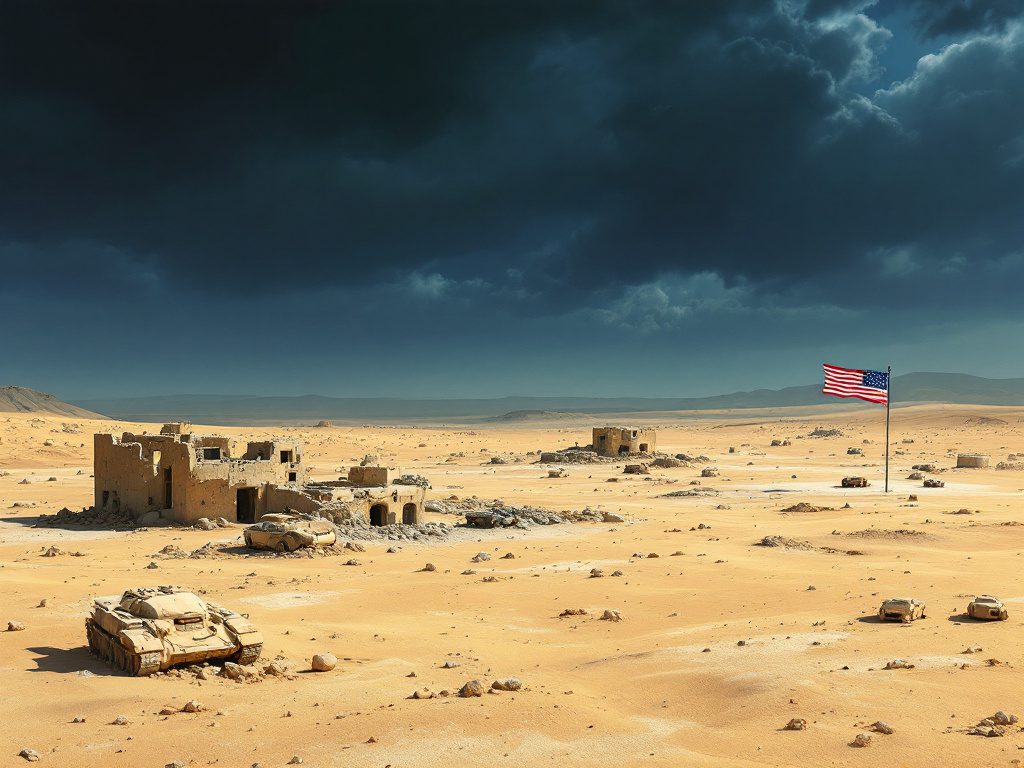
The echo of boots on Syrian soil is growing fainter. In a move both expected and fraught, the United States has begun a substantial withdrawal of military forces from northeastern Syria. Once numbering over 2,000, U.S. troops are set to fall below 1,000 in the coming months—a shift the Pentagon describes as “consolidation,” but whose consequences ripple beyond mere numbers. As outposts shutter at places like Mission Support Site Green Village and M.S.S. Euphrates, a fundamental question hangs over Washington’s foreign policy: Is this the methodical closure of a chapter, or a risky opening act for renewed instability?
Beyond the dry metrics of military realignment lies bitter memory. This region, battered by years of war, remains one of the most volatile on the globe. The United States initially surged its presence in late 2023, responding to Iranian-backed militia attacks following the Gaza conflict and the tragic loss of three American service members in Jordan. Yet just months later, the pendulum is swinging toward reduction. According to a recent analysis by the Institute for the Study of War, the abrupt nature of past American withdrawals—such as the infamous 2019 pullback greenlighting a Turkish incursion—lends today’s developments an aura of déjà vu.
Military commanders will reassess the drawdown after 60 days, setting the floor at a minimum presence—most recommend around 500 troops—to safeguard coalition gains. The Pentagon insists that “targeted strikes and rapid response capabilities” will persist, but the optics—a shrinking constellation of American bases—cast new doubts on U.S. staying power in a region where adversaries rarely rest.
The Changing Terrain: Politics, Partners, and Peril
The situation on the ground is transforming with dizzying speed. The Kurdish-led Syrian Democratic Forces (SDF), once America’s most crucial counter-ISIS partner, were recently compelled into a deal with the new Syrian government helmed by Abu Mohammad al Julani—a former ISIS lieutenant, now cast as president. Under the agreement, all armed groups—including the SDF—are to disarm. This seismic political shift leaves local allies exposed and American interests suddenly less certain.
Describing the partnership as “every bit as imperiled as in 2019,” Middle East analyst Mona Yacoubian told NPR that “when the U.S. pulls back, a dangerous vacuum emerges.” The SDF, lauded for their resilience against ISIS, now face existential choices: integrate, resist, or scatter. The continued American presence, however limited, is perhaps the last shield against total marginalization of what remains of pluralistic governance in northeast Syria. Human rights advocates warn that history too frequently records how rapid military withdrawals leave local populations—especially minorities—caught in the crossfire of emboldened regimes and extremist groups.
ISIS, consigned by some officials to the dustbin of history, is now showing signs of resurgence: in 2024 alone, it has claimed nearly 300 attacks in Syria—a stunning escalation from the previous year, as the Armed Conflict Location & Event Data Project (ACLED) reports. The threat, clearly, is not contained by headlines that tout “mission accomplished.” Instead, the specter of repeating past mistakes haunts every American decision—failure to sustain stabilization efforts in Iraq after 2011 famously paved the way for ISIS’s explosive rise.
“It is a fantasy to think that terrorism and chaos can be contained by simply closing outposts and calling it progress. History tells us that American engagement, however imperfect, is usually the bulwark against a far worse outcome.”
Limiting Risks, Limiting Progress: A Liberal Critique of Conservative Retreat
Should America continue to shoulder the burden of Middle East stabilization? Critics on the right, fueled by isolationist sentiment, argue that consolidation is overdue, an end to “forever wars.” But this view—so appealing in its simplicity—often ignores the hard-earned lessons of the past two decades. Harvard historian Dr. Samantha Power once remarked, “Retreat leaves a vacuum, and the worst actors are always waiting to fill it.”
The moral and strategic risks of a hasty pullback are intertwined. U.S. presence, though not a panacea, has allowed a fragile ecosystem of Kurdish self-governance, protected ethnic and religious minorities, and kept the worst tendencies of regional strongmen and militias in check. Remove that force, and the odds lengthen for justice, diversity, or even basic stability in the region.
Progressive values—like the defense of pluralism and the dignity of those most affected by conflict—are rarely served by abandonment. American withdrawal is often sold to the public as “bringing the troops home,” yet what is left unsaid is who pays the price abroad when order collapses and extremists thrive. Recent polling from Pew Research shows Americans are deeply divided on these issues, torn between war fatigue and obligations to allies. But ask the families in Hasakah or Raqqa, and they’ll tell you: The U.S. flag, still present in their skies, remains more than a symbol. It is, for many, a lifeline.
A closer look reveals why it is not enough to call this drawdown prudent policy or necessary cost-cutting. The debate must grapple with uncomfortable realities: How will the U.S. and its coalition partners adapt if ISIS morphs again from shadow to shock troops? Who bears responsibility if American disengagement leads directly to renewed atrocities—be they by ISIS, Assad-era loyalists, or the new regime?
The world has learned, time and again, that solutions forged solely from a place of expediency rarely last. Responsible retrenchment demands careful planning, robust support for local partners, and a commitment to the American ideals of security, equality, and justice—not just for ourselves, but for those most at risk when we leave.
