
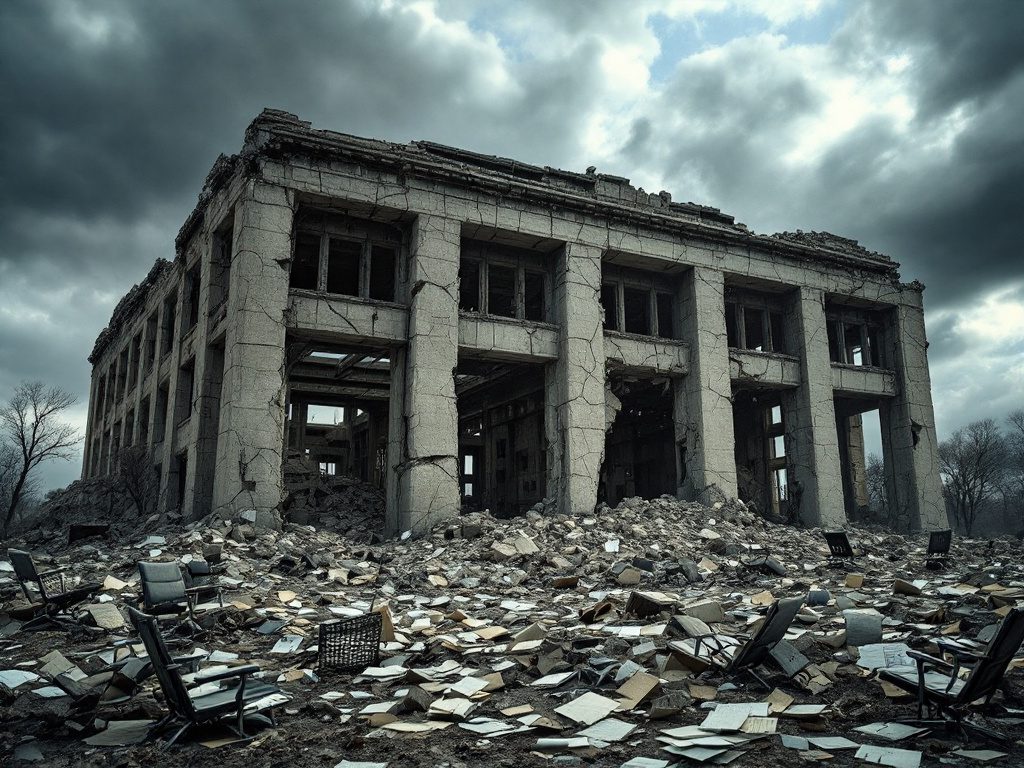
The Dominoes Fall: Firings Trigger Pentagon Crisis
Friday morning in the Pentagon began not with the measured calm of military order, but with a flurry of badge deactivations and whispered speculation in the corridors. The sudden firing of three top aides—Dan Caldwell, Darin Selnick, and Colin Carroll—followed closely by the surprise reassignment of Joe Kasper, Defense Secretary Pete Hegseth’s own chief of staff, set off shockwaves that pulsed through the Department of Defense’s leadership tiers. The disruption was so acute that one senior official described the scene bluntly: “There is a complete meltdown in the building.”
This wasn’t just a reshuffling of midlevel staffers. These were trusted figures in Hegseth’s inner circle, ejected less than 100 days into his tumultuous tenure and leaving his front office suddenly denuded of institutional memory and political cover. According to Politico’s reporting, the firings stem from an ongoing probe into leaks of classified and operational information—including, most astonishingly, sensitive attack plans concerning Houthi rebel targets in Yemen and military operational plans for Panama Canal operations. Even details of tech mogul Elon Musk’s Pentagon visit, alleged to involve a discussion of a potential U.S.-China conflict, made their way to journalists.
The most egregious breach reportedly emerged on the Signal encrypted messaging app, where National Security Advisor Michael Waltz accidentally included Atlantic editor-in-chief Jeffrey Goldberg—a prominent journalist—in a high-level group chat. The result: plans for imminent airstrikes, meant for a battle-hardened audience, landed in a civilian reporter’s lap. It’s almost Shakespearean in its folly, but no one is laughing in the E-Ring. Washington Post columnist and military historian Thomas Ricks notes that “internal Pentagon instability doesn’t just risk careers; it can compromise national security planning and global deterrence.”
Leadership in the Crosshairs: Hegseth’s Judgment Under Fire
You might ask: How does the world’s most powerful military end up embroiled in a scandal that feels scripted by a political drama? The answer, critics argue, traces directly to Secretary Hegseth’s controversial appointment and his subsequent personnel choices. Chris Meagher, former Assistant Defense Secretary for Public Affairs under President Biden, minced no words, stating, “Everyone knew that Pete Hegseth did not possess the leadership qualities, background, or experience to be Secretary of Defense.” His comment encapsulates a broader unease about the DOD’s direction under Hegseth, whose selection seemed less rooted in national security credentials than political loyalty.
Beyond that, the nature of the leaks exposes a deeper rot. Specific operational details—like the deployment of a second carrier to the Red Sea and a controversial pause in intelligence gathering on Ukraine—surfaced just as the United States faces escalating threats abroad and an adversarial environment at home. Leaks of this caliber have the potential to endanger lives and undermine alliances built on trust and reliability. Security analyst Mara Karlin, writing for Foreign Affairs, warns that “the trust deficit created by such lapses lingers far longer than any staff shakeup, corroding interagency cooperation and allied confidence.”
“A Pentagon in chaos—even if only for days or weeks—carries real consequences for Americans in uniform and our partners abroad. Leadership isn’t just about discipline in the ranks. It’s about discipline at the very top.”
Yet Hegseth’s troubles run deeper than mere bad optics or mismanaged messaging apps. His office has now been stripped of trusted deputies and seasoned advisers, punctuating a pattern of instability that began with the contentious ouster of senior military leaders earlier this year—including former Joint Chiefs Chair Gen. C.Q. Brown and Chief of Naval Operations Adm. Lisa Franchetti. In less than four months, the Pentagon has cycled through more internal turbulence than it typically sees in a decade.
Power, Accountability, and the Tragedy of Poor Leadership
To grasp the stakes, consider the American tradition of civilian control of the military—a fundamental principle designed not merely to keep the generals in check, but to ensure strategic decision-making in the public interest. When that civilian leadership is compromised, either by incompetence or internal discord, the entire edifice wobbles. The current “meltdown” at the Pentagon reveals the dangers of prioritizing ideological fealty over competence—a theme that has haunted conservative cabinets before, from the tumult of the Trump first term to historical analogues like the Nixon administration’s Watergate-era purges.
Legal and ethical headaches now loom for Hegseth. Two of the ousted officials, sources report, intend to sue the U.S. government for wrongful termination, dragging the controversy into the courts and threatening more public airings of the department’s dirty laundry. It’s worth recalling the resignation wave during Donald Rumsfeld’s tenure—another period marred by controversial decisions and an exodus of experienced hands. According to a 2020 Pew Research Center study, public confidence in the Defense Department depends on perceptions of its professionalism and apolitical stewardship—a bar that recent events only lower.
A closer look reveals that these internal dramas do not merely bruise egos. They slow response times, chill information sharing, and compromise already fraught relations with legislative overseers. Perhaps most crucially, this episode raises the haunting question: Can a chaos-ridden Pentagon provide the steady hand needed as the world treads the precipice of new conflicts and cyber threats? If the U.S. military can’t safeguard its own secrets or maintain a functioning leadership team, how can it hope to assure Americans—or allies—that it can defend democracy itself?
Progressive voices call for a reset: an end to politicized appointments and a renewed embrace of qualifications, transparency, and ethical accountability. The alternative is more “complete meltdowns” and, ultimately, the erosion of an institution meant to protect—not destabilize—the nation. The stakes for our democracy demand nothing less.
