
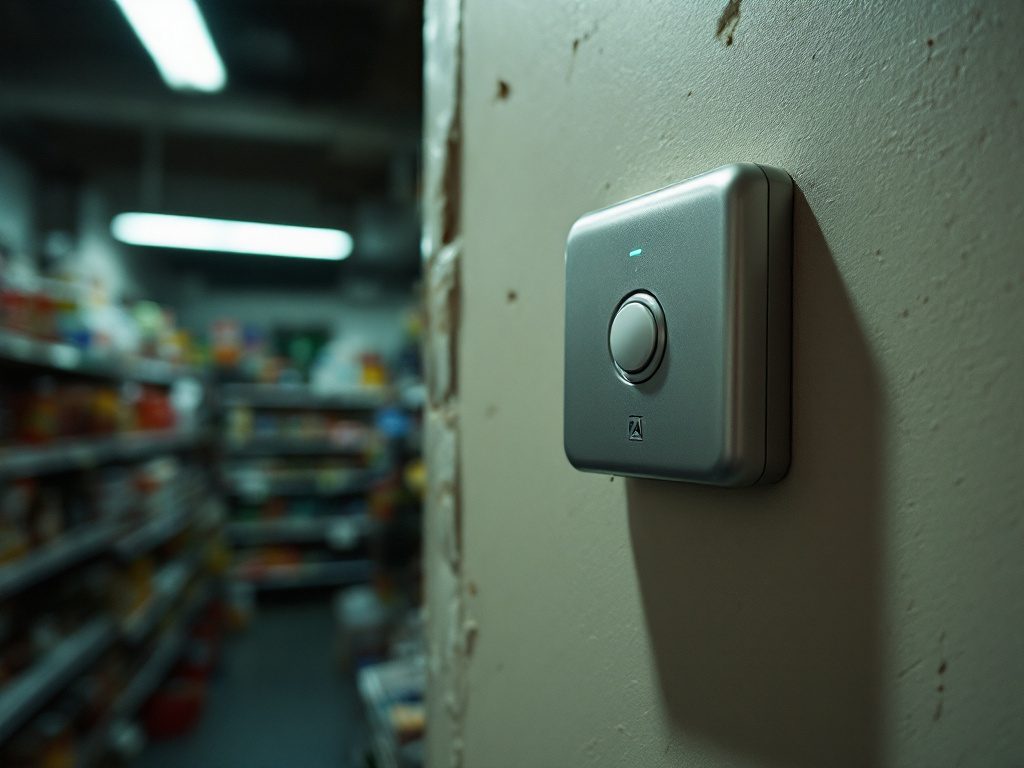
Sounding the Alarm: New York’s High-Stakes Gamble in Bodega Safety
On a rain-soaked Sunday in Harlem, the history of New York’s beloved bodegas took a sharp turn. It wasn’t just another day behind the counter for the small business owners and workers who keep the city’s neighborhoods fed and connected. No, this day was marked by tragedy—a brutal stabbing in a corner bodega underscored the intense vulnerability that thousands of store clerks, most of them immigrants, live with day after day. According to the United Bodega Association, their demands for greater protection have often fallen on deaf ears. Now, with an emergency $1.6 million investment in “SilentShield” panic buttons for 500 high-risk bodegas, Mayor Eric Adams pledges relief. But at what cost, and to what effect?
With panic buttons linking bodegas directly to the NYPD’s central command center, bypassing 911, the city hopes to cut response times and deter would-be criminals. Yet, beneath the optimistic headlines, a deeper current of unease runs through both the city’s frontline workers and progressive advocates. New York’s attempt at rapid intervention frames this moment, but it also forces uncomfortable questions: Are these measures truly enough, or do they risk becoming a high-tech bandage on longstanding social wounds?
Dollars, Technology, and the Cost of “Feeling Safe”
The story doesn’t begin with panic buttons. The United Bodega Association (UBA), founded decades ago, has consistently pushed for city-backed investments in security for stores located in what police politely term “hotspots.” Last year, a pilot program distributed fifty panic buttons into particularly vulnerable boroughs—but the results proved less than revolutionary. Critics and some bodega employees, speaking anonymously to The New York Times, noted that response times remained painfully inconsistent because the integration with NYPD command was incomplete. In a city where seconds can separate life from death, that’s no small flaw.
This time, the Adams administration promises a direct feed from store security cameras to police precincts the moment an alarm sounds. The $1.6 million grant will flow through the UBA, which is charged with running a competitive bid for the technology. Installation begins in weeks. The NYPD, hoping for a failing grade in the category of “tragedies averted,” insists that not divulging the specific bodega locations will heighten deterrence. Yet there’s an uneasy familiarity in the city’s dance with high-tech surveillance tools as a fix for violence. It’s hard not to recall New York’s earlier infatuation with stop-and-frisk policing, a policy widely discredited for its disproportionate impact on communities of color but which was once hailed as a bold public safety breakthrough by its proponents.
“I’d rather let them take those cigarettes than risk my life. But what I really want is for someone to show up before it gets ugly,” confided one longtime Bronx cashier, reflecting a sentiment heard across the city’s night shifts.
According to the Bureau of Labor Statistics, store clerks are among the most frequently victimized workers in America. The risks are amplified in urban centers like New York, where economic desperation and insufficient neighborhood investment intersect to form a combustible pattern for violent crime. It’s no coincidence that bodega trade groups have long sought, not just panic buttons, but also greater access to affordable insurance, regular NYPD patrols, and social services for at-risk youth.
Harvard criminologist Dr. Jessica Frye argues that while investments in security technology can save lives, “they’re rarely substitutes for mental health supports, stable housing policies, and meaningful economic opportunity.” Looking at global examples, Frye points to cities like Glasgow and Lisbon, where layered approaches—including youth mentorship and robust public health funding—matched significant drops in neighborhood-level violence.
Bodegas Between Hope and Harsh Realities
On their face, panic buttons represent empowered self-defense—a way for workers to summon immediate help without escalating potentially catastrophic confrontations. Yet the system’s success hinges on more than just silicon and sirens. Training for store workers is promised, though skeptics recall that previous rollouts suffered from lackluster outreach.
Some voices within the bodega community hail the new system as overdue. Fernando Mateo, UBA spokesman, called the alarms a “game changer.” But listen closer, and one hears weariness entwined with that hope. For every worker exuberant about pressing a button in a crisis, another worries about false alarms, police overreaction, or reprisal from emboldened criminals unconvinced by promises of secrecy around which shops are protected. One shopkeeper from Queens told NY1, “We want help, but not the kind that makes us targets for even more violence if it goes wrong.”
According to a recent Pew Research study, public trust in policing technology remains fragile, especially in communities of color, where surveillance and aggressive police response have historically been cause for concern, not comfort. For some, panic buttons are a last resort in an unjust system—that is, until meaningful reforms level the playing field.
Real safety isn’t built on gadgets alone. When you walk beyond the storefront awnings and deep into neighborhoods forced to fend for themselves, the patchwork of protective measures seems less a solution and more a symptom—of income inequality, underfunded mental health services, and a decades-long retreat from robust social safety nets.
What Real Prevention Looks Like
Bodegas are more than just convenience stores; they’re vital cogs in the machinery of New York civic life—gathering spaces, emergency shelters, even food banks in a pinch. When violence intrudes on these sanctuaries, it reveals fractures woven deep into the city’s social fabric. Bandaids—or panic buttons—cannot heal those wounds without a broader commitment to social justice and investment.
“The technology is only as good as the policies supporting it,” says civil rights attorney Marcy Vega. She points to the need for real community-led safety plans, candid dialogue between the NYPD and vulnerable groups, and public investment that addresses root causes. “Bodega workers shouldn’t have to gamble on a panic button to get home safely,” Vega says. “We need a city that guarantees their dignity and security before harm comes their way.”
The city’s targeted rollout represents an acknowledgment, if not yet a reckoning, of the layered challenges at play. Beyond that, it invites all of us to ask: What do we owe those who hold up the scaffolding of this metropolis? Training and panic buttons matter—but not more than the promise of real, enduring safety rooted in equality, opportunity, and trust.
Panic buttons may soften disaster, but justice means daring to prevent it altogether. That’s the moral challenge facing not only Mayor Adams, but every resident who calls New York City home.
