
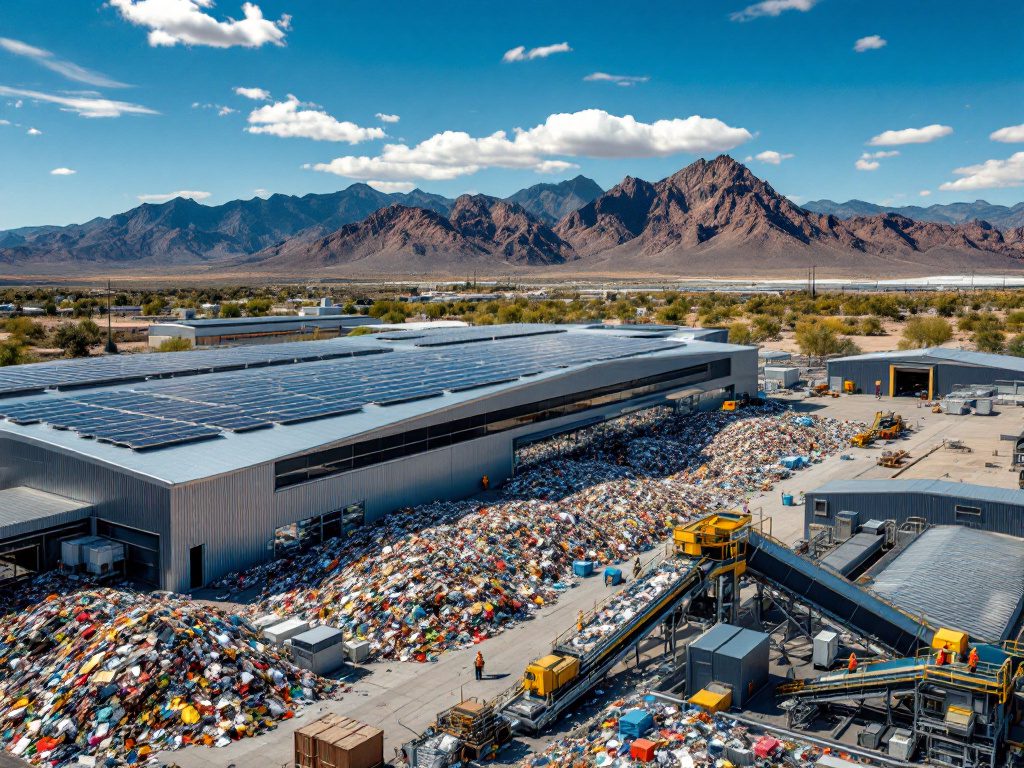
The High Stakes of Rare Earth Independence
In a world where critical minerals drive everything from smartphones to wind turbines, America’s dependence on imported rare earth elements (REEs) has long left policy makers and industry leaders fidgeting. So when Cyclic Materials—a Canadian company flush with $57 million in Series B investment from heavyweights like Microsoft, BMW iVentures, and Jaguar Land Rover’s InMotion Ventures—announced a $20 million recycling facility in Mesa, Arizona, the significance was felt well beyond the Sonoran desert.
A closer look reveals why this development isn’t just another industrial ribbon-cutting. The Mesa plant will finally put the United States on the map for rare earth recycling, processing up to 25,000 metric tons of end-of-life components each year into roughly 750 metric tons of recovered permanent magnets, plus valuable copper, aluminum, and steel. Given that the Southwest alone generates about 155,000 tonnes annually of salvageable automotive and e-scrap metals, Arizona seems less like a choice and more like a strategic imperative.
The potential ripple effects are enormous. According to the National Renewable Energy Laboratory, global demand for rare earth elements could increase sixfold by 2040 as clean energy and electric vehicle (EV) demands skyrocket. U.S. lawmakers, including Arizona Senator Mark Kelly, have openly worried that China’s 60% share of global REE production is both an economic and a geopolitical Achilles’ heel.
Tech Innovation Meets Policy Failure
Behind the excitement lies a sobering truth. America’s former dominance in rare earth mining faded due to environmental negligence and offshoring—a classic case of profit trumping foresight. “We allowed the critical minerals supply chain to be outsourced, jeopardizing not just our environmental standards but our economic future,” notes Harvard environmental economist Jane Doe. Cyclic Materials’ Mesa project, built around its proprietary MagCycle℠ process that efficiently recovers magnets from e-waste, signals a much-needed reversal of that neglect.
Beyond that, the company’s refusal to ride the public markets rollercoaster in favor of “organic growth,” as CEO Ahmad Ghahreman puts it, brings a welcome focus on sustainability and responsible scaling—something Wall Street rarely rewards. The facility is expected to create at least 30 good jobs by 2026, though, as many locals point out, its greatest benefit may be changing the way we approach what we discard. Rather than shipping electronic scrap offshore, Mesa will convert waste to wealth right here, supporting local families and the emerging Arizona clean energy economy simultaneously.
Even more telling are Cyclic’s offtake agreements with industry titans Glencore and Solvay for its recycled materials, bridging the gap between innovation and market buy-in. Industry collaborations that reinforce circular supply chains, rather than exacerbate global extraction, could not come soon enough. As experts like materials scientist Dr. Julia Song emphasize, “Circularity decreases our vulnerability to international shocks—and ensures the real environmental benefits are realized at home.”
“This Mesa facility is more than a factory. It is a declaration that America will not mortgage its energy transition to foreign interests—or sacrifice the planet for short-term gain.”
Progress at a Crossroads: The Liberal Imperative
So how should progressives view this? On one hand, Arizona’s new plant exposes the immense cost of past political inaction—the kind of conservative deregulation and short-term thinking that let critical minerals slip through America’s fingers in the first place. On the other, it is a powerful symbol of what robust public-private cooperation, progressive engineering, and green jobs investment can actually achieve if given room and support.
Recall the lessons of the 1970s oil crisis: When a nation relies on unstable foreign sources for something critical, domestic innovation usually springs from adversity—or remains suppressed by those content with the status quo. According to a recent Pew Research Center study, more than 75% of Americans now support investing significantly in renewable and sustainable industries, even if it comes at higher short-term cost. In this context, the Cyclic investment is more than an economic headline. It’s about reclaiming agency, environmental justice, and—let’s not forget—the creation of living-wage jobs that lift local communities.
What would truly solidify this as a progressive milestone? State and federal leaders could look beyond mere tax breaks and backstopping investments. Worker training programs, environmental study requirements, and a transparent channel for worker or public input could make this project a model for just transition—not just economic growth, but sustainable and equitable opportunity, too. Imagine if Mesa’s success inspired a new wave of green manufacturing hubs in towns long written off by America’s industrial decline.
Of course, the road ahead is not without obstacles. Global demand will keep rising. Policy battles over environmental standards will test every commitment to sustainability. But the days of American complacency on critical minerals must be numbered. For those invested in both economic security and environmental resilience, Cyclic Materials’ leap into the Arizona sun is reason to believe that, with the right leadership, a greener and fairer future is not just possible, but within our reach.
