
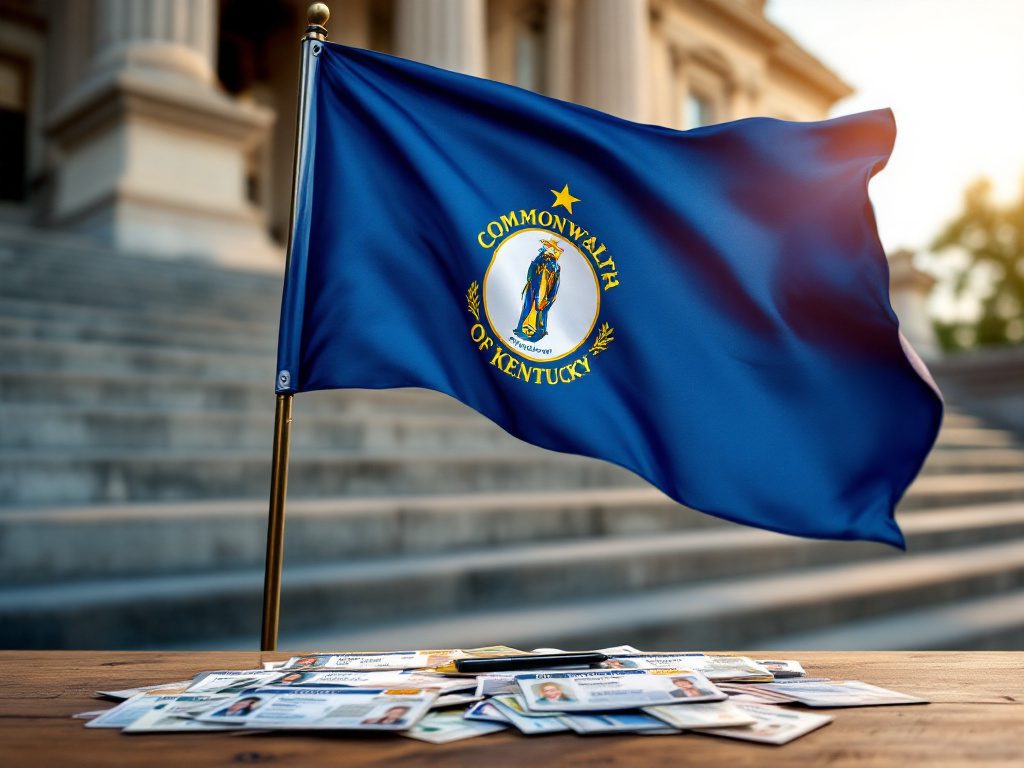
A State Caught in the Crosshairs of Federal Mandate
Picture a long line of weary faces snaking out the door of a government office, a scene that might call up memories of bygone bureaucratic inefficiencies. But for thousands of Kentuckians desperate to secure a federally compliant ID before the looming May deadline, this scenario is all too real. With just weeks left before the nationwide enforcement of the REAL ID Act—a policy born post-9/11 but delayed nearly two decades by tangled regulations and underfunded state-level implementation—Kentucky lawmakers are sounding the alarm: “We are simply not ready.”
Senate Transportation Chair Jimmy Higdon, joined by 27 state and federal colleagues, including U.S. Senator Mitch McConnell, has taken the unusual step of formally requesting the Department of Homeland Security grant the Commonwealth more time. Their plea centers on a stubborn set of problems: only about 35% of residents have obtained the new IDs (according to Kentucky’s Department of Vehicle Regulation), regional licensing offices are chronically backlogged, and appointment slots vanish within minutes of release. For those living outside urban centers, the burden is even heavier—some must travel hours or across county lines just to access a licensing office open for REAL ID services one Saturday per month.
Against this backdrop, you might ask: Is Kentucky’s struggle an outlier or a warning sign for the nation?
The Human Toll of Bureaucracy—and Missed Policy Connections
Turn the spotlight on stories like Deanna Scott’s. A lifelong resident of rural Kentucky, Deanna found her local licensing office shuttered under the regionalization plan, with the nearest functioning center over 40 miles away. As a working mother, finding a weekday appointment that aligns with her schedule is nearly impossible. The ripple effects are clear: individuals in rural communities—already underserved—face disproportionate obstacles to acquiring what has become an essential credential for air travel and accessing federal facilities.
Kentucky’s digital divide compounds these obstacles. According to a 2023 Pew Research Center study, at least 12% of rural Kentuckians lack high-speed internet, making online appointment booking or information access more challenging. Policy analyst Emanuel Fields at the University of Louisville argues, “When major public goods transition to online systems, the gap grows wider for disadvantaged groups.” The legislature’s move to allow third-party licensing vendors offers hope for expanded access, but the fix arrives too late; it won’t be in effect until after the current federal deadline.
“We’ve created a situation where compliance relies as much on geography and timing as it does on personal responsibility. Untold Kentuckians are being left behind not by choice, but by lack of access.”
—U of L Policy Analyst Emanuel Fields
Comparisons to previous registration mandates—such as the rollout of the Affordable Care Act’s federal exchanges—are apt. There, too, overwhelmed call centers, website crashes, and underinvestment sowed frustration and confusion, particularly among vulnerable populations. The lesson: a public program’s success hinges on robust logistical support and a realistic assessment of how people interact with government infrastructure, especially in less-connected communities.
What’s at Stake: Beyond the Beltway and Into Daily Life
Dive into the numbers and it becomes clear Kentucky is far from alone. At least 17 states languish below the 50% compliance threshold (per Department of Homeland Security estimates). Opposition to REAL ID has rarely followed partisan lines, but the administrative hurdles are distinctly tied to state-level investment—and in many Republican-led states, chronic underfunding of civic infrastructure shapes today’s crisis. Delays, limited hours, and narrow eligibility reflect past choices to cut budgets rather than modernize public services.
The real-world effect is a two-tiered system, where those with the means—time off work, transportation, flexibility—get compliant IDs, while others, often the economically vulnerable or elderly, risk losing access to air travel, federal buildings, and even certain healthcare sites. That contradiction flies in the face of progressive values like equal opportunity and access. Michael D. Brown, former FEMA administrator and policy expert, summarized it for The Atlantic: “Security is vital, yes, but when security policies create new inequities, we have failed at our mission.”
Could the alternative be any clearer? Lawmakers and advocates stress that many residents may not actually need a REAL ID—passports and military IDs remain valid substitutes for federal access. Yet, confusion persists, amplified by inconsistent outreach and a patchwork of state communications. Kentucky’s request to pause the deadline isn’t simply an exercise in bureaucratic foot-dragging—it’s a call to prioritize people over rigid timetables.
An Opportunity to Reimagine Public Service
Looking ahead, the dilemma over REAL ID offers progressives a rallying point for smarter, more humane government. Imagine a rollout process with mobile licensing vans for rural areas, extended weekend office hours, and streamlined online tools accessible even without broadband. These aren’t pipe dreams—several states have piloted mobile DMV units and remote services with success.
Why not use this critical moment to invest in civic infrastructure, close the digital divide, and ensure every American can access foundational services without undue hardship? Kentucky’s predicament underscores a national imperative: effective policy must be paired with genuine, equitable access. As the U.S. considers the next chapter in its quest for “secure” identification, it must choose not just what is secure, but for whom security is truly guaranteed.
The lessons are urgent, the stakes are high, and as history so often reminds us—progress begins when government meets people where they are, not where we wish them to be.
