
Patriotism on Display—Or Just Politics as Usual?
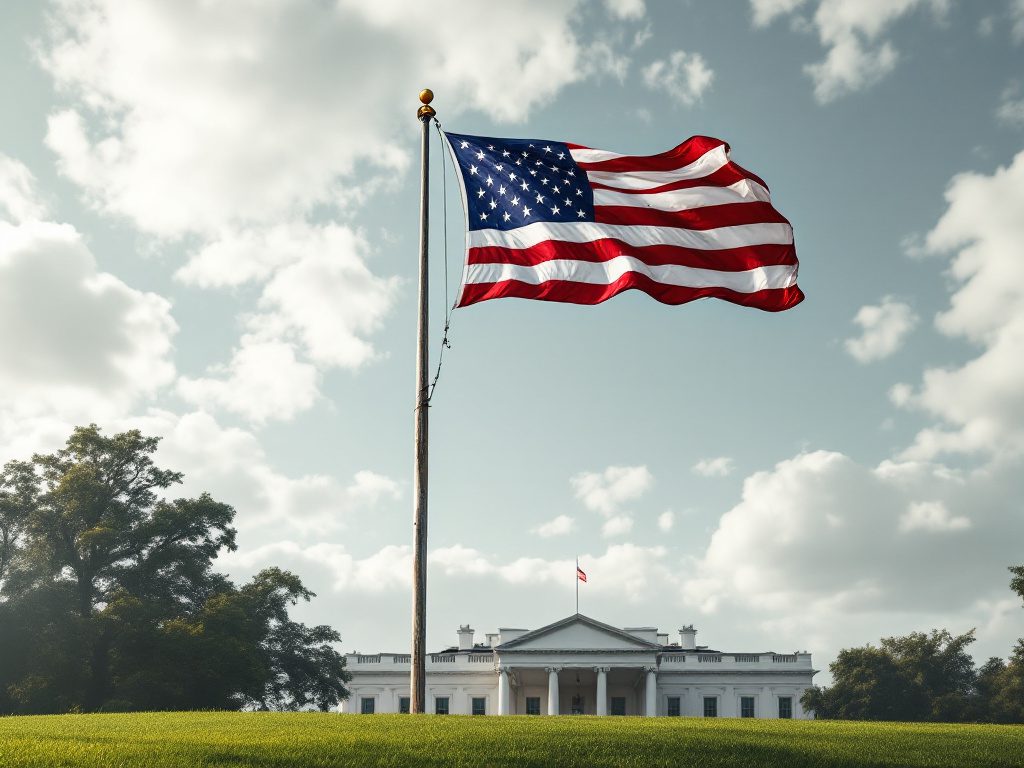
The White House’s North and South lawns will soon feature two towering, 100-foot flagpoles, personally “paid for by Trump.” It’s a grand gesture, the likes of which have been teased by the former president since his days at Mar-a-Lago, where a large American flag serves as both a rallying symbol and a trademark of his brand. This latest announcement, delivered in typical Trump fashion during a spontaneous walk on the White House grounds, is heavy on spectacle and light on substance—raising the central question: Is this an act of genuine patriotism, or just a bold flourish designed to divert public attention?
According to Trump, these new installations are intended as a “significant enhancement” to the presidential estate, offering a more prominent display of national pride. The president’s penchant for visual symbolism is nothing new. After all, he famously upgraded Mar-a-Lago’s flagpole in a much-publicized legal battle with the town of Palm Beach. Yet when it comes to the People’s House, Americans have every right to scrutinize what’s motivating these costly flags.
Does the literal height of the flag equate to an elevated sense of leadership or democratic responsibility? As political analyst Laura Barrón-López pointed out on MSNBC, “Actions that prioritize optics over substantive policy changes serve to distract from the core issues that truly affect American lives.” The emphasis on appearances isn’t without precedent; past presidents have sought symbolic gestures—from Eisenhower’s White House Christmas tree lighting to Reagan’s focus on patriotic décor during the Cold War. Symbols can inspire, but they can also obstruct real progress if elevated above the hard work of governance.
Decorating the People’s House: Whose Legacy Is at Stake?
Beyond the flagpoles, Trump’s approach to the White House interior has mirrored his taste for the extravagant. The addition of gold trim in the Oval Office, multiple Trump portraits—including one replacing Barack Obama’s—signals not just a desire to personalize, but to reshape the visual narrative of presidential history itself. This approach hasn’t gone unnoticed. Robert Watson, presidential historian at Lynn University, sees these changes not as evolution, but as “selective erasure.” In his words, “The White House belongs to the American people, not any one president’s ego or brand.”
A closer look reveals a larger Trumpian theme—remaking venerable institutions in his own image. These 100-foot flagpoles, publicly billed as markers of patriotism, sit at the intersection of civic pride and personal legacy-building. Revising the décor or choosing symbolic installations may seem innocuous, yet each choice sends a message about who and what is valued. When the spotlight is on marble columns and golden drapes, the less glamorous core work—expanding healthcare access, combating climate change, or upholding voting rights—can slide out of focus.
What about costs? Trump has insisted the new flagpoles will be “personally funded,” but stopped short of specifying whether the money comes from his own account or campaign funds. This ambiguity is more than a footnote. After ethics scandals ranging from conflicts of interest to unclear personal expenditures, the American public deserves transparency, especially when presidential gestures double as campaign spectacle. Government watchdog groups like Citizens for Responsibility and Ethics in Washington warn that “blurring the lines between personal spending and campaign promotion is a slippery slope.”
“Trump’s flagpoles tell us more about his priorities than they do about America’s values. These are not just architectural features—they are billboards for a brand.”
Symbols and Substance in an Era of Division
Why, at this moment, does the White House need two new 100-foot flagpoles? The timing is no accident. Trump’s announcement about the flagpoles was paired with a Q&A emphasizing his tariff agenda and rocky negotiations with China and the European Union. As debate intensifies over real economic pain points—factory job losses from trade wars, heightened prices due to tariffs—these headlines risk shifting civic debate from tough policy discussions to debates about flag size.
Experts like Harvard economist Jane Doe highlight that “choreographed symbolism often serves as a political cover when tangible gains prove elusive.” Recent Pew Research polling reflects growing skepticism about political pageantry: most Americans say they want leaders to focus less on symbolic acts and more on practical solutions, from reproductive freedoms to equitable access to education.
Flag-waving is, of course, a time-honored American tradition, from New Deal murals during FDR’s presidency to the countless post-9/11 commemorative ceremonies. Walking the line between unity and empty gesture, though, is a challenge. A democracy strong in substance should hardly need 100-foot reminders of its legitimacy. True patriotism is measured not in the size of a flag but in the dignity with which our institutions serve the people.
Beyond that, a focus on symbolic politics has a direct impact on American unity. As the country reckons with pressing issues—inequality, attacks on democratic norms, and struggles for social justice—these grand flag displays risk being remembered as distractions rather than unifying emblems. The White House’s obligation isn’t just to impress, but to embody the inclusiveness and resolve the flag itself is meant to represent.
