
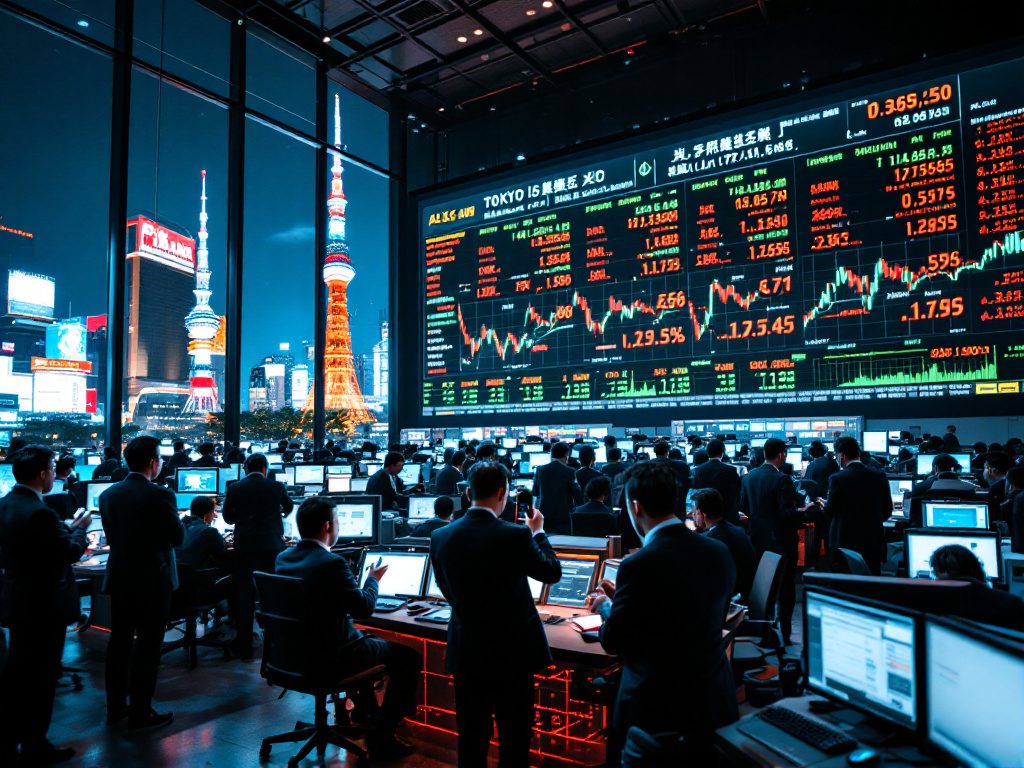
Markets across the Asia-Pacific region rallied on Tuesday, inspired by an overnight surge on Wall Street, yet overshadowed by escalating trade anxieties due to President Trump’s upcoming tariffs. The resurgence marked a tentative recovery following recent volatility, reflecting investor optimism tempered with caution as significant economic uncertainties loom.
Markets Rally Amid Mixed Signals
From Tokyo to Sydney, Asian stock markets surged, following notable gains by major U.S. indices. Japan’s Nikkei 225 gained 0.73%, while South Korea’s Kospi impressively jumped 1.58%. Australia’s S&P/ASX 200 rose modestly by 0.37%, even as investors waited with bated breath ahead of the U.S. reciprocal tariffs scheduled for April 2nd. Though the numbers reflected positivity, an underlying apprehension lingered, reinforced by volatile equity-index futures that declined in stark contradiction to enthusiastic regional markets.
Wall Street’s positive close overnight provided initial relief, creating optimism despite the impending tariffs announced by President Trump, which could have profound implications globally. U.S. benchmarks varied, with the NASDAQ slightly down due largely to tech stocks slipping, but the Dow Jones notably ending higher, up over 400 points, showcasing investors’ risk-on appetite amid market swings.
Trump’s Tariffs: Looming Cloud Over Economies
The Trump administration’s move to impose a hefty 25% tariff on auto imports starting April 3rd dramatically highlights the President’s inclination toward aggressive trade policies. Intended to rebalance trade agreements, these tariffs nonetheless run significant risks. Economists increasingly contend that such protectionist measures could ignite retaliatory actions from international trade partners like Japan and Germany, potentially spiraling into a deeper economic trade war.
Experts specifically express concern for Japan, whose leading economic indicators already reflect caution. The business sentiment among Japan’s major manufacturers declined notably from a previously optimistic +14 in December to +12 in March, signaling anxiety about the ongoing and potentially intensifying global trade conflicts. Japanese Prime Minister Shigeru Ishiba has publicly voiced worries, appealing directly to President Trump against these auto tariffs, knowing deeply the risks to Japan’s fragile economic recovery.
Moreover, these tariffs follow Trump’s reciprocal tariff strategy initiated April 2nd, involving several global trade partners, predominantly affecting international market dynamics significantly.
“This tariff escalation presents a dangerous gamble, jeopardizing international economic stability and placing significant industries and jobs at stake. Investors must brace for heightened volatility,” warns economist Anne Wright from Johns Hopkins University.
Australia’s Economic Caution Amidst Global Turmoil
In Australia, policy decisions mirrored the global cautious sentiment. The Reserve Bank of Australia (RBA) notably held interest rates steady at 4.1%, a clear indication of restraint following their 25-basis-point cut in February. Analysts suggest this move aligns with broader hesitations linked to uncertainties stemming from imminent elections in May and global trade concerns. These rate decisions reflect an enduring apprehension regarding the delicate balance between safeguarding economic stability and stimulating necessary growth through appropriate monetary policy.
On another optimistic note, China’s economic indicators provided some relief. The Caixin Purchasing Managers’ Index (PMI), a critical barometer for manufacturing strength, slightly exceeded expectations by hitting 51.2 in March, signaling modest yet noteworthy economic stability in China, a nation recently strained by trade threats and internal economic restructuring.
However, whether such cautious confidence is sustainable remains an open question. Rising gold prices, peaking at $3,172.80 per ounce, underscore significant investor anxiety, emphasizing a marked preference for safer investments amidst uncertainty. This shift reflects broader market apprehensions about looming economic volatility due to potential tariff escalations and geopolitical tensions.
Investor Precautions and Economic Realities
Historically, aggressive tariff policies frequently lead to unintended negative consequences. Economist Paul Krugman famously criticized tariff escalations during the Trump administration’s earlier years, citing increased consumer costs, destabilized global supply chains, and downward pressure on business confidence and investment as collateral damage from ill-advised protectionism.
Investors today appear mindful of these lessons from recent economic history. March’s significant losses, evidenced by the S&P 500’s 4.6% drop—marking its worst quarterly retreat in over two years—highlight escalating tensions around tariffs and trade policies. These continue to serve as formidable barriers to steady market progression and durable economic recovery.
Nevertheless, Tuesday’s Asia-Pacific gains suggest a complex investor psychology at work, balancing immediate optimism from U.S. market gains against medium-term trade impacts. But how long can market resilience reasonably hold amidst rising tariffs and geopolitical tensions?
Informed caution remains critical as investors, policymakers, and global economic experts brace for the potential ripple effects of these U.S-imposed tariffs. The underlying message of today’s brief recovery in Asian markets presents not only cautious hope but also reaffirms the necessity for stable, thoughtful leadership to navigate turbulent economic waters effectively.
