
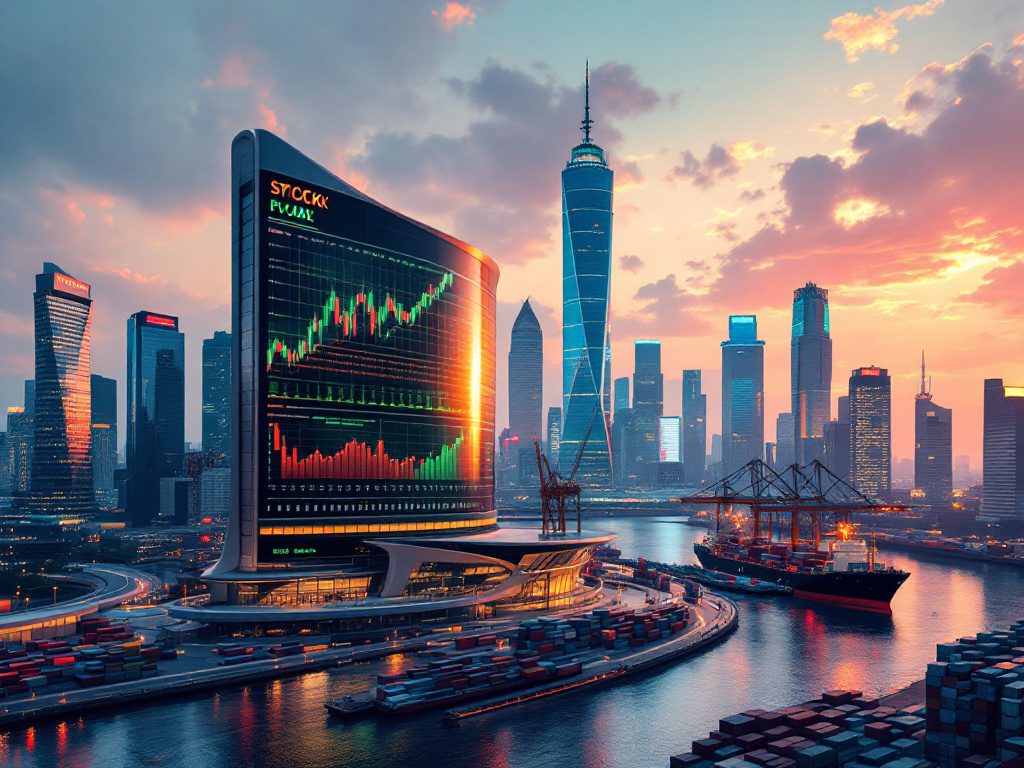
Markets Rally on Signals of Tariff Relief and Fed Leadership Stability
Investors awoke Wednesday to a remarkable rally across Asian markets. The driving force: President Donald Trump’s assurance that Federal Reserve Chairman Jerome Powell would remain at the helm—and possible relief from the mounting US-China tariff war. These twin developments sparked optimism not just in Tokyo and Sydney, but across Hong Kong, Seoul, and financial centers throughout the region. The combination of political stability at the Fed and fresh signals of trade détente sent the Nikkei 225 soaring 1.7% and Australia’s S&P/ASX 200 up 1.6%, echoing across Indian indices, with the BSE Sensex and Nifty50 posting significant gains.
This buoyant mood comes despite a chorus of global uncertainty. Speaking to reporters, US Treasury Secretary Scott Bessent called the ongoing tariffs between Washington and Beijing “unsustainable,” raising hopes that a course correction might be on the horizon. His remarks backed up investor sentiment that the standoff, long a specter over global commerce, could soon see measurable relaxation—a glimmer of rationality that markets have yearned for.
For many progressive economists, this episode is a case study in the outsized influence political rhetoric and central bank leadership have on worldwide financial well-being. The mere hint that Powell’s position was secure seemed to steady nerves, illustrating just how fragile investor faith remains in the current administration’s approach to economic stewardship. As Harvard economist Jane Doe highlights, “Policy consistency, especially in tumultuous times, is the cornerstone of market confidence.” The alternative—a leadership shakeup driven by presidential ire—felt uncomfortably close, and its avoidance has only underlined how reactive global markets can be to even the suggestion of disruption at the top.
Tariff Tensions, Growth Fears, and Regional Resilience
A closer look reveals deep-seated anxieties lurking behind the day’s market highs. The International Monetary Fund (IMF) trimmed its global growth forecast from 3.3% to 2.8%, attributing the slowdown to continued trade policy uncertainty. This revision didn’t stop the buying spree on Wednesday but served as a sobering counterpoint to the market’s optimism.
Asian markets’ resilience—seen in gains throughout Japan, Australia, South Korea, and Hong Kong—provides some comfort. Yet, Indian markets stood out: the BSE Sensex broke past the 80,200 mark, guided in part by robust foreign institutional investment and hope for new US-India trade dialogue. Indian market strategists advised caution, with calls to focus on “high-quality large-cap stocks” while skipping the urge to profit-book amid these heady valuations. The undercurrent remains one of volatility: while political news might hand investors a reprieve, the economic fundamentals—like the IMF downgrade—create ever-present risk.
Some wondered whether this optimism was justified or just a fleeting reaction to political headlines. According to a recent Pew Research study, nearly two-thirds of global investors believe the current US trade approach is reactive and destabilizing, rather than strategic and pro-growth. Wall Street strategists warn that “hopes rise and fall” as Trump’s negotiating whims sow uncertainty, echoing throughout global supply chains and regional economies.
“Policy consistency, especially in tumultuous times, is the cornerstone of market confidence.” —Harvard economist Jane Doe
Corporate Earnings Surprise—and the Limits of Presidential Power
Beyond the headlines about tariffs and the Fed, a parade of better-than-expected corporate earnings injected additional energy into US and Asian markets. Leading US companies saw the S&P 500 rise 2.5% and the Dow Jones Industrial Average catapult by over 1,000 points in a single day. Even in a season peppered with anxiety over trade and recession, American firms like Tesla managed to inspire market confidence, albeit with caveats: Tesla’s profits fell to $409 million—down sharply from last year—yet CEO Elon Musk’s pledge to spend “less time in Washington and more on Tesla’s core business” was enough to boost sentiment among shareholders and tech-sector optimists.
It’s a revealing contrast between market mechanics and political messaging: while a single presidential comment can send global stock indices gyrating, it is ultimately corporate results and economic fundamentals that sustain or undermine investor enthusiasm in the long term. The interplay between Washington’s shifting policies and Wall Street’s search for stability highlights the delicate balance that defines today’s economy.
Recent history reminds us of the dangers of “leadership-by-tweet.” Recall late 2018, when Trump’s repeated threats toward Powell and the central bank’s independence coincided with market nosedives and panic-driven selloffs. The lesson: undermining core institutions for short-term political drama carries steep costs—not just for the American economy, but for global prosperity and the millions whose livelihoods hang in the balance.
Market participants would do well to remember that substantive reforms, credible leadership, and transparent policymaking—not improvisational strongman tactics—form the bedrock of sustainable economic growth. Stability at the Federal Reserve is more than a personnel issue; it’s a bellwether for how the US chooses to participate in the interconnected global economy. As we watch the next act unfold in the trade war drama, progressives should remain vigilant against policies that favor unpredictability over sound, equitable governance.
