
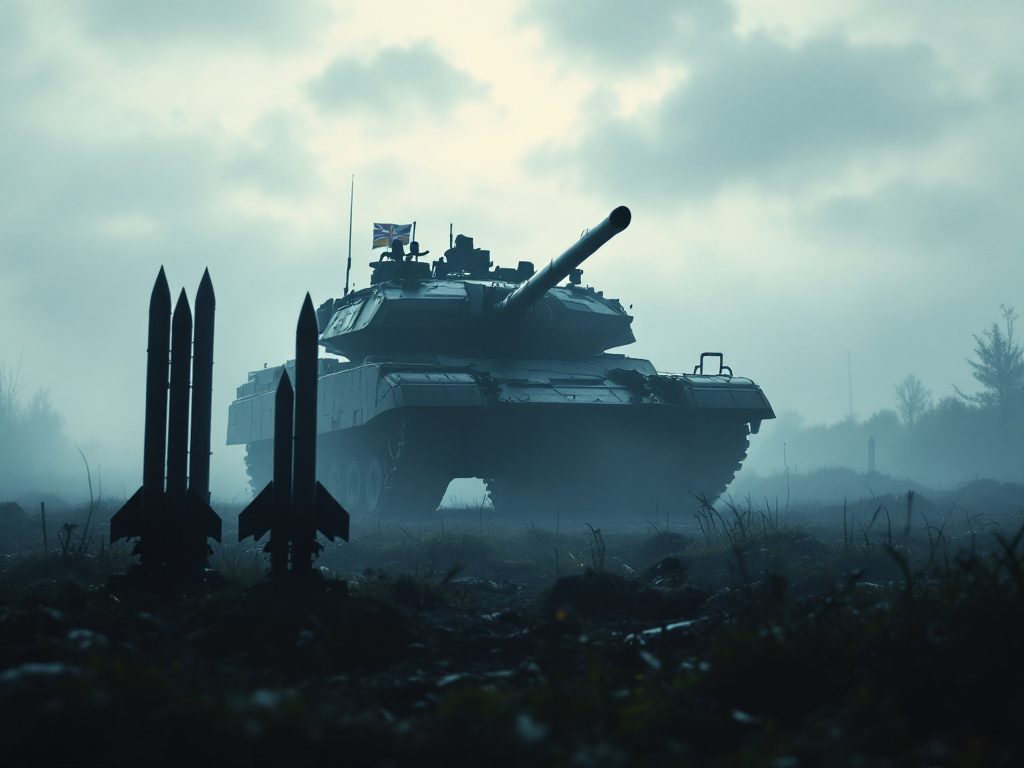
The High-Stakes Debate Over Taurus Missiles
With relentless artillery duels and urban destruction in Ukraine’s east, a new debate has gripped Europe’s capitals: Should Germany break ranks and provide Kyiv with Taurus, an advanced long-range cruise missile? The United Kingdom has signaled an unequivocal answer—Britain stands prepared to back Germany’s transfer—even as the decision splits Berlin and raises difficult moral, political, and strategic questions for the West.
Taurus, a German-Swedish marvel of military engineering, boasts a range over 500 km. It can strike fortified, high-value targets far from the frontlines, gliding low with sophisticated guidance to evade Russian air defenses. For Ukraine’s battered defenders, Taurus could be transformative, offering the sort of reach and precision that British and French Storm Shadow and SCALP missiles have brought to the battlefield already. “As Russia continues its brutal campaign, Western unity and resolve have never been so crucial,” says Dr. Claudia Major, a security expert at the German Institute for International and Security Affairs.
Yet within Germany, the discussion has been anything but united. Outgoing Chancellor Olaf Scholz refused to send Taurus, haunted by the prospect of Ukrainian strikes on the Kerch Bridge in Crimea or even iconic Moscow targets—actions that could, in his view, trigger a wider war. Acting Defense Minister Boris Pistorius remains skeptical, while incoming Chancellor Friedrich Merz, leader of the center-right Christian Democrats, signals openness if key allies like Britain and France are on board.
Britain’s public willingness to support the move is more than a technicality. It’s a pointed political signal—one that may embolden pro-Ukraine factions as Germany’s coalition talks wear on, and which could reshape the argument in Berlin from one of risk-aversion to responsible solidarity with Ukraine at a critical moment.
Public Opinion, Political Risk, and the Limits of Caution
Why, then, does the debate carry such political peril in Germany? Beyond that, a recent ARD poll found 64% of Germans opposed sending Taurus missiles to Ukraine, a figure that gives even hawkish politicians pause. The German public’s “deep postwar pacifism and fear of escalation with Russia is real,” says historian Katja Hoyer, “but it’s increasingly challenged by the horrors unfolding in Ukraine.”
Supporters of the transfer argue that Taurus is a defensive tool, allowing Ukraine to degrade Russian logistics and command far from civilian areas and push Moscow’s war machine back. Critics warn of “red lines” and escalation. Scholz himself voiced fears that the missiles could land in the Kremlin’s backyard or be used against the symbolic, strategically vital Kerch Bridge, inviting Russian retaliation not only against Ukraine but potentially against NATO.
“The tension is not whether to help Ukraine, but how far you risk direct confrontation with Moscow for a nation fighting for its survival.”
Historical parallels cloud the conversation: Many Germans recall the agony of proxy conflicts in the Cold War, where miscalculation could have meant catastrophe for Europe. Yet, as British Foreign Secretary David Cameron recently stated, “There is no responsible strategic argument for holding back advanced weapons from Ukraine while Moscow wages war with impunity.” His view echoes growing Western frustration with German caution—a feeling that delay only prolongs Ukrainian suffering and Russian occupation.
Polls aside, political pressure mounts within Berlin’s government. As Merz’s Christian Democrats pivot toward a stronger transatlantic line, fearing a “wobbly Europe” becomes a political liability. French hesitation still complicates the picture, but Britain’s readiness to openly endorse Taurus changes the diplomatic math: If consensus among key NATO powers can be reached, Germany’s resistance may prove unsustainable.
The Broader Stakes: Unity, Deterrence, and the West’s Moral Test
Britain and France already provide Ukraine with Storm Shadow and SCALP missiles—kin to Taurus in destructive reach and technological pedigree. If Germany joins them, the impact will not merely be tactical. The message to Moscow would be unmistakable: The West won’t be paralyzed by Kremlin threats or opinion polls in defending European democracy. According to Dr. Ian Bond, the Centre for European Reform’s foreign policy director, “Any gap in Western resolve only emboldens Putin. Drawing lines is pointless unless you’re willing to act.”
Isn’t it time to ask—if Europe’s richest nation continues to hesitate when its allies have already stepped up, what precedent does that set for collective security? The stakes are generational: Today’s decisions will shape not only the war’s outcome but the entire European security architecture for decades. America’s wavering commitment underlines why Europeans themselves must lead, acting decisively while aligning across parties and borders.
A closer look reveals Germany is not simply risking Ukrainian defeat but undermining Western unity if it opts out. Polls can change—but Ukraine’s need for long-range strike capability is immediate, and British support for Taurus marks a powerful inflection that Berlin ignores at its peril. Past episodes, like the slow delivery of Leopard tanks, have shown how foot-dragging helps only one side: the aggressor.
As coalition talks grind on, the world is watching. Will Berlin heed the call—backed now by London and, potentially, Paris—to step up? Or will the ghosts of the past keep Germany on the sidelines? One thing is certain: Ukraine will judge the West not by its words, but by its courage to match those words with action.
