
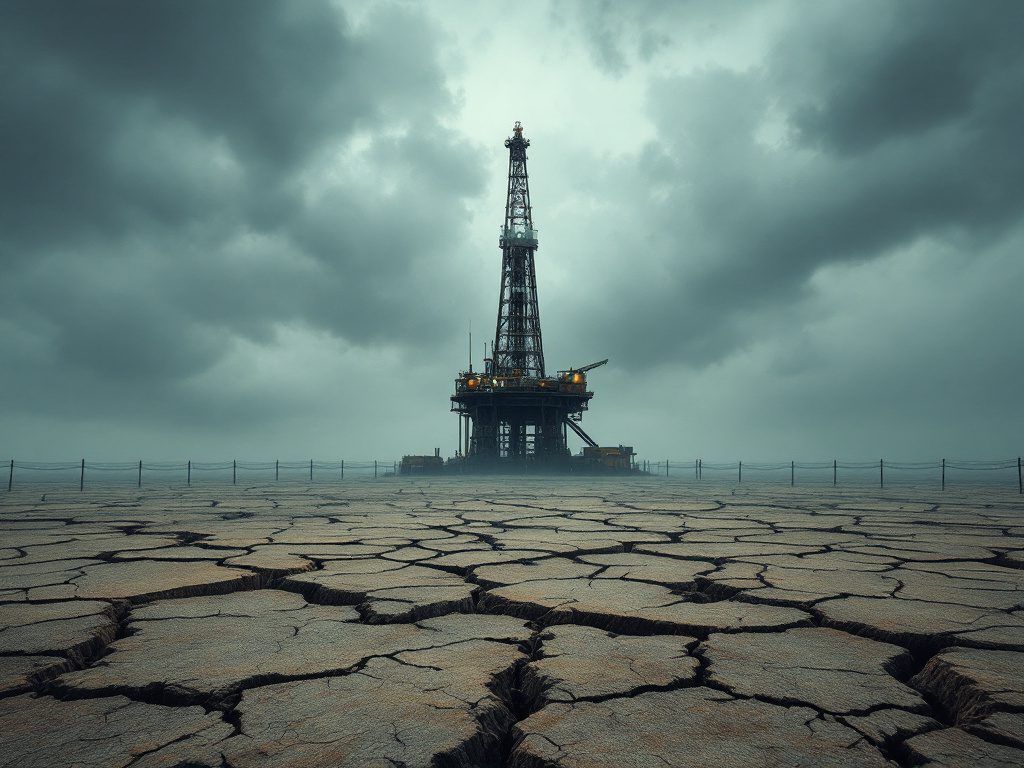
Oil Markets Under Pressure: Sanctions and Surges
A jolt shot through the global oil markets this week. For the second day in a row, crude prices surged—West Texas Intermediate futures hovered near $63 a barrel, their highest point in over a month—after the United States announced tough new sanctions targeting Iran’s oil exports. Ostensibly, these measures are classic hardball: a direct attempt to squeeze Tehran economically and politically. U.S. Treasury Secretary Scott Bessent did not mince words, describing ‘maximum pressure’ as the new normal for disrupting Iran’s oil supply chain. By specifically targeting Chinese “teapot” refineries accused of laundering sanctioned barrels, Washington is casting a wide net across vast, often murky, international oil waters.
The Trump administration’s renewed “maximum pressure” campaign may win headlines for cracking down on Iran’s petroleum income, but whose interests are truly being served? From the White House press room to trading floors in Singapore, volatility has replaced predictability. Energy sector stocks outperformed the wider market in tandem with the price rally—APA Corp climbed 3.2%, Targa Resources and Devon Energy 2.7% each, with Diamondback Energy up 2.6%—as investors jumped at the scent of windfall profits. Still, even as Wall Street cheered, the everyday American faces elevated gasoline and heating prices as a direct result of manipulated supply chains.
The U.S. administration’s focus wasn’t limited to restricting Iran directly. The new sanctions also punish companies and vessels facilitating what’s commonly called the ‘shadow fleet’—a network of ships evading scrutiny to keep Iranian oil flowing in spite of diplomatic efforts. These escalations aren’t just about barrels and profit margins; they are shaping the geopolitical chessboard, with ramifications Europe, Asia, and Africa can’t ignore. As sanctions ripple through the world’s supply chains, every family at the pump inevitably feels a sting carefully orchestrated thousands of miles away.
Winners and Losers: A Fragile Balance
Who gains and who loses when a superpower flexes its muscles in the global oil market? Wall Street’s reaction was immediate: energy stocks soared, overshadowing drags in the tech sector. But this rally comes at a cost. Everyday consumers bear the real pain—gas prices at the pump inch higher, while home heating budgets tighten nationwide. For middle- and working-class families, these increases aren’t just economic footnotes; they’re a direct hit, compounded by stagnant wages and inflation that already outpace household budgets.
Global repercussions go further. OPEC, after years of uneasy alliances and quota battles, once again pledged deeper output cuts—this time, with Iraq, Kazakhstan, and others scrambling to submit new compliance plans after overshooting previous limits. The goal: bring balance to a see-sawing market, but also to shore up collective profits just as U.S. sanctions turn off another spigot of supply. Yet, as experts like Michael McCarthy of CMC Markets point out, Iranian production isn’t a linchpin in the world oil order, nor do all OPEC members actually stick to their quotas. Still, even a whiff of disruption can light a fire under prices, fueled as much by psychology as by physical barrels.
“When the U.S. weaponizes energy, it isn’t just autocrats who feel the squeeze—households in Cleveland, Nairobi, and Beijing pay the real bill.”
Pile on reports from the International Energy Agency, OPEC itself, and investment giants like Goldman Sachs and JP Morgan—all recently slashing forecasts for global oil demand and pricing amid rising trade tensions—and the situation gets murkier. OPEC’s latest forecast pegs global trade at a contraction of 0.2% this year, compared with a hoped-for 3% expansion just months ago (World Trade Organization). Oil is not an island—it is the lifeblood of a fragile ecosystem rocked by tariffs, retaliatory measures, and currency wars. Despite this, major oil companies and investors seem eager to seize short-term gains, leaving consumers and smaller economies to carry the risks.
The Broader Fallout: Policy Choices and Repercussions
While the Trump administration’s approach may score easy political points for appearing tough on Iran, a closer look reveals a tangle of unintended consequences. Beyond the headlines, punitive sanctions often fail to produce lasting change, instead prolonging humanitarian crises and strengthening hardline positions within targeted governments. Iran’s Foreign Minister Abbas Araqchi responded that Iran’s right to enrich uranium is “non-negotiable,” highlighting the limits of economic pressure to curb nuclear ambitions through simply throttling oil exports (Reuters).
Domestic policy choices inevitably echo abroad. High crude inventories in the U.S.—stockpiles rose by 515,000 barrels this week, even as gasoline and distillate levels fell—suggest an underlying disconnect (U.S. Energy Information Administration). Despite shriller rhetoric and actual disruption of sanctioned flows, macroeconomic headwinds and the hangover of trade tensions mean any price rise may only be temporary. Citi analysts are already calling for oil to dip toward $60 per barrel in the near term, only to potentially rebound if global growth stabilizes (Citi Global Markets, April 2024).
Ultimately, sanction-based, isolationist energy strategies spotlight a deeper need for international cooperation over unilateral bluster. History offers cautionary tales. From the oil shocks of the 1970s—when embargoes triggered fuel lines and economic malaise—to more recent disruptions caused by regional conflicts, punitive measures rarely stay contained. They breed unpredictability, incentivize risky shadow trade, and fracture the trust and collaboration that global energy security desperately requires.
If there’s a silver lining, it’s in the growing realization—across parties and continents—that cleaner, diversified energy economies are not only environmentally necessary but increasingly strategic. Progressive voices continue to call for robust investment in renewables, improved public transit, and social safety nets to shield the vulnerable from policy-induced market shocks. The evidence is clear: energy policy must not be wielded as a club, but as a lever for positive, sustainable change.
