
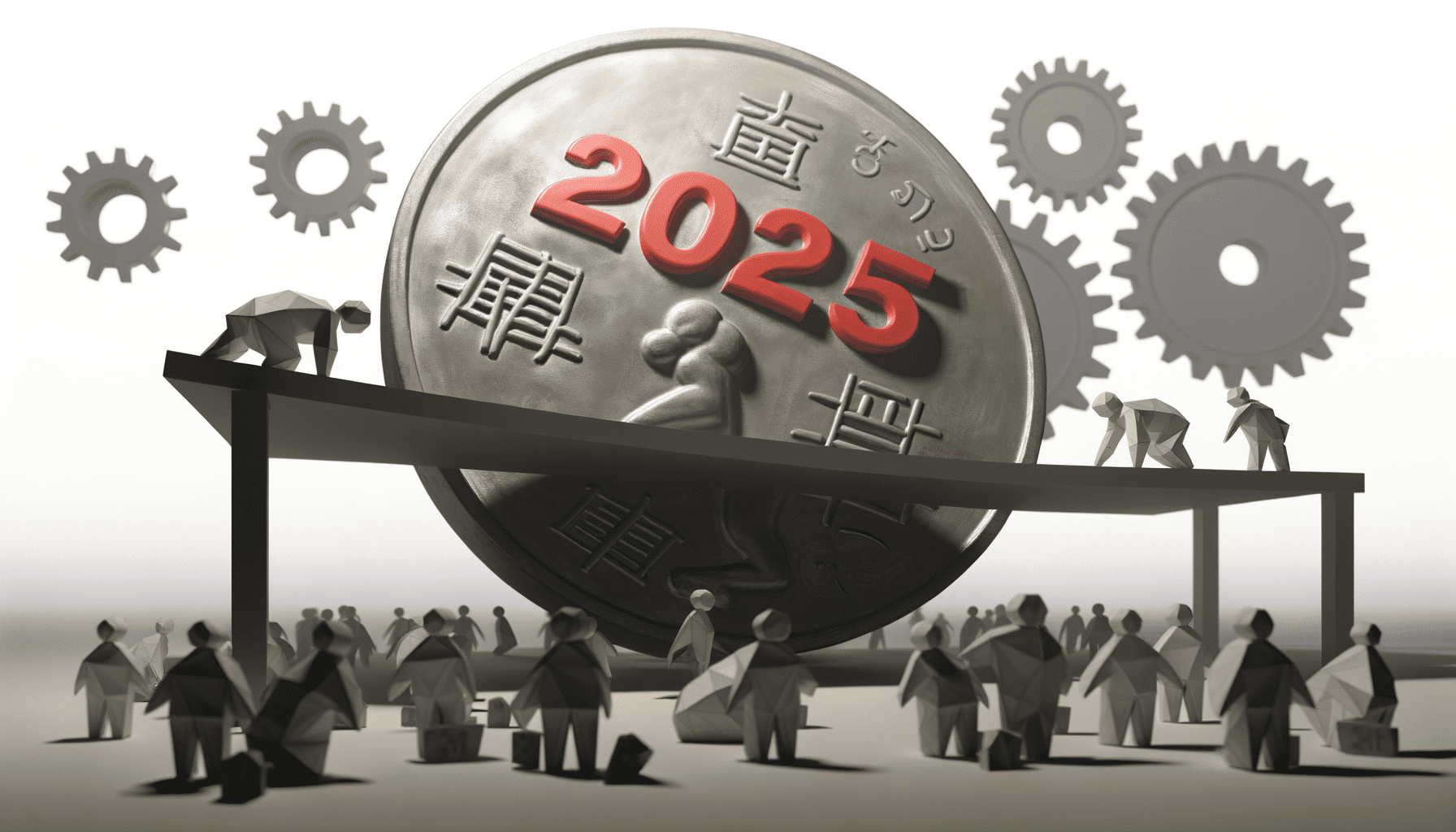
Signs of Recovery Amid Economic Woes
China’s economy is no stranger to the roller-coaster ride of fluctuating markets and unexpected geopolitical challenges. Recent data from the first two months of 2025 paint a complex picture of an economy at a crossroads. On the one hand, the country has seen an uptick in retail sales and industrial production, a sign of recovery. Retail sales increased by 4% compared to the previous year, and industrial production showed a robust 5.9% rise year-on-year. Analysts attribute these gains partly to government incentives encouraging consumer trade-ins of old household appliances for new ones.
However, beneath these seemingly positive numbers lie significant challenges. The real estate market, once a cornerstone of China’s economic dynamism, stumbled as investment fell by 9.8%. Moreover, the National Bureau of Statistics (NBS) warns of weak domestic demand, which remains a thorn in the side of policymakers attempting to buoy the world’s second-largest economy. The NBS points to an increase in the urban unemployment rate to 5.4%, a two-year high. This dichotomy of growth and struggle aptly highlights the delicate balance China must maintain as it navigates economic turbulence.
The Housing Market: A Persistent Drag
The Chinese housing market continues to cast a long shadow over national economic prosperity. Recent data reveal that real estate prices declined year-on-year in 68 of 70 major cities, despite government efforts to stabilize the sector. The pace of decline has slowed, but the deep-seated issues within the housing market linger. This ongoing crisis is more than just an economic impediment; it creates real-world consequences for individuals and families caught in the web of falling property values. Many are left grappling with the harsh reality of negative equity or elongated timelines for property sales.
Fu Linghui of the NBS underscores the complexity of the external environment, which has shifted from merely competitive to grim, causing companies nationwide to face increasing difficulties. Despite the dismal real estate statistics, there is room for optimism. Efforts to stimulate consumer spending through targeted subsidies reflect a proactive stance by Beijing, aimed at reducing economic dependence on fluctuating export markets. Still, ING’s chief Greater China economist, Lynn Song, cautions against reducing policy support prematurely, indicating that ongoing intervention is crucial for fostering a stable and sustainable recovery.
“The foundations for sustained economic recovery and growth are not robust enough. Continued intervention is crucial,” emphasizes Song.
Targeting Growth Amid Tariff Tensions
Further complicating matters is the burden of new tariffs imposed by the United States, which casts a shadow over China’s economic horizon. This move not only strains international trade relations but also exacerbates domestic economic challenges. President Donald Trump’s administration has ratcheted up tariffs, threatening to impact China’s high-tech sector, which remains a beacon of hope for future economic stability and innovation.
The Chinese government’s response has been to outline a 30-point plan to boost consumption, aiming to stabilize growth around an ambitious 5% this year. While this target showcases confidence in China’s economic resilience, achieving it will require deft maneuvering and perhaps even more robust policy support. Officials have zeroed in on increasing consumer demand through measures like income raises and childcare subsidies, aiming to stimulate a more consumption-driven economy rather than relying solely on export markets.
A closer look at these plans reveals a deep commitment to not only stabilize the economy but also to enhance the well-being of its 1.4 billion citizens. These policies will need to strike a delicate balance at a time when external pressures are high and internal demands for economic reform grow.
The Path Forward: A Cautious Optimism
Looking ahead, the Chinese economy’s path is riddled with both opportunities and potential pitfalls. Economic recovery, as illustrated by the mixed signals in recent data, is far from guaranteed. Yet, the resilience shown in retail and industrial sectors provides a hopeful glimmer for the months to come. Many economists echo concerns over the viability of sustaining long-term growth amid these challenges.
However, this period of economic uncertainty provides an opportunity for policymakers to reevaluate and reframe China’s economic strategies to prioritize not just growth but sustainable, equitable progress. It is a moment calling for reshaping policies that promote diversity, equality, and inclusion, ensuring that the benefits of economic resurgence reach every tier of society.
The progressive path forward involves creatively addressing internal inefficiencies and embracing international cooperation over isolationist tendencies. By harnessing the potential of its technological advances and addressing domestic challenges head-on, China can set a transformative precedent for economic development in the modern era.
As China faces its next chapter in economic development, the questions looms: Can it embrace the challenges and evolve, or will it remain mired in the cyclical uncertainty of the past? For now, hope lies in the adaptability of its policies and the resilience of its people.
