
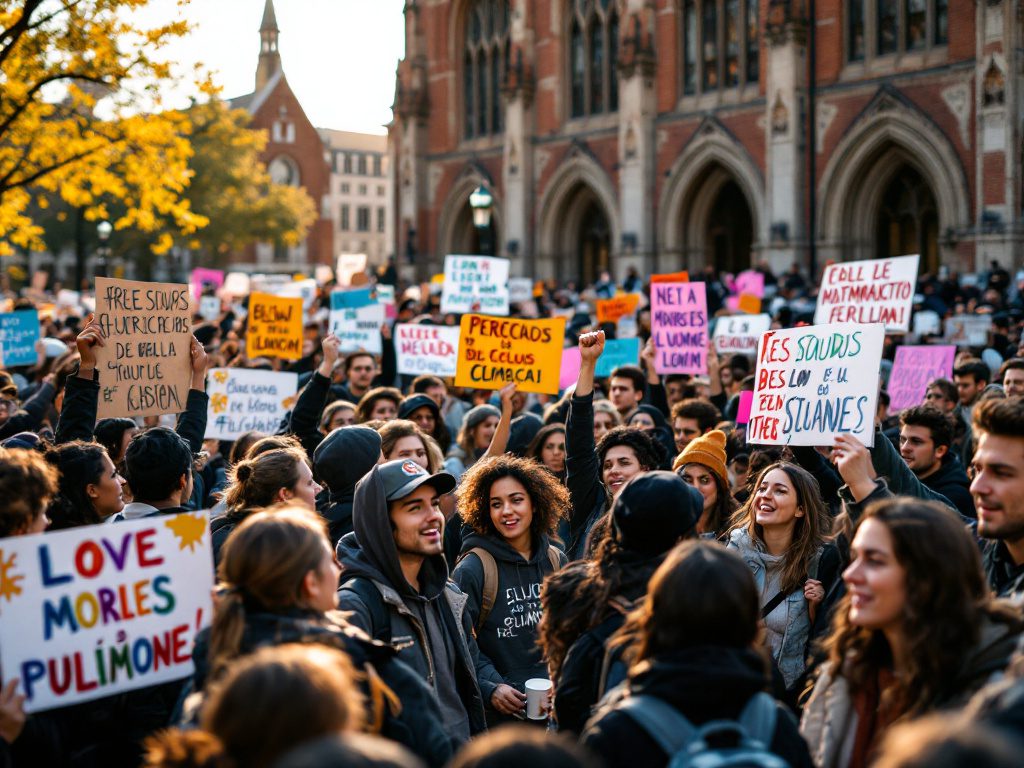
The images were striking: Columbia University students, some masked and others draped in keffiyehs—a traditional scarf symbolizing Palestinian solidarity—were seen chained to the gates of St. Paul’s Chapel on campus. Their bold rallying cry echoed throughout the grounds: “globalize the intifada” and “There is only one solution, intifada revolution.” What prompted such a vivid demonstration of political solidarity and resistance particularly from a group of Jewish students?
At the heart of this tense scene was the detention of Mahmoud Khalil, a legal permanent resident and prominent campus advocate for Palestinian rights. Students have accused the university’s trustees of direct collaboration with U.S. Immigration and Customs Enforcement (ICE), claiming this betrayal resulted in Khalil’s arrest. Despite Khalil not being formally charged with any criminal offense, ICE detained him, reinforcing the fears already heightened by Trump’s controversial and aggressive immigration policies.
A University under Scrutiny
The student protesters demanded transparency and accountability, calling out the university administration and trustees by name in their chants and protest banners. Central to their demands was the revelation of the trustees who allegedly supplied Khalil’s identification to ICE officers leading to his detainment. The protesters viewed this alleged act not merely as administrative cooperation but as a significant ethical transgression, framing it as a direct attack on student safety and freedom to express political opinions.
The campus has been grappling with mounting tension over the past year, significantly around the controversial handling of anti-Semitism allegations and Israel-Palestine advocacy. This particular incident formed part of a broader narrative highlighting institutional silence or complicity in actions that critics argue silence marginalized voices within academic circles.
One student named Shea, uniquely recognizable by his watermelon-patterned kippah and keffiyeh scarf, vividly encapsulated the protesters’ blend of Jewish identity and pro-Palestinian humanitarian concern, reflecting the nuanced alliances forming around issues of justice and human rights among progressive Jewish students.
The Fallout: Administrative Shakeups and Financial Losses
These protests have hardly occurred in isolation. Indeed, the renewed focus on Columbia’s internal policies—especially related to issues of free speech, racial justice, and human rights—already had repercussions far beyond campus gates. Columbia University has faced rising scrutiny and subsequent financial blows, losing roughly $430 million in federal funding amid controversies around alleged institutional support or tolerance for anti-Semitism.
Amidst the escalating accusations and demonstrations, the resignation of the university president marked a pivotal moment in Columbia’s institutional crisis. This singular event seemed to underscore the severity and gravity felt by students, staff, and administration alike, pushing the institution into reflective reassessment and a deeply challenging public conversation.
“These chains around our bodies symbolize the chains around our freedom to advocate safely,” one student poignantly stated during the protest. “We won’t stay silent when our very democracy feels under threat on our own campus.”
In the face of such accusations, Columbia’s administrative response has so far been largely organizational and procedural, citing protest actions as breaches of the Rules of University Conduct. A university spokesperson has articulated commitment towards managing disruption cautiously, pledging to monitor campus environments closely.
A Call for Institutional Transparency
Ultimately, beyond immediate administrative decisions, this incident underscores decades-old debates about the roles universities play in political tensions and student activism. It calls into question where institutions draw the line between neutrality, complicity, and active support for student rights and political expression.
The situation at Columbia acts simultaneously as a spotlight on broader American political tensions, offering a microcosm of struggles around identity, rights, and the overarching impact of Trump-era policies plaguing higher education institutions nationwide. What happens when universities are expected—or perceived—to take stances on charged political issues?
Activists argue that genuine academic institutions should actively defend their students’ rights, rather than acting as sites of increased surveillance or collaboration with authorities attempting to silence outspoken political activism. Columbia’s story compels all academic institutions into a crucial moment of reckoning with their own complicities, accountabilities, and ethical responsibilities.
This moment also beckons broader attention from advocates across the country to reassess our shared values concerning freedom of speech, safe spaces for dissent, and the roles educational institutions play in upholding or undermining these essential democratic liberties. For progressive observers, Khalil’s detention and prolonged detainment without criminal charges underscore broader systemic issues demanding immediate and sustained attention.
With students like those at Columbia bravely leading the charge for accountability and justice, this critical examination of institutional ethics and responsibilities is likely to resonate far beyond one college campus. Their bold, symbolic protest sends a clear message: institutions must be transparent, accountable, and steadfast defenders—not silencers—of student rights and human dignity.
