
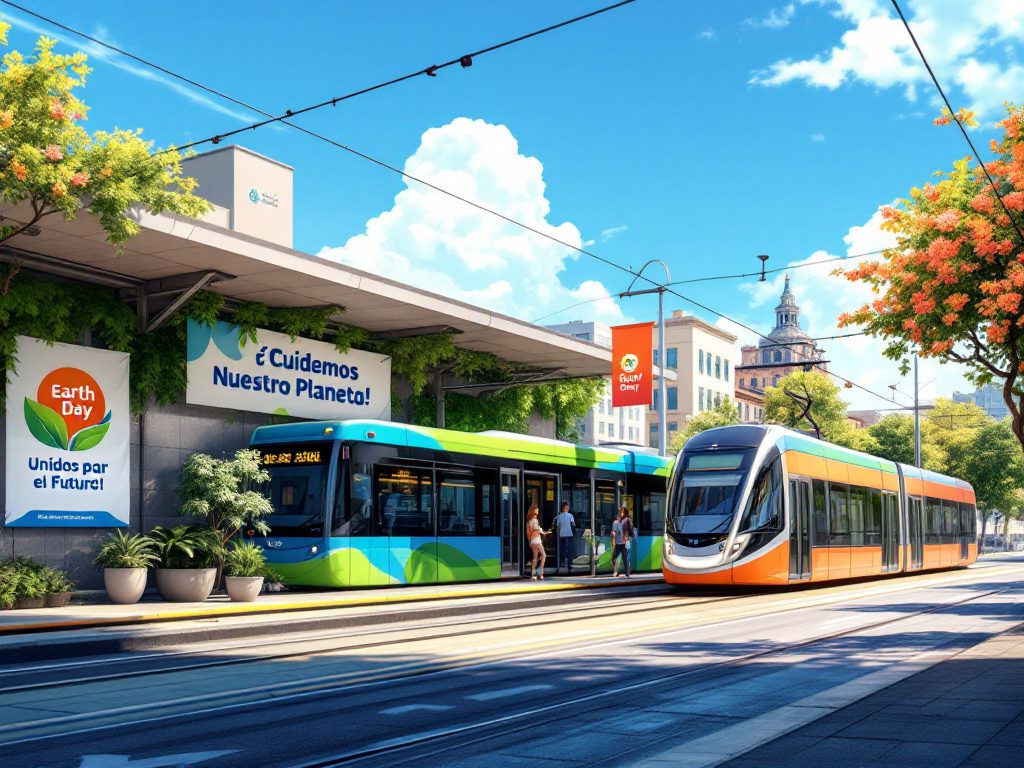
Riding Toward a Greener Tomorrow
On a crisp April morning, the familiar rumble of city buses takes on a new meaning. This year, in a coordinated show of environmental solidarity, public transit systems from Asheville, North Carolina to Ocala, Florida—and notably, Maryland’s vast Mass Transit Administration (MTA)—are offering fare-free rides to all comers in celebration of Earth Day. As crowds of families, students, professionals, and retirees step aboard, there’s an unmissable sense of hope: a small, kind gesture that packs a powerful punch in the fight against climate change.
Maryland’s MTA leads the way with a particularly inspiring twist: riders can hop on a specially decorated “Earth Day bus,” its windows and panels festooned with youthful artwork, a visible beacon urging commuters to consider the climate with every trip. Organizers hope these flourishes aren’t just festive—they’re educational, nudging people to envision a future where public transport is the backbone of sustainable cities.
For many Americans, especially those in sprawling, car-dependent areas, public transit has too often felt like an afterthought—an emblem of bygone urban cores. This Earth Day effort challenges that notion, underscoring mass transit as a critical tool in the fight against emissions. According to the United States Environmental Protection Agency, transportation accounts for nearly 29% of total greenhouse gas emissions nationwide, with personal cars and trucks being the worst offenders (EPA, 2023). Maryland’s own statistics echo this: in the Old Line State, transportation is cited as the leading source of carbon pollution, largely due to private vehicles clogging up roads and pumping toxins into the air.
Small Steps, Lasting Impact: Why Free Fares Matter
When transit agencies throw open their doors each April 22nd, the gesture resonates on several levels. First, it’s an invitation—removing cost barriers for low-income riders, and coaxing even the most die-hard motorists onto the bus, train, or subway for a day. But the symbolism runs deeper. As SunTran in Ocala proudly asserts, free Earth Day rides are meant to encourage everyone to “skip the gas pump and honor our planet together.”
Climate experts have consistently argued that individual choices aggregate into societal transformation. Harvard climate scientist Dr. Leah Stokes emphasizes that the “greening” of transit goes beyond electrifying bus fleets—it hinges on making it easy and appealing for people to leave their cars at home. She points to Earth Day fare-free promotions as the kind of social nudge that can spark lasting behavioral change.
“If we want greener cities and lower emissions, it’s not enough to swap a gas car for an electric one. We have to make shared transport the norm, supported and celebrated by our communities.”
States and cities aren’t acting alone. The United Nations Framework Convention on Climate Change (UNFCCC) has repeatedly called for reductions not just in the types of vehicles on the road, but in the number of car trips we collectively take. Shifting journeys from private vehicles to buses, trains, bikes, and foot traffic is essential, they argue, if we are to reach the targets necessary to limit warming to manageable levels (UNFCCC, 2022).
Maryland’s two-year streak of Earth Day fare-free rides represents—not incidentally—a growing acknowledgement among progressive policymakers that climate solutions need broad, public participation. Beyond that, these initiatives champion environmental justice for communities disproportionately burdened by pollution and unequal transit access. According to a 2023 Pew Research study, lower-income families and communities of color are up to twice as likely to rely on public transit yet are often forced to grapple with underfunded and inaccessible services.
Looking Forward: Building a Culture of Transit
What would it take for America to truly embrace public transit—not as a symbolic gesture for one day a year, but as a bedrock of modern life? A closer look reveals a patchwork of opportunity and challenge. Cities like New York and San Francisco have long celebrated their subways and buses, but in much of suburban and rural America, transit suffers from decades of underinvestment and stigma.
Bold action matters. Free ride days grab headlines, but sustained investments—dedicated bus lanes, expanded hours, improved station accessibility, and reliable service—represent the real keys to winning hearts and changing habits. Conservative policymakers have too often dismissed such proposals as costly or superfluous, fixating on tax cuts and car-centric infrastructure while ignoring the undeniable economic and environmental benefits of robust transit. This myopic approach shortchanges both our planet and millions of Americans who yearn for cleaner air, safer neighborhoods, and affordable ways to get to work, school, and family.
Consider the broader wins: According to a 2023 report by the American Public Transportation Association, every $1 billion invested in public transportation supports and creates over 50,000 jobs, cuts annual U.S. carbon emissions by hundreds of thousands of tons, and improves community health outcomes. As cities experiment with fare-free buses and eco-themed transit, they’re planting seeds for a future in which collective mobility reflects both efficiency and equality.
Will a single Earth Day transform the national culture overnight? Of course not. But these growing efforts—from whimsical art buses in Maryland to free rides for all in Asheville and Ocala—lay crucial groundwork. When you step aboard a city bus this Earth Day, or encourage friends and neighbors to join you, remember: you’re choosing more than a greener commute. You’re underscoring the principle that climate action is strongest when we act together, not alone.
