
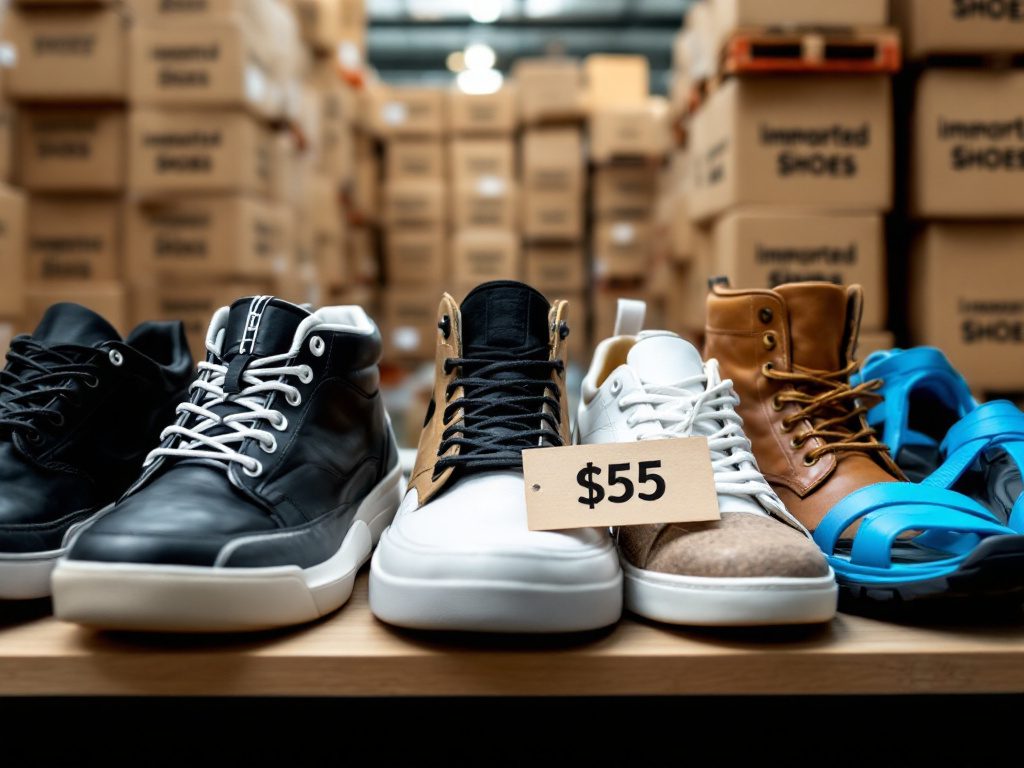
The Tariff Dilemma: Existential Threat to American Footwear
Picture a mother wandering the aisles of her local department store, searching for school shoes her kids won’t outgrow in a week. For decades, affordable sneakers and boots have lined American shelves, the result of global supply chains and fierce industry competition. But in the spring of 2019, that sense of choice and certainty began to falter. Why? President Donald Trump’s sweeping reciprocal tariffs—including those targeting imported footwear—threatened not only the price tags but the very survival of an industry dominated by household names like Nike, Adidas, and Puma.
Fear rippled through the footwear sector as Trump’s tariffs took direct aim at key sourcing countries—China, Vietnam, and Cambodia. For Vietnam and Cambodia alone, rates initially soared above 45% before a temporary reprieve dialed them back to 10%. China faced the brunt with a staggering 145% effective tariff. The fallout was immediate and, in the eyes of the industry, devastatingly predictable: companies placed orders on hold, inventories teetered on the brink of depletion, and the future for lower- and middle-income American families—who depend on value-priced footwear—grew increasingly unsettled.
According to the Footwear Distributors and Retailers of America (FDRA), over 80 top footwear firms signed an urgent plea to the White House. In their letter, they warned, “This is not a mere inconvenience—it’s an existential threat to American jobs and businesses.” Skechers, Steve Madden, Under Armour, and dozens more echoed the sentiment as they grappled with the practical realities of paying for shoes already en route but now slapped with punishing new taxes on arrival.
Empty Promises: Tariffs Won’t Bring Manufacturing Home
What are tariffs supposed to achieve? Trump’s calculus suggested that by making foreign goods more expensive, American buyers would shift to U.S.-made alternatives, spurring a renaissance in domestic manufacturing. Yet the footwear industry—long ago offshored due to high labor costs and capital-intensive production—quickly rebutted this simplistic narrative.
Industry leaders cite a stubborn reality: existing tariffs on shoes have hovered at double-digit rates for years, reaching as high as 37.5% on certain kids’ footwear. Has this led to a single significant uptick in U.S. production? According to FDRA President Matt Priest, “Our industry has faced high tariffs for generations—and shoe factories have not come home.” The lion’s share of American shoes are already made overseas because the infrastructure, skills, and economies of scale simply do not exist stateside.
Beyond that, tariffs on imported machinery and materials compound the problem, making it even more expensive to consider relocating factories. Any shift back would require not just billions in new investment, but years of retraining and construction—an impossible timeline for companies currently grappling with immediate existential threats. Harvard economist Dani Rodrik, writing for Project Syndicate, notes, “Industries deeply embedded in global supply chains do not ‘snap back’ to American soil because of tariffs. The fundamental dynamics have not changed.”
“This is not a mere inconvenience—it’s an existential threat to American jobs and businesses.”
—FDRA letter to President Trump
International trade experts and business leaders alike dismissed the idea that tariffs would resurrect a robust domestic shoe industry. What the history of American manufacturing actually shows, from steel to textiles, is that tariffs inflate costs for all consumers, disproportionately harming the very families most in need of affordable goods. Pew Research data confirms that lower-income Americans spend a greater share of their earnings on basic consumer goods—including footwear—meaning they feel the brunt of tariff-induced price hikes far more acutely than the wealthy.
The Human Cost: Rising Prices and Shrinking Choices
How much does a tariff hit home? The answer is clear in the daily realities of American shoe-shopping. At current tariff rates, FDRA estimates that levies could balloon to between 150% and 220% for many popular brands—costs that brands cannot simply “absorb” without folding. Already, U.S. inventories are dwindling as companies halt shipments, bracing for volatile pricing and uncertainty.
Without relief, the impact will radiate outward:
business closures, job losses, and higher prices for working families. According to industry projections, thousands of retail jobs are at risk, and the knock-on effects could ripple into transportation, warehousing, and logistics sectors—job categories that lack resilience and safety nets.
Is there a better path forward? The industry argues for a targeted approach: strategically exempting affordable footwear while supporting American workers through real investments in upskilling and innovation.
Rather than punitive tariffs that punish consumers and small businesses alike, progressive economic policy should aim to foster prosperity for all—especially the most vulnerable. The reality is stark: a policy that raises prices for children’s sneakers is hardly the champion of the American worker.
Polling shows a clear majority of Americans prefer trade policies that promote affordability and job growth without concentrated harm. As the 2020 election neared, trade policy became a flashpoint—not for corporations alone, but for millions of ordinary shoppers whose voices, too often, get drowned out in the din of political grandstanding.
So, when you next find yourself browsing for shoes online or at the mall, know that the pricing pain isn’t “just business.” It’s a consequence of political choices that ripple through the economy—often falling hardest on those least able to pay. The lesson isn’t new, but it’s urgent: real progress means policies anchored in empathy, evidence, and enduring fairness.
