
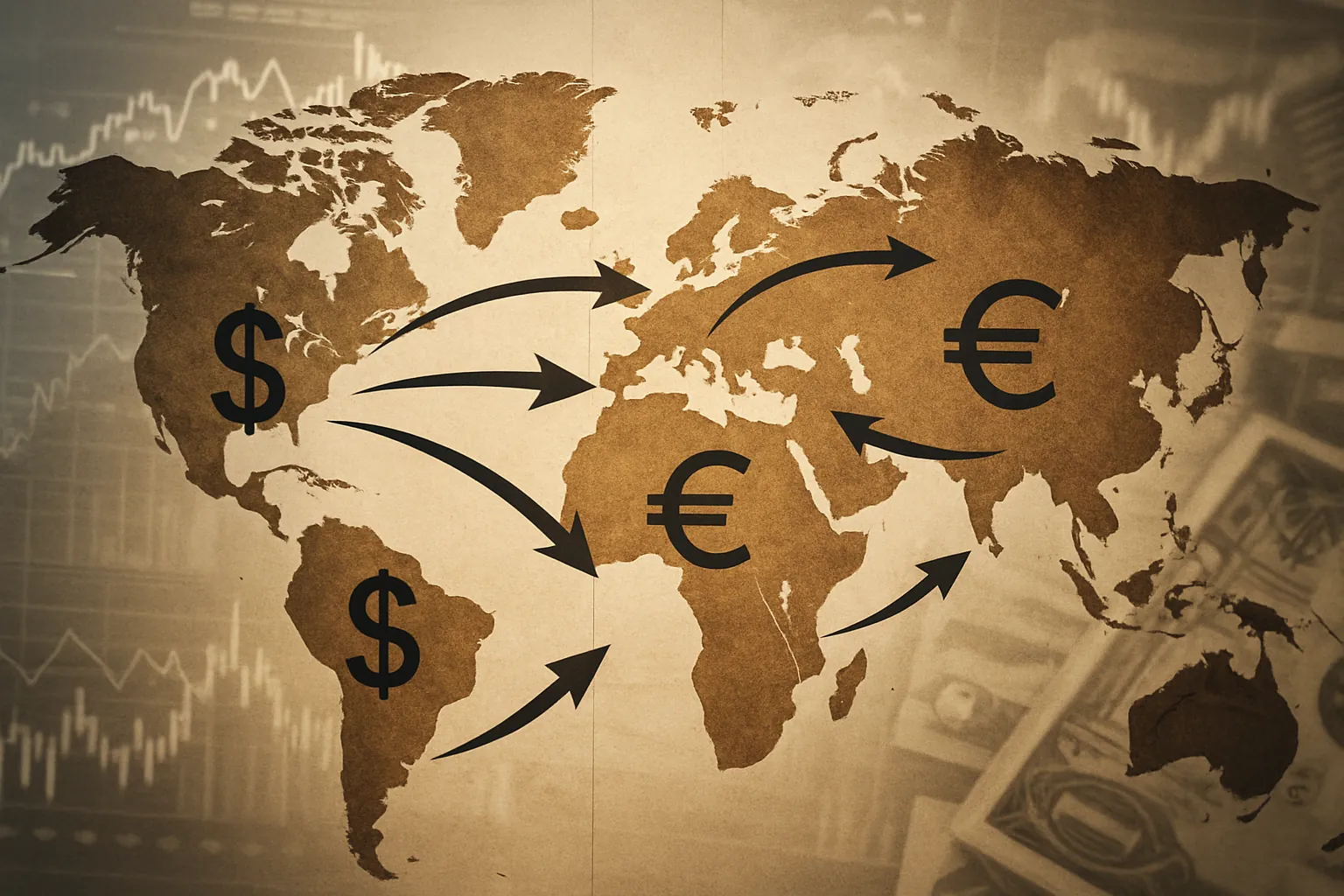
The World Gathers in Washington Amid Rising Anxiety
The lingering unease over global economic instability will be center stage as finance ministers, central bankers, and world leaders converge on Washington, D.C., for the 2025 Annual Meetings of the International Monetary Fund (IMF) and World Bank Group. This high-stakes gathering, set for October 13–18, comes at a moment when global debt is reaching levels unseen since World War II. Rising trade tensions, inflationary pressures, and fresh geopolitical frictions threaten both emerging and developed economies, fueling debate about the role and reform of international financial institutions.
Watching the world’s most powerful economic policymakers stride into the IMF’s marble lobby, one can’t ignore the weight hanging over these meetings. According to Harvard economist Carmen Reinhart, “Many economies face a cocktail of high borrowing costs and slow growth, making this a dangerous time for complacency.” Debt moratoria and ‘rescue packages’ that once seemed extraordinary now feel routine, underpinning a broader worry: are our global frameworks fit for a new era?
This year’s agenda addresses the gravest challenges head-on. From the stubborn aftershocks of the pandemic to the mounting financial peril in the Global South, the conference’s featured sessions—like the Plenary and the IMF’s International Monetary and Financial Committee—will tackle the broad question: Can collective action stem the tide of economic turbulence, or will old fault lines widen?
Debt, Divides, and the Battle for Economic Stability
Debt, both sovereign and private, has become a political lightning rod and a humanitarian concern. According to a recent Pew Research study, more than half of low-income countries are now at high risk of debt distress, often forced to spend more on interest payments than public health or education. Conservative policy critics—championing austerity and deregulation—argue that the answer lies in belt-tightening and curbing government intervention. Yet history paints a different picture: the draconian IMF “shock therapy” of the late 20th century left many societies gutted, from Latin America to Southeast Asia.
Progressive voices are demanding institutional reform and debt relief that centers real people, not just bondholders. Nobel laureate Joseph Stiglitz has argued, “For real recovery, the international system must prioritize sustainable growth and social investment over simply balancing books.” Many developing nations are echoing this sentiment, pushing for greater say within the IMF and World Bank and more responsive structures against the backdrop of rising trade protectionism and national populist movements.
“The policy choices made in Washington echo far beyond boardrooms—they shape whether a Malawian child can attend school, or if a Greek hospital keeps its doors open.”
It’s easy to talk theory inside polished conference halls, but the real-world stakes are painfully immediate. The 2025 agenda isn’t just about statistics—it’s about dignity, survival, and a redefining of global priorities. That’s why eyes are fixed on plenary addresses from leaders like Olavo Avelino Garcia Correia, Ajay Banga, and Kristalina Georgieva, whose voices will set the moral and pragmatic tone for reform in a period of mounting uncertainty.
Reimagining Leadership: The Next Generation of Global Economists
Change at the institutional level requires not only new policies, but new minds. Enter the IMF’s 2026 Economist Program—a rigorous, three-year initiative designed to cultivate the next generation of leaders for an era of unprecedented global complexity. Recent PhDs from every continent will work at IMF headquarters, tackling live economic crises and participating in both research and policy formation on macroeconomics, finance, and urgent issues like climate adaptation and poverty alleviation.
Participants will rotate through two 18-month assignments, immersing themselves in regional hot spots and wrestling with challenges from balance-of-payments instability to monetary policy reform. This isn’t just a training program—it’s an incubator for fresh solutions in a system often accused of stale orthodoxy. The IMF touts a competitive, meritocratic selection process that emphasizes diversity and cross-disciplinary expertise—a stark contrast to the historical image of the institution as an exclusive club of Western technocrats.
Mentorship forms the cornerstone of this endeavor. Seasoned economists—many of whom have witnessed the chaos and triumph of policy interventions across crises from Argentina to Greece—work side-by-side with young recruits. This hands-on experience, coupled with technical and language training, positions these emerging leaders at the frontline of an evolving, interconnected world.
Beyond that, the World Economy Summit’s fall edition—convening in tandem with the IMF-World Bank meetings—will offer another platform for debate and collaboration. It will focus on surfacing the best ideas and new policies in response to surging inflation, technological disruption, and the hard lessons of recent global shocks.
Charting a Progressive Path Forward
A closer look reveals the urgent need for multilateral solutions rooted in equity, not just GDP growth. The reality is that rising protectionism—echoed in the Trump administration’s calls to reshape international institutions to fit narrow national agendas—risks unraveling decades of progress toward poverty reduction and shared prosperity. Liberal critics rightly point out that conservative tinkering with global agreements often leads to exclusion, fragmentation, or outright peril for vulnerable populations.
At stake in these annual meetings isn’t merely the trajectory of currency markets or stock tickers. It’s a battle over the soul of globalization: Do we look outward together, or turn inward and let inequality fester?
History’s judgment is clear. Postwar multilateralism—the very idea behind the IMF and World Bank—is responsible for some of humanity’s greatest gains in health, prosperity, and peace. Scrapping these ideals in favor of transactional, zero-sum deal-making sacrifices the collective good for the illusion of short-term advantage. It’s time for bold, progressive engagement with the world’s toughest economic puzzles, grounded in facts and compassion, not fear or nostalgia.
