
Moody’s Downgrade: A Stark Warning and Surging Gold Demand
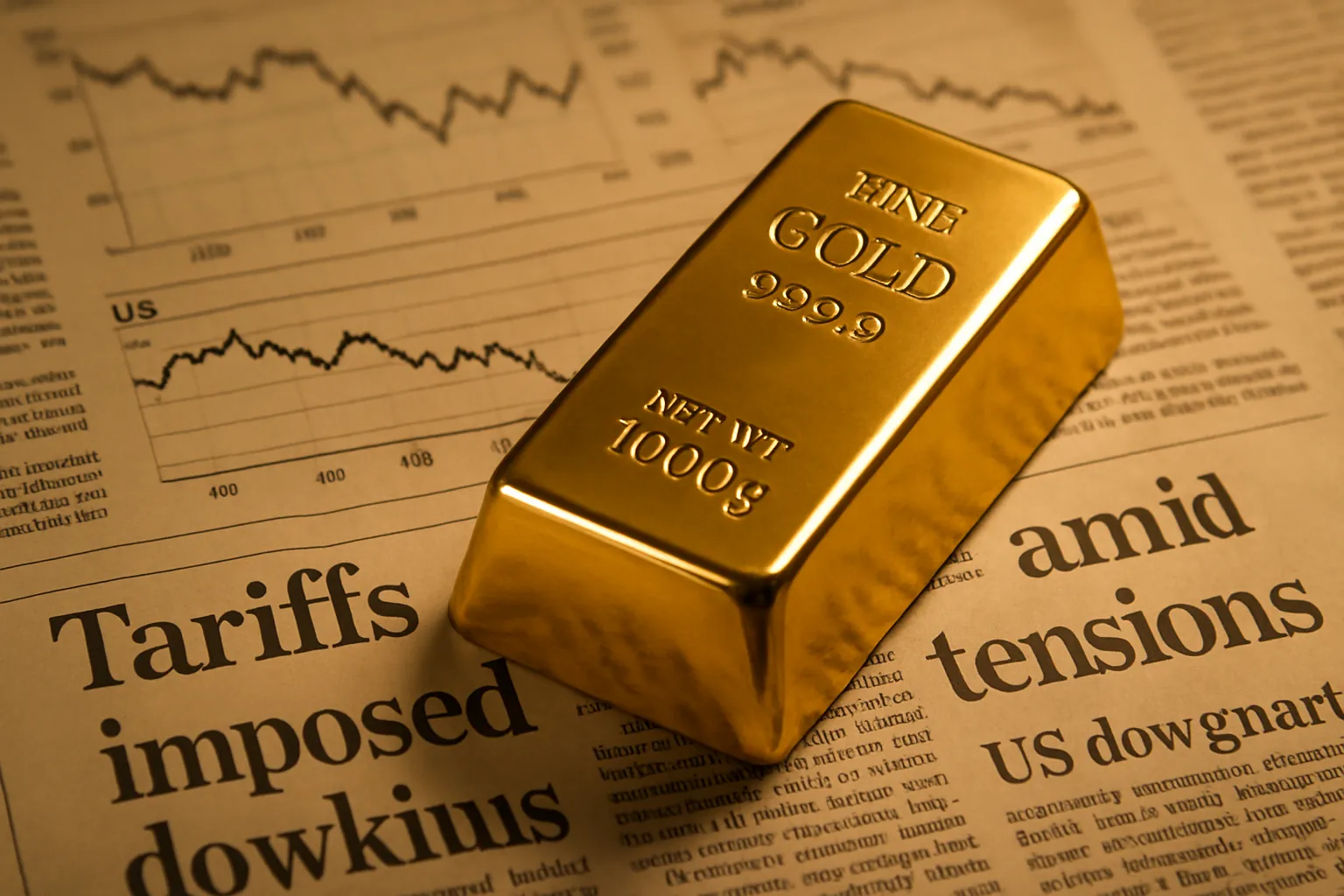
It was an ordinary Monday until a decisive move by one of the world’s leading credit agencies sent tremors through global markets. Moody’s Investors Service slashed the United States’ credit rating from AAA to Aa1—a public rebuke of the nation’s fiscal trajectory rarely seen in modern times. Gold prices jumped over 1%, leaping to just above $3,247 per ounce before steadying near $3,243, as anxious investors sought safe harbor amid the storm. But why did a technical-sounding credit assessment set off alarm bells and send precious metals on a tear?
At its core, the Moody’s downgrade is not just a bureaucratic footnote—it’s a referendum on years of mounting debts and political dysfunction. Moody’s projects that US federal debt will balloon to a staggering 134% of GDP by 2035, up from 98% in 2023. To seasoned observers, this is more than a number; it’s a warning. Harvard economist Kenneth Rogoff argues, “When debt outpaces a country’s ability to grow, markets rightly worry about the long-term sustainability of public finances.”
Beyond that, the impact cascaded through the bond markets. US 30-year Treasury yields spiked to the 5% threshold, making borrowing more expensive not just for Washington, but for American households, businesses, and even state governments. As bond yields surged, the dollar weakened—making gold, often denominated in dollars, more attractive for buyers abroad. Quietly but swiftly, gold buyers from Mumbai to Hanoi piled in: on India’s MCX, gold futures for June delivery soared by 1.7%, while Vietnamese gold prices rose nearly half a percent.
This hunger for gold shines a light on more than just fear—it spotlights a profound lack of trust in the US government’s ability to manage its finances. Central banks, those bastions of stability, remain the largest holders of gold precisely because it is shielded from the follies of any one government. When ratings agencies express doubt about the world’s most important borrower, history tells us: the world listens, and investors act.
Trade Tensions and Policy Blunders Fuel Market Volatility
But the anxiety gripping financial markets extends beyond budget mismanagement. On this same eventful Monday, U.S. Treasury Secretary Scott Bessent doubled down on President Trump’s threats to impose sweeping new tariffs on trade partners who, in the administration’s eyes, aren’t negotiating “in good faith.” The return of tariff drama—a move straight out of the 2018-19 trade war playbook—sent shudders through the global trading system.
Trade wars have never been a path to prosperity. John Hopkins economist Mary Lovely notes, “America’s working people and small businesses bear the true cost of tariffs—in the form of higher prices and lost export opportunities, not our trading partners or distant rivals.” Gold’s status as a safe haven asset only strengthens as the specter of protectionism reemerges. A weakening dollar, sliding 0.3% on Monday, further amplified gold’s appeal.
Is this déjà vu all over again? Tariff threats in the late 2010s led to whipsaw markets, climbing consumer costs, and fraught diplomatic relations. They didn’t solve structural trade deficits, but they did inject a sense of deep uncertainty. Now, with US economic indicators already weakening—retail sales growth has slowed, inflation remains stubbornly low, and the Producer Price Index surprised to the downside—it’s no wonder investors are seeking safety, not risk.
“When debt outpaces a country’s ability to grow, markets rightly worry about the long-term sustainability of public finances.” — Harvard economist Kenneth Rogoff
The anticipation of further Federal Reserve intervention provides little comfort. According to CME FedWatch Tool projections, markets have priced in 54 basis points of Fed rate cuts this year, with expectations for the first cut in October. But with yields already elevated and the government’s creditworthiness called into question, can monetary policy alone restore confidence? History suggests otherwise: during the 2011 debt ceiling crisis, gold rocketed to then-record highs, but economic and political recovery lagged for months afterward.
Geopolitical Unrest: Gold’s Ultimate Test as a Safe Haven
All of this unfolds against a backdrop of erupting geopolitical tensions. Israeli forces have launched another massive ground offensive, sending ripples through global markets anxious about the consequences of Middle East turmoil. At the same time, the high-stakes spectacle of imminent Trump-Putin negotiations over Ukraine’s fate threatens fresh volatility. It’s no wonder gold remains firm, its price buttressed by uncertainty that seems, for now, here to stay.
These uncertainties expose the limitations of conservative economic and foreign policy choices. Rigid adherence to deficit-financed tax cuts, largely benefiting the wealthy, and saber-rattling trade policy may momentarily score political points but leave society more exposed in times of stress. Decades of empirical evidence—including Ronald Reagan’s 1980s experiment with “trickle-down” tax cuts and the turmoil following George W. Bush’s 2001-03 tax reform—demonstrate the dangers of debt-fueled stimulus without a long-term plan for economic competitiveness or equity. Today’s downgrade and swelling deficit failings echo those missteps, with consequences reverberating through every corner of the global marketplace.
You have to ask: Who truly pays the price for political brinksmanship? It’s average Americans—working families, retirees on fixed incomes, and young people just entering the labor force—who most acutely feel the bite from lost confidence, market instability, and eroding international credibility. Even traditional fiscal conservatives warn that undermining America’s credit standing turns every debt negotiation into high-wire theater, risking recession in a world already on edge.
Is there a lesson here? The progressive answer is clear: prioritizing sustainable budgets, smart social investments, and international cooperation over economic saber-rattling protects not only our wallets but our democracy’s standing in the world. Gold’s rally is a symptom—not a solution—of deeper problems that demand collective action, informed debate, and above all, accountability from those in power. Only then can America hope to reclaim its reputation for economic stability and visionary leadership.
