
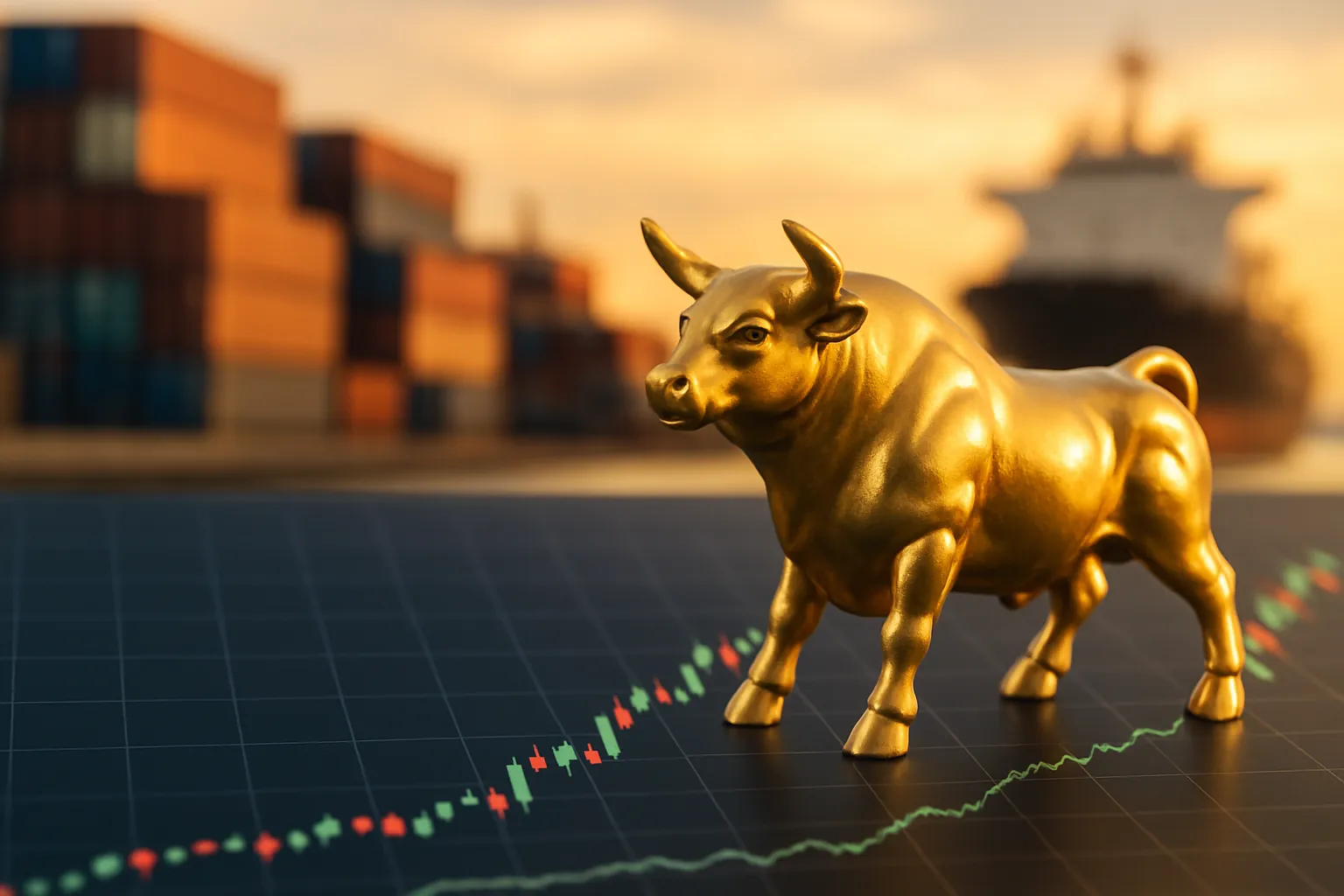
New Trade Winds on Wall Street: Optimism Meets Caution
No one who’s watched America’s recent economic rollercoaster should be surprised: Wall Street reacts swiftly to even whispers of a trade truce. This week, it’s more than whispers propelling optimism. Goldman Sachs, the bellwether for financial sentiment, has dramatically revised its forecasts for the S&P 500 and Chinese GDP upward, citing an unexpected turn in US-China tariff negotiations. Gone, for the moment, are the fears of an imminent recession; in their place is tempered hope—just tempered, not boundless.
According to Goldman’s strategists, the S&P 500 could breach 6,100 by year-end, surging to 6,500 within twelve months—a move that signals new faith in a resilient U.S. economy after a bruising few years. Meanwhile, the bank’s China desk projects GDP growth to hit 4.6% this year, up from 4.3%. Notably, that’s still below Beijing’s 5% goal, highlighting both progress and constraint in the world’s second-largest economy.
What’s driving these bullish projections? The recent loosening of tariff restrictions has rekindled the so-called “Buy America” trade, as the global economy’s two titans—after years of retaliatory sparring—seem to be tentatively lowering their shields. Eased trade tensions allow companies battered by supply-chain snarls and volatile materials costs to breathe easier, for now.
Yet, even amid this market rally, Goldman’s guidance exudes caution. The strategists warn that while relief is real, the current forward price-to-earnings ratio of the S&P sits in the 90th percentile since 1990. Valuations this high have historically signaled limited room for additional exuberance, reminding investors that all rallies have ceilings.
Behind the Upgrades: Tariffs, Earnings, and Recession Risks
The nitty-gritty of Goldman’s newfound optimism reveals much about the current economic psyche. The tariff rollback, unexpected in both timing and magnitude, has immediate effects on both U.S. and Chinese corporate earnings—a boon in the short-term, but with longer-term caveats. The bank’s research now projects S&P 500 earnings per share (EPS) growth for 2025 and 2026 at 7% each year, notably higher than previous predictions of 3% and 6%.
This shift isn’t just numbers—it’s a signal of improving corporate fundamentals and a market betting on robust consumer demand. Yet, as Harvard economist Jane McAndrew explains, “Market exuberance often precedes volatility when underlying uncertainties aren’t resolved. Investors should heed the lessons of 2018’s trade war missteps, when optimism turned on a dime.”
Recession risk, always the market’s shadow, appears to be retreating—at least in the near term. Goldman has reduced its 12-month recession probability to 35% from 45%, reflecting confidence in more stable trade flows and resilient economic activity. For Main Street, this equates to more job security and less handwringing over the specter of a downturn, but for investors, it’s a complex mix of relief and renewed risk-taking.
Yet, caution abounds. Goldman expects the effective U.S. tariff rate to rise by 13 percentage points in 2025, a stark reminder that the current period of relative harmony may be fleeting. The resulting squeeze on profit margins won’t be felt immediately, but it could undermine the very earnings growth now fueling investor enthusiasm.
“What gets Wall Street so excited today could spark anxiety tomorrow. High valuations make markets vulnerable—not invincible—and a sharp turn in policy or geopolitics could quickly unravel these gains.”
Past experience offers a sobering lesson. Recall the mini-crash of late 2018: U.S. equities plummeted on trade war escalation, only to rebound after policymakers blinked. If future tariff increases take effect as predicted, we could easily see a rerun of this painful whiplash.
Progressive Lens: What Wall Street Optimism Means for Everyone
For the average American or global worker, the headlines mask a critical truth: Rising stock targets don’t equal rising living standards. Even as the S&P climbs and executive bonuses swell, real wage growth for the working class remains tepid. The easing of tariffs may grant temporary respite from price hikes at the store, but unless policy directly addresses income inequality and invests in quality jobs, the benefits will continue largely accruing to the wealthiest.
Goldman’s advice that investors stick to companies with strong “pricing power”—firms able to pass higher costs to consumers—underscores a deeper discomfort. This strategy, while sound for protecting portfolios, does little for those already paying more for goods and services. As Robert Reich, former Secretary of Labor, notes, “When corporate America protects its margins through price hikes, the working and middle class bear the brunt.”
Market-watchers might recall how similar supply-side logic failed to deliver prosperity in the past. Deregulation and trickle-down promises in the 1980s produced impressive market returns but deepened disparities. Today, a progressive vision for economic growth means investing in climate resilience, affordable healthcare, and equitable education opportunities—not just celebrating market highs.
At its best, strong U.S. and Chinese growth signals a world less at odds and better able to tackle global challenges collaboratively. But market euphoria cannot substitute for bold, just policy. Readers seeking more than fleeting gains must advocate for leaders willing to address systemic inequality and advance the broader public good. Only then will the prosperous numbers on Wall Street have a chance to enrich the lives of those far from its glass towers.
