
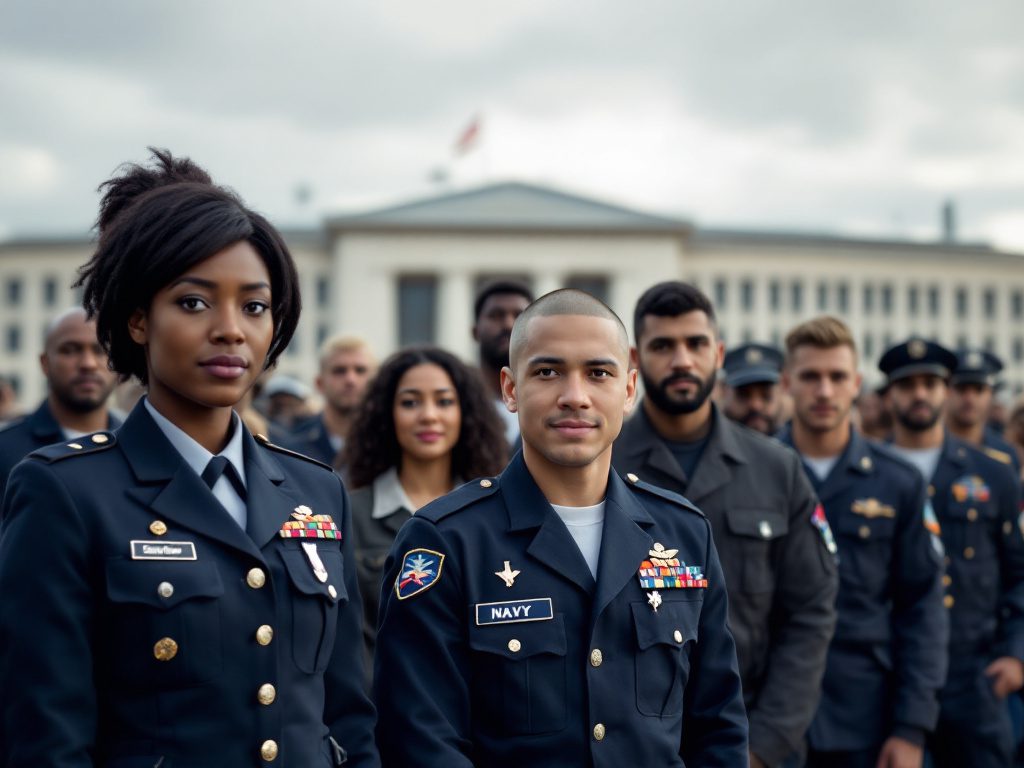
The Trump Doctrine in Uniform: A Shake-Up at the Top
“Less Generals, More GIs.” That’s the slogan Secretary of Defense Pete Hegseth has adopted as he unleashes a historic restructuring of America’s military hierarchy. In a move that’s left the Pentagon roiling and raised alarms among reform advocates and senior brass alike, Hegseth has ordered a 20% cut in active-duty four-star generals and admirals. The National Guard, too, must shed a fifth of its top generals. The measure, according to an internal memo, is meant to “remove redundant force structure and streamline leadership.” In practice, it’s the sharpest blade taken to U.S. senior military ranks in living memory.
On its face, the cut is justified as an overdue correction to a top-heavy system. Hegseth argues that the U.S. now fields far more generals per capita than at the height of World War II, making the chain of command costly and unwieldy. “We’re going to shift resources from bloated headquarters elements to our warfighters,” he explained in a forthright memo to Congress. The rhetoric conjures images of wasteful brass enjoying peacetime sinecures while the battlefield foot soldier is forgotten. But what shakes faith in this rationale is the context—and fallout—of the order itself.
A closer look reveals the reforms arrive atop a wave of purges and culture war initiatives from Hegseth and the Trump administration at large. After firing both Joint Chiefs Chairman Gen. CQ Brown Jr. and Navy Chief of Staff Adm. Lisa Franchetti—actions many saw as raw political maneuvers—the administration has now pressed forward with an effort to not only cut but reshape the upper echelons of American defense in its own image. The list of those targeted or already removed, as reported by The Hill and confirmed by Reuters, has included a disproportionate number of women and officers of color. That fact alone should force us to interrogate the goals behind this supposed efficiency drive.
Diversity Setbacks and Political Power Plays
Beyond trimming the top ranks, Hegseth’s directives aim squarely at the values that have begun—incrementally—to define 21st-century national security: diversity, equity, and inclusion. With an explicit mission to root out diversity programming, end policies supportive of transgender troops, and constrain the Pentagon’s outreach on inclusion initiatives, the Secretary’s agenda extends far beyond the budget books.
This entanglement of administrative reform with ideological rollback is sounding alarm bells among defense experts and lawmakers who see it as a determined bid to centralize power among a narrow circle of loyalists. Rep. Veronica Escobar (D-TX), a member of the House Armed Services Committee, told MSNBC, “This administration’s so-called reforms risk damaging the very fabric of our military by sidelining talent and sending precisely the wrong message to the next generation of leaders. Diversity isn’t a box to check; it’s a force multiplier.”
There’s a historical sting to these moves, reminiscent of the post-Vietnam military retrenchment in the 1970s, when the purging of dissenting voices coincided with disastrous missteps in planning and personnel. Gen. Martin Dempsey, retired Joint Chiefs chairman, underscored this via CNN: “Generational change and an inclusive force are proven sources of military advantage. When you gut leadership in the name of expedience, you don’t just lose experience—you risk groupthink and operational blind spots.”
This isn’t mere fearmongering. According to a recent Pew Research Center report, women and people of color remain underrepresented at the military’s top levels. Moves that disproportionately oust them invalidate years of progress toward a leadership that reflects the nation it serves. Senator Tammy Duckworth (D-IL), an Army veteran, put it starkly:
“When our highest ranks close to women and minorities under the guise of efficiency, we slam the door on innovation and readiness. The world isn’t less dangerous today. We can’t afford to rob ourselves of perspective and skill because of politics.”
Yet the administration appears undeterred, with a senior defense official telling reporters off the record that the shakeup is only “Phase One”—with deeper reviews of command structures and even further personnel reductions on the horizon. The Pentagon press office has since limited its communication with the media and public, leaving critical questions about implementation, impact assessments, and timelines unanswered. The opacity only adds to suspicions that these reforms serve less to promote efficiency than to consolidate an ideologically friendly, less independent senior leadership class.
Risks to Readiness and America’s Role in the World
Every military analyst worth their salt will concede that effective reform often means breaking with the past. Sure, the number of generals ballooned long after U.S. troop numbers peaked, due in part to Cold War sprawl and interminable overseas deployments. But the speed and selectivity with which Hegseth’s order is being carried out means critical institutional knowledge and diversity of thought are being jettisoned alongside real inefficiency.
The Pentagon is already advising on proposals to merge major combatant commands—a move which has drawn bipartisan skepticism in Congress due to the risk of weakening U.S. military posture in Europe and Africa. Harvard security scholar Dr. Rachel Kleinfeld told CNN, “Streamlining makes sense in theory, but not at the expense of our global credibility or diverse leadership. Challenges from Russia and China demand adaptability, not echo chambers.” Without a transparent review of which roles add value—versus which are merely political targets—the risk is that these cuts will harm both operational readiness and international trust.
History doesn’t offer much comfort. After the infamous Rumsfeld-era defense reforms of the early 2000s, when experienced voices were marginalized in the rush to “transform” the force, the U.S. military became bogged down in two forever wars it could neither win nor reshape. What’s the lesson? Betting America’s security on a smaller, more homogeneous, and politically obedient senior officer corps is a gamble few strategists would endorse.
So where do we go from here? Congressional oversight remains one safeguard: Many of the proposed changes require legislative approval, and bipartisan resistance to politicizing the armed services is strong—for now. But a nationwide reckoning looms. Is America’s military a model of democratic diversity, or destined to become just another lever controlled by the White House of the day?
