
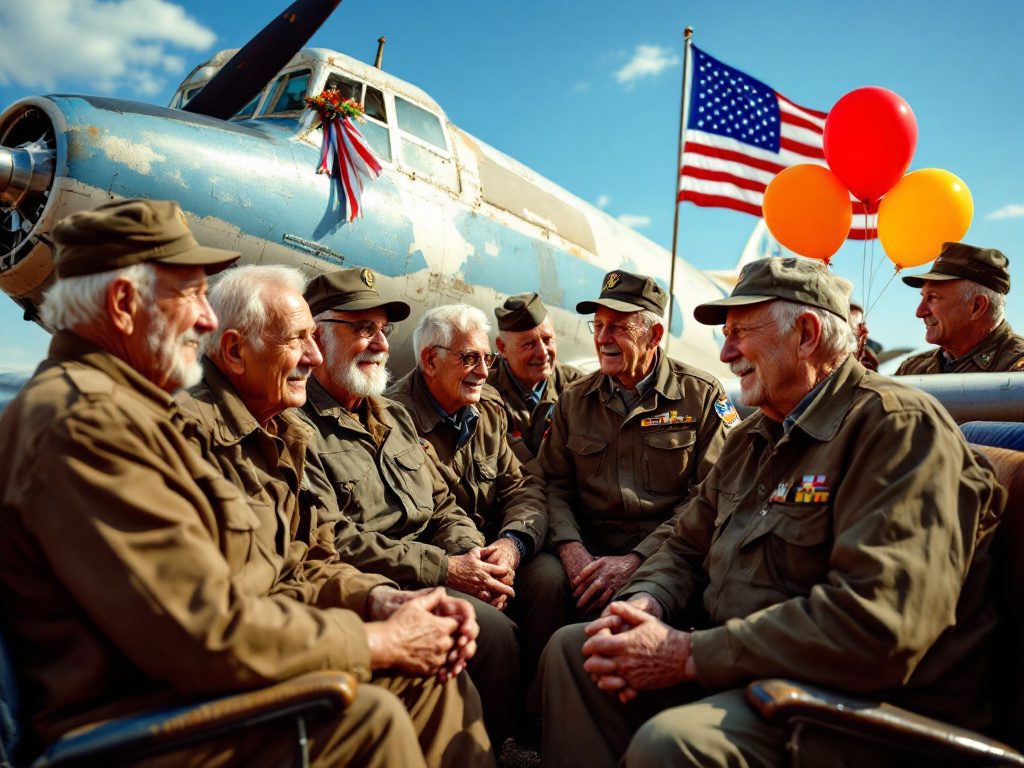
A Journey of Recognition: Veterans Return to Washington, D.C.
Every spring and fall, airports across the heartland teem with anticipation as veterans—some sprightly, others pushing the limits of frail bodies—board flights uniquely chartered for them. These are no ordinary journeys. As part of the Honor Flight Network’s mission, hundreds of veterans recently traveled to Washington, D.C., to visit the very memorials honoring their sacrifice. It’s an act of recognition and remembrance that many never experienced upon their actual homecomings.
At Bradley International Airport, the excitement was palpable as 65 veterans, including a 102-year-old World War II veteran, gathered for their trip through Honor Flight Connecticut. They were joined by veterans from the Korean War, Vietnam, and even the often-overlooked Cold War, representing the Army, Navy, Air Force, and Marine Corps. Their stories span generations, but so many share a common thread: for decades, gratitude for their service had felt elusive—until now.
Freedom Honor Flight representatives in La Crosse, Wisconsin, echoed similar emotions. Since 2012, nearly 2,000 veterans from the region have participated. Local community groups like the Broome County Sheriff’s Office, American Legion riders, and a convoy of motorcycle clubs rallied together, escorting busloads of departing veterans right to the state line—a vivid demonstration of community devotion that transcends political and generational boundaries.
What compels us, as a nation, to organize such pilgrimages today, decades after the guns fell silent abroad? The answer, in part, lies in an overdue reckoning with our own history. Vietnam veterans, in particular, were too often met with scorn, not celebration. According to the Pew Research Center and countless firsthand accounts, nearly 60% of Vietnam veterans reported feeling disrespected upon returning home. This legacy shapes the urgency and emotion of these modern-day journeys.
Across the Memorials: From Healing to Celebration
The itinerary of an Honor Flight is both grand and intimate. Arlington National Cemetery, the World War II Memorial, the Korean War Veterans Memorial, the Lincoln Memorial, and the Vietnam Veterans Memorial form the ceremonial backbone. But the most profound moments often unfold quietly—a hand tracing a name on cool black granite, a candid reminiscence of lost comradeships, or the silent tears when a veteran, finally, feels seen.
During one of these trips, a Vietnam veteran stood before the wall—etched in stark stone, the name of a friend lost fifty years ago glowed in the dappled sun. He traced each letter by touch, whispering memories only he could know. It’s no surprise many veterans described the journey as “overwhelming phenomenal,” words that reflect a complex blend of sorrow, gratitude, and relief previously deferred.
These acts of acknowledgment carry powerful weight. The Honor Flight Network, active since 2005, has transported more than 250,000 veterans nationwide to witness their legacies. As Harvard historian Michael Kazin has noted, America’s ambivalence toward its soldiers—celebrating valor but too often shunning honest reckoning with war itself—requires constant recalibration. For these veterans, much of that healing happens not in grand speeches or parades, but in moments of connection: a stranger’s handshake, a schoolchild’s letter, a crowd’s thunderous cheer upon their return.
“It felt, perhaps for the first time, that I truly belonged—that my service meant something more than just war. In the hush by the memorials, we were part of history, and finally, history remembered us.”
A closer look reveals another layer: age diversity and shifting memory dynamics. With only a handful of World War II veterans alive—like Honor Flight Connecticut’s 102-year-old participant—there’s a race against time to ensure each generation receives its due. “Visiting these memorials is about legacy, not just nostalgia,” highlights Dr. Jill Lepore, a Harvard historian. “It’s a collective promise, renewed with every flight.”
Long-Awaited Reunions: Closing Circles of Memory and Justice
Yet for all the cheering crowds and emotional scenes on the National Mall, these events also invite reflection on how our nation supports veterans once the cameras stop rolling. Despite bipartisan admiration for their heroism, many American veterans face challenges—health care delays, mental health struggles, and underfunded resource programs. Too often, conservative policies have favored symbolic gestures over structurally adequate support.
Simply put, a handshake or parade cannot substitute for access to quality medical care or housing stability. Recent policy debates around the VA budget, long-term care funding, and mental health resources underscore the difference between recognition and real reform. As noted by the Center for American Progress, closing the gap between intent and action remains a moral imperative for lawmakers in Congress.
Why does it matter? The answer is both ethical and practical. A country that honors its defenders only in ceremony risks cynicism and erodes social trust. A progressive approach must insist that the reverence shown at the memorials becomes tangible at home—in robust GI benefits, world-class VA hospitals, and mental health services that reflect the real costs of war.
Veterans stepping off their flights share a message that should resonate: Honor Flights represent the beginning, not the end, of our obligations. The welcome-home rallies, letters, and coordinated care from communities are a template worth expanding. Empathy and gratitude must be accompanied by policies matching the scale of sacrifice.
As Honor Flights continue, it’s clear that America’s best tribute to its veterans is to sustain their dignity in both word and deed. The next time a veteran boards these flights—whether 22 or 102—we would do well to remember: history only remembers what we choose to honor with action, not sentiment alone.
